Eight-Ball Jacket

A color-blocked leather jacket with a giant black-and-white eight ball on the back, designed by Michael Hoban in 1990 and priced around $800. For two winters it was the status symbol of New York, worn by ballplayers and rappers, robbed off kids' backs, and then dropped so hard that Seinfeld put one on Puddy as a joke.
Michael Hoban, whose North Beach Leather label had been a San Francisco fixture since the late 1960s, created the eight-ball jacket in 1990. The look was loud on purpose: bright color-blocked panels with big black-and-white eight-ball decals on the back and sleeves. The genuine article retailed for about $800, which was the point. In New York's East Coast hip-hop scene it was worn by Kid 'n Play and by ballplayers Darryl Strawberry and Bobby Bonilla, and the eight ball itself carried a whole set of meanings, the money ball you win or lose the game on. Hoban has said the drug slang was unintentional.
The price made it a target. Bootleggers moved in fast, with low-end knockoffs selling for as little as $300 and Harlem's Dapper Dan making luxury versions at $1,200; Hoban sent cease-and-desist letters and sued shops that kept going, and eight settled. Worse, the jackets became something kids were robbed for at knifepoint and gunpoint. In December 1990 it was reported that five New York youths had been shot and killed in coat robberies over four weeks, two of them tied to eight-ball jackets, and by February 1991 the Los Angeles Times counted 16 young New Yorkers shot over the winter in robberies involving eight-ball or shearling coats, six of them fatally. Some stores refused to stock the jacket at all.
The craze burned out almost as quickly as it lit. By 1992 A Tribe Called Quest was using the jacket as a diss in "Show Business," and its reputation only curdled from there. When Seinfeld writer Spike Feresten put one on David Puddy in "The Reverse Peephole" in January 1998, he was deliberately trying to make it uncool, and later admitted it hadn't worked: "It's like herpes. It will always be around and some people will have it." Hoban licensed a cheaper "Wear Me by Michael Hoban" line and lost the business in 2003; by early 2004 North Beach Leather was liquidating everything but its original San Francisco store. The jacket has resurfaced since as a throwback, which is the only way anyone wears one now.
Similar items
Starter Jackets
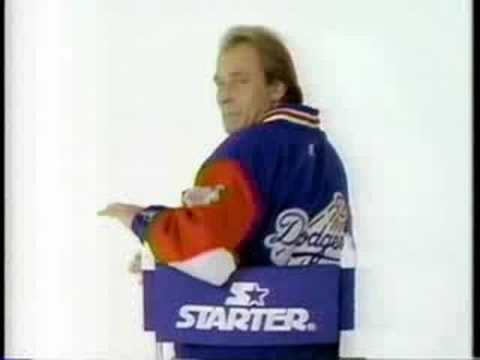
Starter's nylon and satin team jackets were the uniform of 90s cool — oversized windbreakers emblazoned with NBA and NFL team logos that transformed playground basketball courts and city streets into stadiums of style. Starter jackets became so coveted they sparked robberies, making them perhaps the decade's most dangerous fashion statement.

Cross Colours
Color-blocked jeans, bold-lettered tees, and a message stitched into every garment: "Clothing Without Prejudice." Cross Colours dressed the Fresh Prince, half of early-90s hip-hop, and every kid who wanted to look like MTV — then vanished almost overnight when its biggest retailer went bankrupt.

Seinfeld
"A show about nothing" created by Jerry Seinfeld and Larry David became everything. NBC's quirky hit turned observational humor about minutiae—shirt buttons, parking spots, the mechanics of social obligation—into the decade's most quotable comedy.
Tommy Hilfiger
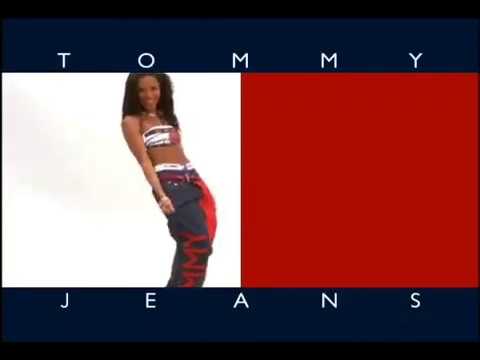
Prep meets hip-hop: the flag logo of a 1985 New York label, co-opted by Snoop Dogg, Aaliyah, and every mall kid of the 90s who wore it oversized and felt instantly cooler. The red-white-and-blue became a uniform.