Sagging pants
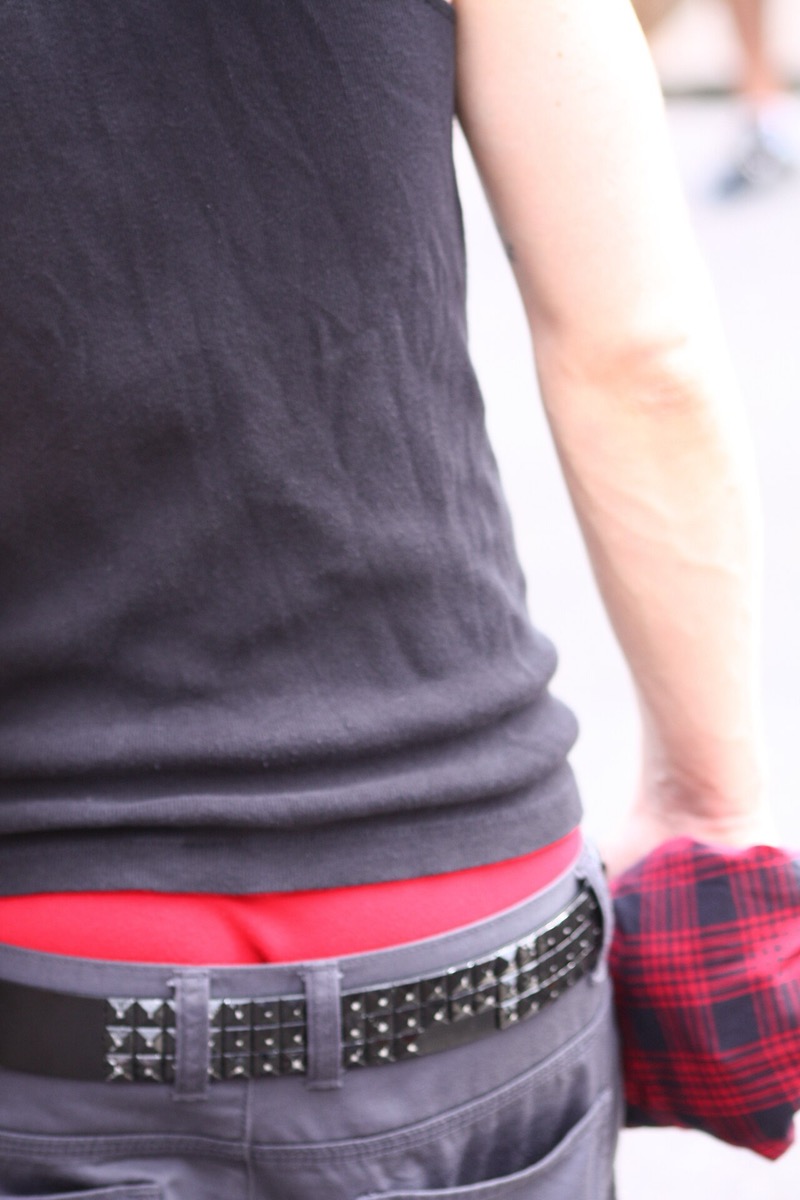
Photo credit: Photo: Tom Evil, CC BY 2.0, via Wikimedia Commons
Jeans worn low enough to show the boxers, the hip-hop look that parents, principals and eventually city councils spent two decades trying to legislate away. Everyone had a theory about where it came from; nobody could prove one.
Nobody has pinned down where sagging started. The story most often told is that it came out of the American prison system, where belts can be prohibited and issued clothing runs oversized, so trousers drooped. A 2023 retrospective in Scalawag magazine argued that this account became sagging's "defining mythos" and got more sensationalized every time it was retold, and pointed out that baggy, oversized fits run all through twentieth-century Black music, from the zoot suits of the jazz era to the hammer pants of the turn of the 1990s. What is documented is the spread: the style was popularized by hip-hop musicians in the 1990s, reached mainstream notice tied to West Coast imagery and Tupac, and by the 2000s had been made ubiquitous by Southern and Midwestern rappers, Lil Wayne and Nelly among them.
The backlash outlasted the trend. Virginia and Louisiana legislatures proposed statewide bans in 2004 and both failed on free-expression grounds, after which the fight moved to town councils across the South. Delcambre, Louisiana passed an indecent-exposure ordinance in June 2007; Shreveport's 2007 version carried a fine of up to $250 and 32 hours of community service, Alexandria, Louisiana added mandatory counseling, and Pine Lawn, Missouri fined the wearer $100 and could fine the parents $500 or jail them for 90 days. Hahira, Georgia and Pagedale, Missouri followed in 2008, Albany, Georgia in November 2010 with a limit of three inches below the top of the hips, Opa-locka, Florida that December, Fort Worth's transit authority barred it on its buses in June 2011, and Florida's schools by state law for the 2011–12 year. Wildwood, New Jersey banned it on the boardwalk in 2013 and Timmonsville, South Carolina in 2016.
The ordinances did not hold up well. In Riviera Beach, Florida a 17-year-old was jailed overnight for sagging in 2008, and a judge threw out the ordinance as unconstitutional within a year of its passage. Asked about the bans on MTV that November, Barack Obama, days from the election, said "I think people passing a law against people wearing sagging pants is a waste of time," then added that "brothers should pull up their pants." Shreveport's police made 726 arrests under its ordinance between 2007 and 2019, 98 percent of them of Black residents, and the city council repealed it in 2019 after a man died during a sagging stop.
Similar items

JNCO Jeans
JNCO jeans were the uniform of 90s youth rebellion: outrageously baggy denim with cavernous pockets so deep you could lose a Walkman, decorated with zipper details and an attitude that rejected traditional fit. If you weren't tripping over your cuffs or making those pockets jingle, you weren't dressed for the decade.

Cross Colours
Color-blocked jeans, bold-lettered tees, and a message stitched into every garment: "Clothing Without Prejudice." Cross Colours dressed the Fresh Prince, half of early-90s hip-hop, and every kid who wanted to look like MTV — then vanished almost overnight when its biggest retailer went bankrupt.

Tommy Hilfiger
Prep meets hip-hop: the flag logo of a 1985 New York label, co-opted by Snoop Dogg, Aaliyah, and every mall kid of the 90s who wore it oversized and felt instantly cooler. The red-white-and-blue became a uniform.
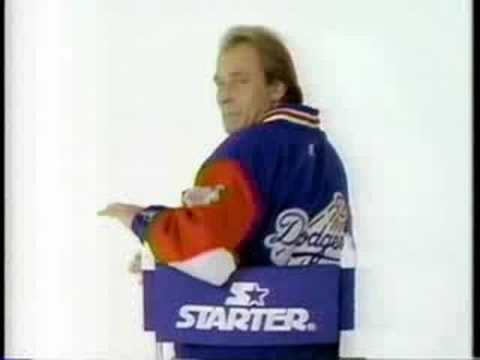
Starter Jackets
Starter's nylon and satin team jackets were the uniform of 90s cool — oversized windbreakers emblazoned with NBA and NFL team logos that transformed playground basketball courts and city streets into stadiums of style. Starter jackets became so coveted they sparked robberies, making them perhaps the decade's most dangerous fashion statement.