Reader Rabbit

The Learning Company's reading-game rabbit, who sorted and spelled three-letter words on Apple IIs in 1984 and was still teaching preschoolers on Windows and Mac in the late '90s. It started two years before Math Rabbit, not with it.
Reader Rabbit began as Reader Rabbit and the Fabulous Word Factory, an Apple II game The Learning Company released in 1984. It was conceived by the Grimm sisters: Leslie Grimm wrote the game, and Corinne and Cindy did the art. Leslie developed the next version while bedridden with a fractured disc, using a detachable keyboard a colleague provided. That version, 2.0, arrived in 1986 alongside Math Rabbit, two years after the original. The Word Factory had four activities: a Sorter for picking words that start with a given letter, a Labeler for spelling words to match pictures, a Word Train where you pick a word that differs slightly from the last, and a Matchup card game, built on more than 200 three-letter words. A talking Apple IIGS version followed, and a 1991 MS-DOS remake added VGA color, sound cards and a mouse.
In the '90s the rabbit became a franchise. Math Rabbit was renamed Reader Rabbit's Math, the series expanded to more subjects and ages, and by 1996 it included animated storybooks. Reader Rabbit got friends like Sam the Lion and Matilda the Mouse, and the games covered kids from infancy to age nine. In 1995 The New York Times noted that the company's flagship was "unusual in crossing over from home use to in-school, curriculum-based learning." That was the year SoftKey took over The Learning Company in a hostile bid, adopted its name, and cut prices on budget titles to $12.99 in plain jewel cases. SoftKey's Kevin O'Leary later recalled, "I'd get a $12 million order for Reader Rabbit... it would blow up behind me, the logistics. I couldn't deliver."
Mattel bought The Learning Company in 1998 in a $3.6 billion deal and planned interactive Reader Rabbit plush toys. Within a year it was selling off the software to avoid bankruptcy, and the brand went to Riverdeep. The early 2000s brought the last major PC releases, and in 2002 the Times was calling the series an "educational staple in schools and homes."
Similar items

Number Munchers
MECC's math game from the school computer lab: steer a green Muncher around a grid, eat every number that fits the rule, and stay away from the Troggles. It came out on the Apple II in 1986 and was still in computer labs through the '90s.
Computer Lab
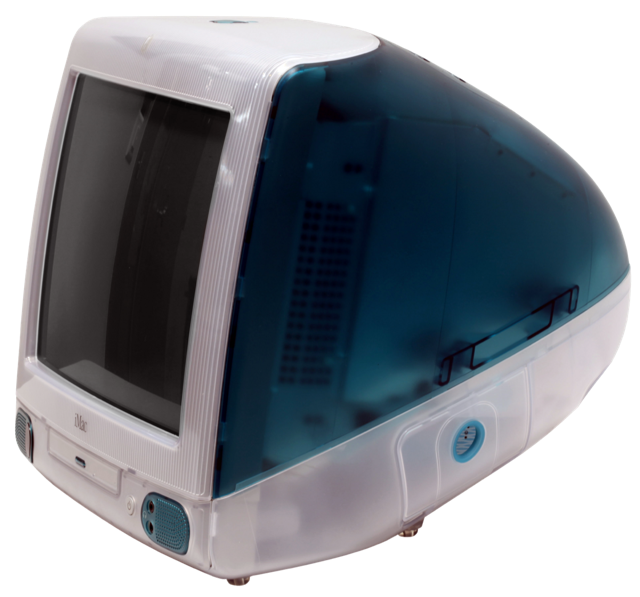
The weekly pilgrimage down the hall to the room full of beige Apple computers, where you'd slot in a floppy disk, wait, and take turns dying of dysentery on the Oregon Trail. "Computer Day" was equal parts educational software and the first place a lot of kids ever touched a keyboard.

Math Blaster
The space shooter your parents wanted you to play: math problems zip across the screen, you fire the cannon at the correct answer, and somehow you're drilling fractions without noticing. Every 90s school computer lab had it, and every kid who touched it felt like an arcade ace instead of a student.

Kid Pix
Broderbund's gloriously chaotic kids' drawing program — the one with the honking sound effects, the rubber stamps, and the stick of dynamite that blew your whole picture apart in a burst of black-and-white circles. For a generation of 90s kids it was the first "art" they ever made on a computer.