Kid Pix

Broderbund's gloriously chaotic kids' drawing program — the one with the honking sound effects, the rubber stamps, and the stick of dynamite that blew your whole picture apart in a burst of black-and-white circles. For a generation of 90s kids it was the first "art" they ever made on a computer.
Kid Pix started with a dad watching his kid struggle. Craig Hickman built it after seeing his three-year-old son wrestle with MacPaint, aiming for something a small child could actually use. He released the original black-and-white version as freeware in November 1989; a color edition, Kid Pix Professional, followed in June 1990. In March 1991 Broderbund published the mass-market Kid Pix 1.0 for Macintosh at $59.95, and it swept up software-of-the-year honors including a MacUser Eddy.
What made it unforgettable was that every tool was a toy. Brushes dripped and sprayed, stamps clacked, and each action fired off a "wacky" sound effect. There was the Wacky Brush, a Mixer that smeared your work, an "Undo Guy" character for mistakes — and the beloved screen-clear: an eraser option that detonated a stick of dynamite and blew the entire canvas apart in alternating black-and-white concentric circles. Kid Pix Studio (1994) piled on animation ("Moopies") and slideshows.
It became the definitive drawing program of the 90s classroom and home computer, bundled everywhere and beloved for being loud, silly, and impossible to break. Its corporate home changed hands repeatedly — Broderbund was absorbed by The Learning Company in 1998, which went to Mattel in 1999, then to Riverdeep — but the software survived every sale. Software MacKiev acquired full rights in 2011 and still develops it today, decades after that first freeware release.
Similar items
Computer Lab
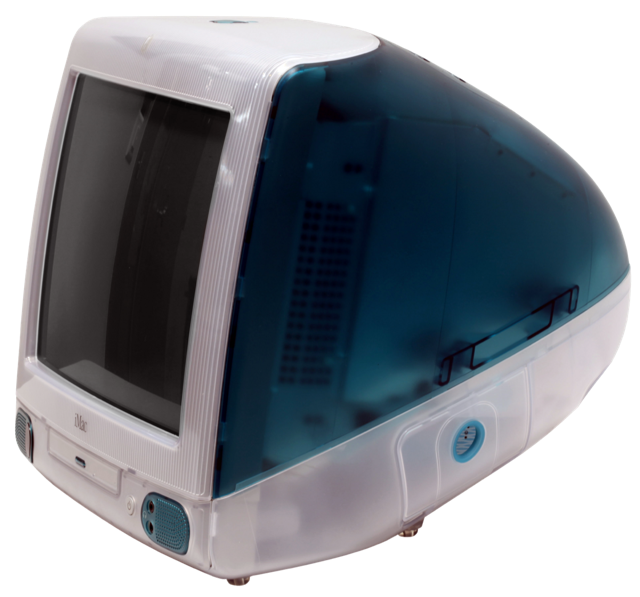
The weekly pilgrimage down the hall to the room full of beige Apple computers, where you'd slot in a floppy disk, wait, and take turns dying of dysentery on the Oregon Trail. "Computer Day" was equal parts educational software and the first place a lot of kids ever touched a keyboard.

The Oregon Trail
The computer-lab game that taught westward expansion through dysentery and desperation. Every 90s kid named their wagon party after friends, overhunted buffalo, gambled on river crossings, and died of unexpected causes while technically learning American history.

Mario Paint
The Super Nintendo game that came with a mouse. You drew pictures, animated little loops, swatted flies, and wrote songs by dropping Mario heads and cat meows onto a music staff — and if you were serious, you recorded the results to the VCR. Decades later its goofy little music maker became a YouTube genre all its own.

Living Books
Brøderbund's CD-ROM storybooks, starting with Mercer Mayer's Just Grandma and Me in 1992: a page read aloud, then a screen where everything you clicked did something. Arthur, the Berenstain Bears and Dr. Seuss followed, and a generation learned to read with a mouse in its hand.