Putt-Putt Joins the Parade

The game that turned thousands of toddlers into gamers without them noticing: a cheerful purple convertible earns his way into Cartown's pet parade in a world where everything you click sings, dances, or talks back. Humongous Entertainment's very first game — and for countless kids, theirs too.
Putt-Putt Joins the Parade was the first game produced by Humongous Entertainment, the studio Shelley Day and LucasArts veteran Ron Gilbert founded in March 1992 in Woodinville, Washington, with a clear mission: make games for young kids that felt like play, not homework. Released for MS-DOS on November 6, 1992, it ran on the SCUMM engine Gilbert had helped build at LucasArts — the same technology behind the era's great adventure games, retooled for players who couldn't read yet.
The premise was slight but perfect. Putt-Putt, a cheerful little purple convertible, hears about Cartown's pet parade and wants in — so he earns money, gets a car wash, buys a balloon, and befriends a stray puppy by giving him a bone, naming him Pep. The genius was in the clicking: nearly everything on screen responded. A flower sang, a door talked back, and the game became a conversation instead of a challenge. It sold over 300,000 copies, and the first three Putt-Putt games passed a combined one million units by June 1997.
The kids agreed with the sales charts: a 1997 University of Texas study found it the most frequently played of thirteen educational programs tested — not because anyone had to, but because they wanted to. For a whole cohort this was the first video game they ever touched, the one that taught them computers could be gentle, playful, and worth exploring. Putt-Putt went on to more adventures, and Humongous became the gold standard of 90s kids' software.
Similar items

Putt-Putt
A cheerful purple convertible car who was born as a bedtime story and became a staple of 90s family PCs. Putt-Putt's point-and-click adventures were forgiving, consequence-free, and brimming with clickable animations — nothing to lose, everything to discover.
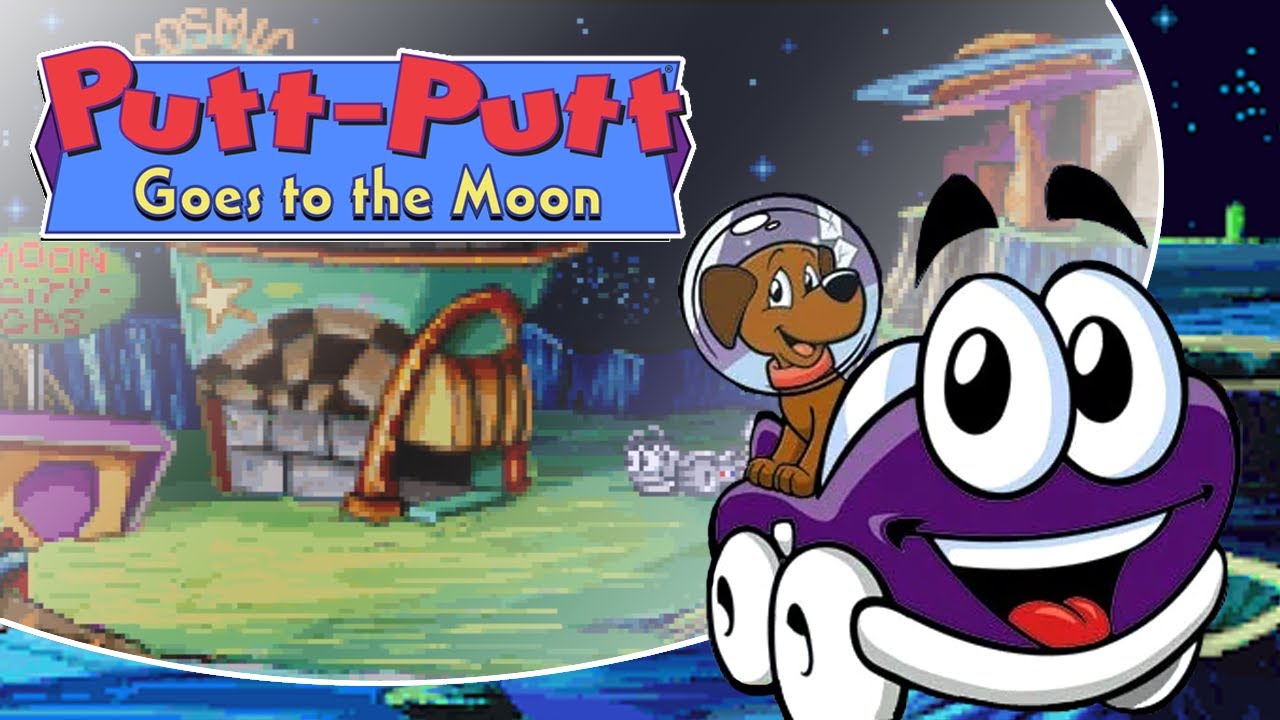
Putt-Putt Goes to the Moon
A fireworks-factory accident blasts the little purple car to the Moon, where he's stranded, scared — and then befriended by Rover, a lonely lunar rover left behind by astronauts. Kids remember the arc viscerally: lost far from home, then puttering back with a new best friend.

Super Solvers: Gizmos & Gadgets!
Race against Morty Maxwell to build faster vehicles by solving science puzzles and outsmarting Cyber Chimps. This Learning Company edutainment staple disguised lessons about simple machines and magnetism as competitive car-building challenges.

Math Blaster
The space shooter your parents wanted you to play: math problems zip across the screen, you fire the cannon at the correct answer, and somehow you're drilling fractions without noticing. Every 90s school computer lab had it, and every kid who touched it felt like an arcade ace instead of a student.