Putt-Putt Goes to the Moon
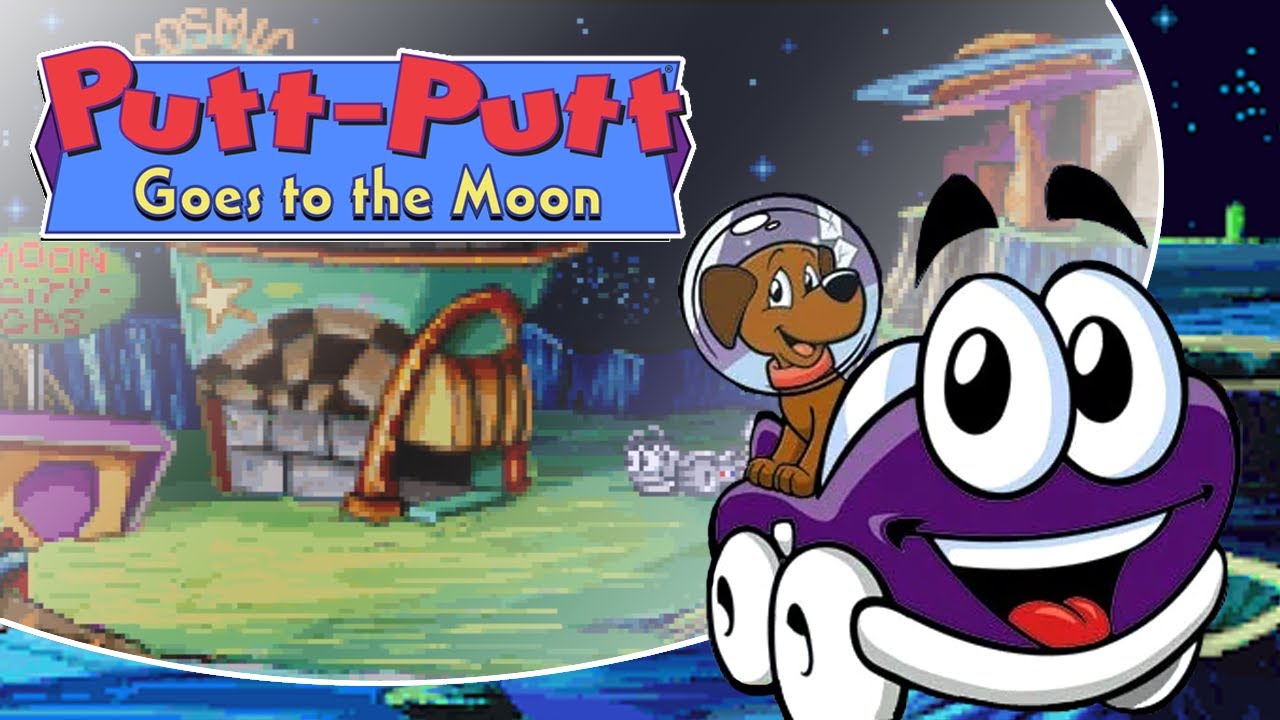
A fireworks-factory accident blasts the little purple car to the Moon, where he's stranded, scared — and then befriended by Rover, a lonely lunar rover left behind by astronauts. Kids remember the arc viscerally: lost far from home, then puttering back with a new best friend.
Humongous Entertainment followed up its debut fast: Putt-Putt Goes to the Moon released October 1, 1993 for MS-DOS, not even a year after the original, on the same SCUMM engine. The premise pushed the gentle formula somewhere bolder — Putt-Putt and his puppy Pep visit Mr. Firebird's Fireworks Factory, a stray firecracker goes off, and Putt-Putt is launched all the way to the Moon.
What could have been pure slapstick landed instead as a small emotional epic for five-year-olds. Stranded on a strange gray world, Putt-Putt meets Rover, a lunar rover left behind by astronauts, and the two work through Moon City gathering parts to build a rocket home. The scare of being lost, the comfort of an unexpected friend, the quiet satisfaction of engineering your own way back — kids absorbed the whole arc between mouse clicks. Ports spread it across the era's family machines: 3DO in 1994, then Mac and Windows in 1995.
It was also the end of an era in miniature — the last game in the series drawn in pixel art before the studio's look evolved. The series rolled on with Putt-Putt Saves the Zoo in 1995, but for many kids Moon was the one that stuck: proof that a children's game could be tender about being scared and still end with a rocket you built yourself.
Similar items

Putt-Putt
A cheerful purple convertible car who was born as a bedtime story and became a staple of 90s family PCs. Putt-Putt's point-and-click adventures were forgiving, consequence-free, and brimming with clickable animations — nothing to lose, everything to discover.

Putt-Putt Joins the Parade
The game that turned thousands of toddlers into gamers without them noticing: a cheerful purple convertible earns his way into Cartown's pet parade in a world where everything you click sings, dances, or talks back. Humongous Entertainment's very first game — and for countless kids, theirs too.

Math Blaster
The space shooter your parents wanted you to play: math problems zip across the screen, you fire the cannon at the correct answer, and somehow you're drilling fractions without noticing. Every 90s school computer lab had it, and every kid who touched it felt like an arcade ace instead of a student.

Super Solvers: Gizmos & Gadgets!
Race against Morty Maxwell to build faster vehicles by solving science puzzles and outsmarting Cyber Chimps. This Learning Company edutainment staple disguised lessons about simple machines and magnetism as competitive car-building challenges.