Super Solvers: Gizmos & Gadgets!

Race against Morty Maxwell to build faster vehicles by solving science puzzles and outsmarting Cyber Chimps. This Learning Company edutainment staple disguised lessons about simple machines and magnetism as competitive car-building challenges.
The Learning Company released Super Solvers: Gizmos & Gadgets! in 1993 as part of its Super Solvers edutainment series. The premise was a race: the villain Morty Maxwell, the "Master of Mischief," has taken over the Shady Glen Technology Center, and the player must race him to build vehicles faster across three categories—automotive, alternative-energy, and aircraft.
The game's core mechanic wove education and play. Parts were locked behind science puzzles about simple machines, magnets, basic electronics, and forms of energy. Learning the concept unlocked the part; solving it faster unlocked better parts. Morty's "Cyber Chimps" would steal parts mid-race, and you'd distract them by throwing bananas to make them nap—a layer of arcade-style interference wrapped around the educational scaffolding.
The full campaign was 15 challenge races. Win all of them and you beat Morty and the game. Losing a race was possible but never final; you could retry as often as needed. Aimed at kids roughly ages 7 to 12, it lived in the sweet spot of educational games that didn't feel like homework.
Gizmos & Gadgets was a fixture of 90s school computer labs nationwide, where teachers queued classroom rotations to get kids onto the science-games cluster. It also found its way into home libraries alongside other Learning Company titles like Reader Rabbit, becoming synonymous with the era when educational software meant actual challenge and interactivity rather than drill-and-practice.
Similar items

Putt-Putt
A cheerful purple convertible car who was born as a bedtime story and became a staple of 90s family PCs. Putt-Putt's point-and-click adventures were forgiving, consequence-free, and brimming with clickable animations — nothing to lose, everything to discover.

The Magic School Bus
Ms. Frizzle's class rode the Magic School Bus into the bloodstream, through outer space, and into a volcano—all while learning science in four seasons of PBS's most unforgettable animated series. Lily Tomlin's fearless teacher and Bruce Degen's original illustrations made learning an adventure, and every kid left knowing 'Take chances, make mistakes, get messy!'

Scholastic Book Fairs
The ritual: your school gym transforms overnight into a pop-up bookstore of rolling display cases, and you wander the aisles with a wish list and a budget. Scholastic Book Fairs dominated the 90s market, though what kids actually bought — glittery gel pens, novelty pencils, poster books — often had nothing to do with the Goosebumps stacks they wandered past.
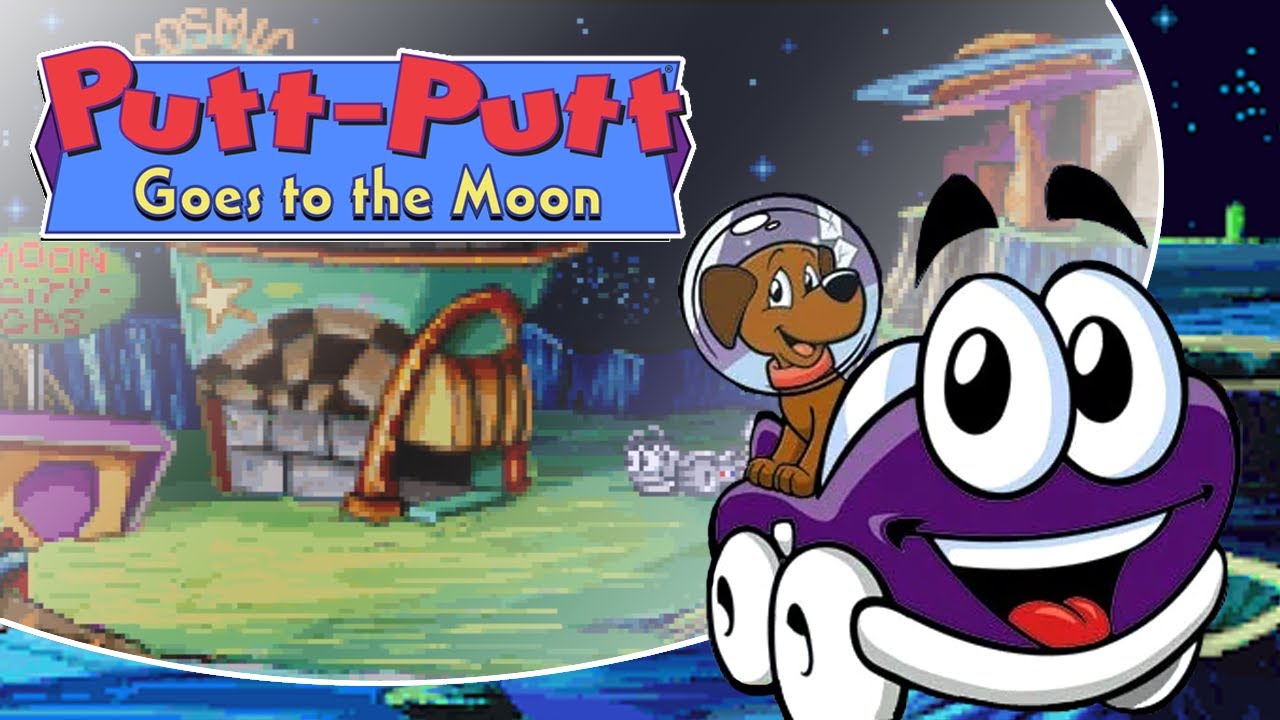
Putt-Putt Goes to the Moon
A fireworks-factory accident blasts the little purple car to the Moon, where he's stranded, scared — and then befriended by Rover, a lonely lunar rover left behind by astronauts. Kids remember the arc viscerally: lost far from home, then puttering back with a new best friend.