OK Soda

Coca-Cola's aggressively ironic mid-'90s experiment: a soft drink built on market research showing that "OK" was the most recognizable word on Earth. The gray neo-noir cans were illustrated by alternative-comics artists Daniel Clowes and Charles Burns, the slogan promised only that "Things are going to be OK," and the whole thing was dead within a year.
In 1994, Coca-Cola marketing chief Sergio Zyman — the executive behind New Coke, rehired by CEO Roberto Goizueta — launched OK Soda in roughly twenty test markets (Boston, Denver, Seattle, and Austin among them), built on an audacious corporate theory: company research had found "OK" was the world's most recognizable word, with "Coke" second. Why not bottle the winning word? The campaign, created by Wieden+Kennedy, leaned into Gen-X cynicism with deadpan manifestos printed on the cans ("What's the point of OK? Well, what's the point of anything?"), a 1-800-I-FEEL-OK hotline with personality-test prompts, "Coincidence" chain letters, and ads that compared the drink's own taste to "carbonated tree sap." The gray neo-noir can designs, illustrated by Daniel Clowes and Charles Burns, became as much a draw as the citrusy fruit-punch cola inside — though Clowes, skeptical of the whole thing, gave his mascot the facial features of Charles Manson; nothing in his contract said he couldn't.
Despite the cultural novelty, OK Soda never escaped its test markets. Zyman had promised Goizueta at least 4% of the U.S. beverage market; OK never topped 3% in any single test city. The project was canceled roughly seven months after kickoff and officially declared dead in 1995. Then the afterlife began: a newsgroup, alt.fan.ok-soda, stayed active for years, and intact cans now command real money from collectors — a strange legacy for a product that was cynical about legacy itself.
Similar items
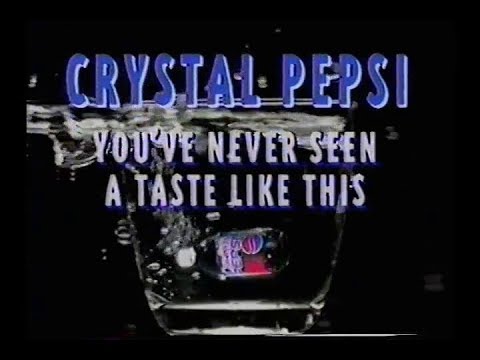
Crystal Pepsi
The clear cola that tasted like 90s optimism and regret mixed together. Crystal Pepsi was caffeine-free, marketed on a fever dream of purity, and backed by a Super Bowl ad that tried desperately to make it cool.
Josta
PepsiCo's high-energy guaraná drink, marketed as "Better do the good stuff now" and remembered for its dark snarling-cat branding. Often credited as the first energy drink from a major U.S. beverage company, it arrived years ahead of the energy-drink boom — and was gone by 1999.
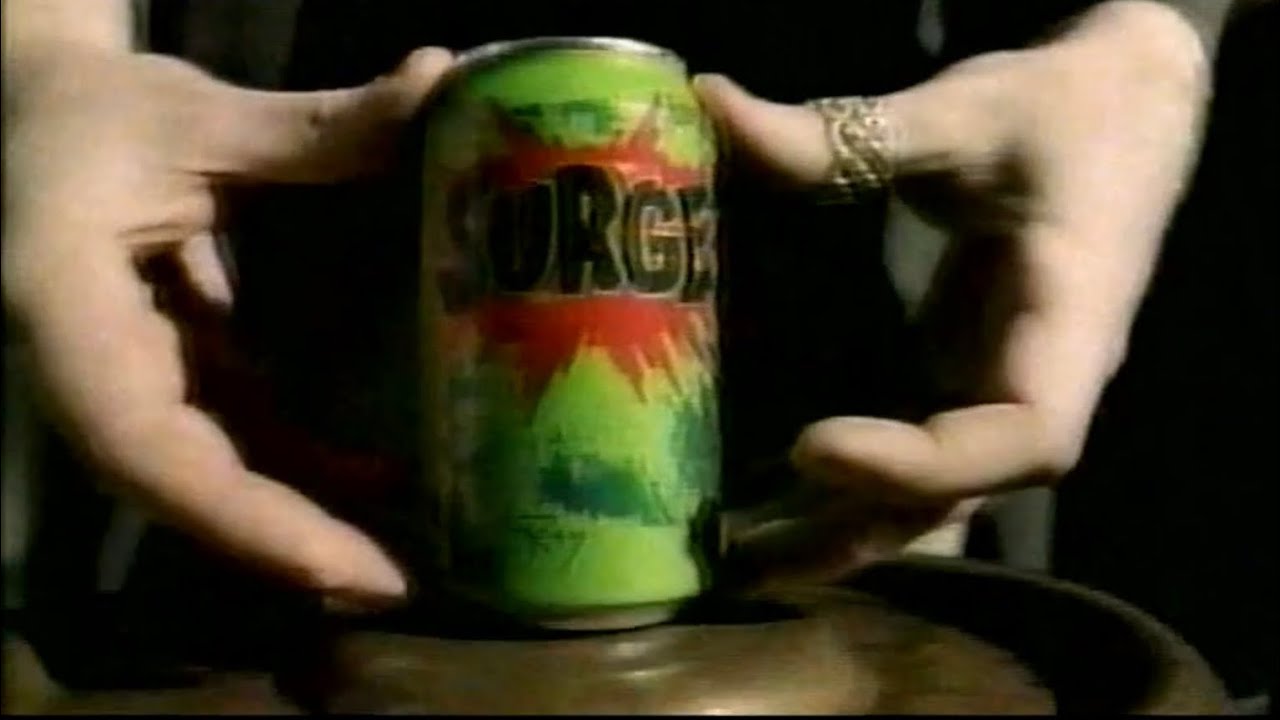
Surge
Coca-Cola's aggressively marketed neon-green citrus soda that positioned itself as the extreme-sports answer to Pepsi's Mountain Dew. Heavy on caffeine and attitude, Surge fueled the mayhem marketing of the late 90s before vanishing from shelves in 2003 — only to surge back after a passionate fan movement brought it to Amazon in 2014.
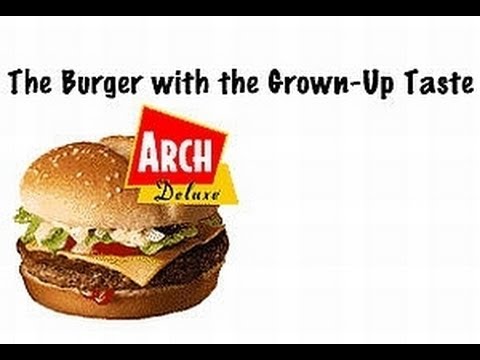
McDonald's Arch Deluxe
McDonald's 1996 gamble: a quarter-pound burger on a potato-flour bun with peppered bacon, Dijonnaise, and a mandate to drag the golden arches upmarket. The ads showed kids recoiling from its sophistication — "kids hate it" was the actual pitch. It's remembered as one of the most expensive flops in fast-food history.