mIRC

The Windows chat client that turned Internet Relay Chat from a text-only Unix curiosity into the place where fandoms, warez traders, Quake clans and lonely teenagers typed at each other all night. Written by one student in London in 1995, it was downloaded more than 40 million times, and its scripts, DCC file transfers and channel wars defined online life before the social networks.
Internet Relay Chat came first. Jarkko Oikarinen wrote it at the University of Oulu in Finland in August 1988 to replace a chat program on the university's bulletin board, and it spread server by server across Finnish universities, then to Oregon and Denver, then everywhere. By 1991 it was carrying eyewitness reports from the Soviet coup attempt through a media blackout, and through the 1990s it fractured into the big networks people remember: EFnet, the Undernet fork of 1992, DALnet in 1994 with its longer nicknames and channel-registration services, and IRCnet after the Great Split of 1996.
mIRC was what put it on an ordinary PC. Khaled Mardam-Bey, a British programmer born in Jordan, found IRC in 1994 while studying for a cognitive science degree at the University of Westminster, when it was used mostly through text-only shell clients. "I wondered if I could create an IRC client that made IRC more fun and accessible," he later wrote. He expected a small project and released the first version on February 28, 1995. It was shareware with a 30-day evaluation, and its popularity, in his words, grew dramatically. Thousands of emails asking for features turned it into "an all-consuming, never-ending project and full-time job," and he has made his living from it ever since; asked what the "m" stands for, he has joked that it is "moo."
What made mIRC the one everybody used was its scripting language, which could add a custom command or completely change how the program looked and behaved, and its DCC file sharing with a built-in file server, which made it a trading post as much as a chat program. The same power had a dark side: scripts that abused the $decode identifier tricked users into handing control of their client to strangers, a problem reported in 2001; mIRC eventually disabled it by default. In 2003 Nielsen/NetRatings ranked mIRC among the ten most popular internet applications, and its download count on CNET's Download.com has passed 40 million. IRC's golden era ran through the 1990s and early 2000s, with QuakeNet alone holding 240,000 users in 2004, before the networks lost around 60 percent of their users between 2003 and 2012 to social media. mIRC is still developed, more than two decades on, which is more than can be said for most of the channels it once filled.
Similar items

ICQ
The pioneering instant messenger with the green-flower icon, the random UIN number, and the unmistakable "Uh oh!" message alert. Launched in 1996, ICQ basically invented consumer IM before AIM and MSN took over.

AIM & MSN Messenger
The after-school ritual: logging on to a dial-up modem, scanning your buddy list, typing AIM away messages packed with song lyrics and veiled drama, and knowing your 12-year-old screen name would haunt you forever. AIM and MSN Messenger were the social nervous system of the '90s and 2000s — instant, informal, and utterly addictive.
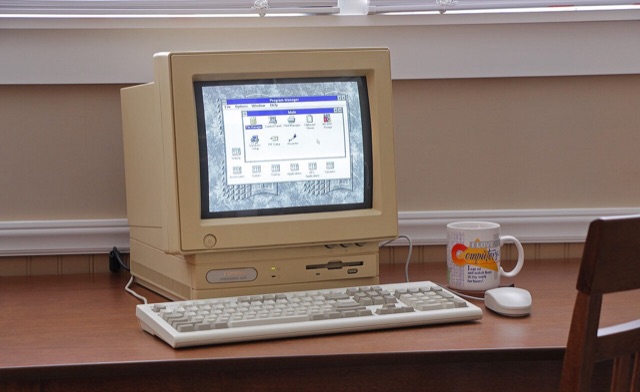
AOL Private Chat Rooms
The hidden rooms where 90s internet culture actually lived. Capped at 23 people, joinable only if you knew the name, and greeted by universal "A/S/L?" — private rooms were where friendships, flirtations, and warez trades quietly thrived.
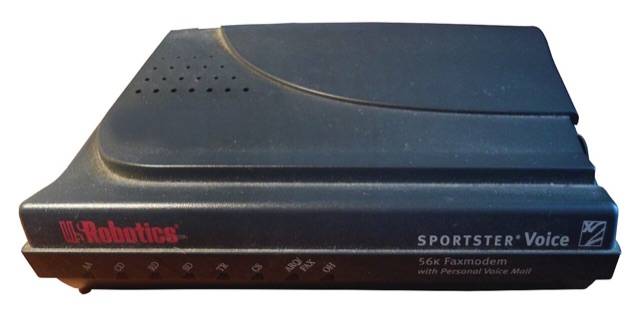
Dial-Up Internet
That modem squeal. The frozen phone line. "Get off the internet, I need to make a call." Dial-up was the sound and the ritual of getting online for a generation of American homes — peaking in the dot-com years, overtaken by broadband around 2004, and lingering until AOL finally hung up in 2025.