Hard Knock Life (Ghetto Anthem)

Jay-Z's breakthrough single samples the orphans' chorus from Broadway's Annie, turning the hardest block-level rap into a stadium singalong. The song that taught America—and taught Broadway—that hip-hop didn't need permission to reinvent itself. A masterclass in audacity that cleared the charts and rewrote the rules.
Released in October 1998 from Vol. 2... Hard Knock Life, "Hard Knock Life (Ghetto Anthem)" was built by producer The 45 King from one of Broadway's most recognizable hooks: the orphans' chorus from Annie (1977), written by Charles Strouse and Martin Charnin. The collision was intentional—Jay-Z and his team had secured a sample clearance from the songwriters themselves, but the story of how Jay-Z won that clearance became as legendary as the song. In his book Decoded, Jay-Z admitted to writing a letter to Annie's creators claiming he'd won an essay contest as a seventh grader in Bed-Stuy whose prize was a trip to see the musical on Broadway. It was a fabrication, a clever hustle: he'd actually watched Annie on television like millions of other kids. The songwriters bought the story and cleared the sample.
The single peaked at #15 on the Billboard Hot 100 and #2 in the UK, becoming Jay-Z's crossover moment. The album itself won the Grammy for Best Rap Album in 1999—and Jay-Z boycotted the ceremony anyway, declaring that "too many major rap artists continue to be overlooked," with DMX's shutout that year, despite two #1 albums, the sorest point of all.
The song's genius was its democratic ambition: it took the orphans' despair from Annie—"It's the hard knock life for us"—and flipped it into a street anthem, proving that sampled pop hooks, when deployed by the right artist, became universal. A Broadway orphan and a Marcy Projects hustler found each other in the same four-bar loop, and the culture moved.
Similar items

Jay-Z
Shawn Corey Carter rose from Marcy Projects hustler to rap's defining CEO, making the 2000s the decade when hip-hop conquered the boardroom. His Imperial period—from Hard Knock Life through The Black Album and beyond—turned street rap into stadium singalongs and Grammy gold. Jay-Z didn't just make hits; he made an industry, proving rappers could own their own records and empires. The 2000s belonged to him.

99 Problems
Rick Rubin stripped Jay-Z down to bare guitar and cowbell, and the Marcy Projects kid recited a real 1994 traffic stop so precisely that a law professor later published a journal article dissecting it. "99 Problems" was endlessly quotable, taught in law schools, and inescapable in 2004—the sound of Jay-Z staging his own exit.
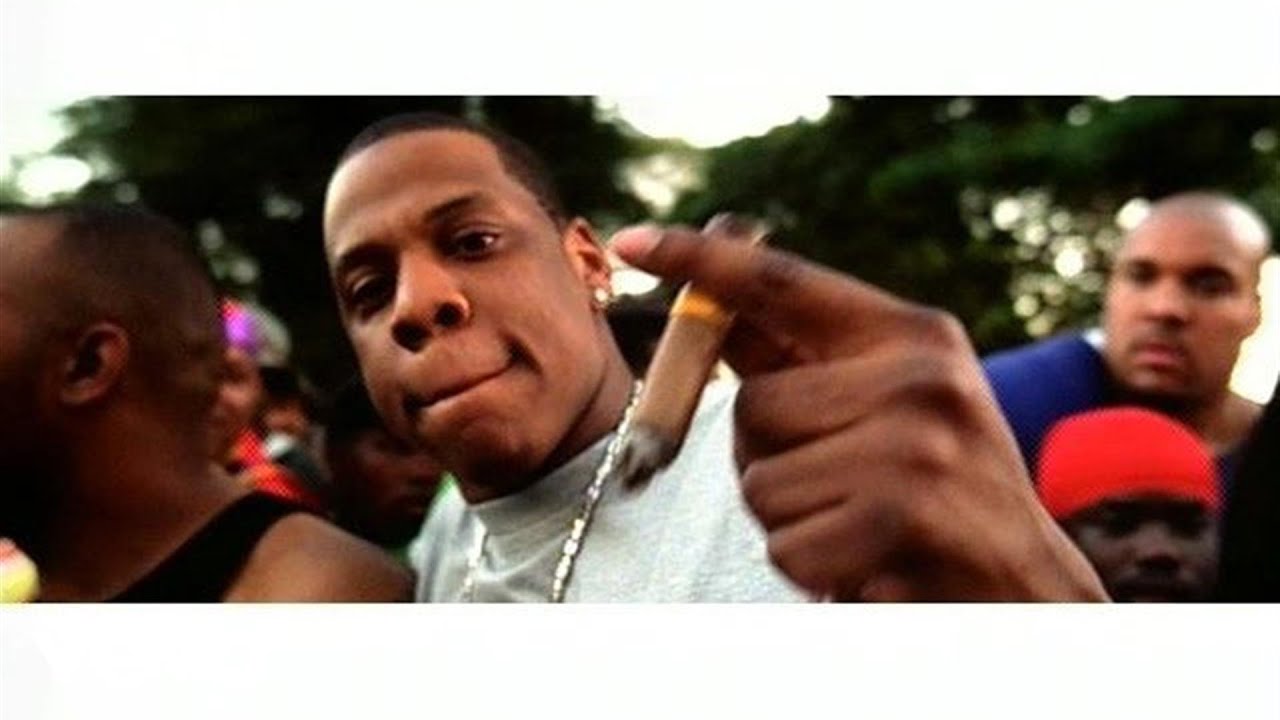
Big Pimpin'
Timbaland looped a flute line from a 1957 Egyptian melody, Houston's UGK traded verses with Jay-Z, and the result was the yacht-party anthem of 2000. The song was iconic enough to fuel a decade-long copyright fight—and brash enough that Jay-Z himself later disowned the lyrics in the Wall Street Journal.
![Video thumbnail — Coolio - Gangsta's Paradise (feat. L.V.) [Official Music Video]](https://i.ytimg.com/vi/fPO76Jlnz6c/maxresdefault.jpg)
Coolio — Gangsta's Paradise
The rare rap song that made parents and teenagers converge on the same chorus, and the moment gangsta rap genuinely crossed over into the mainstream. Coolio's dead-serious delivery over a gospel choir and an interpolation of Stevie Wonder proved that the genre had gone everywhere.