Big Pimpin'
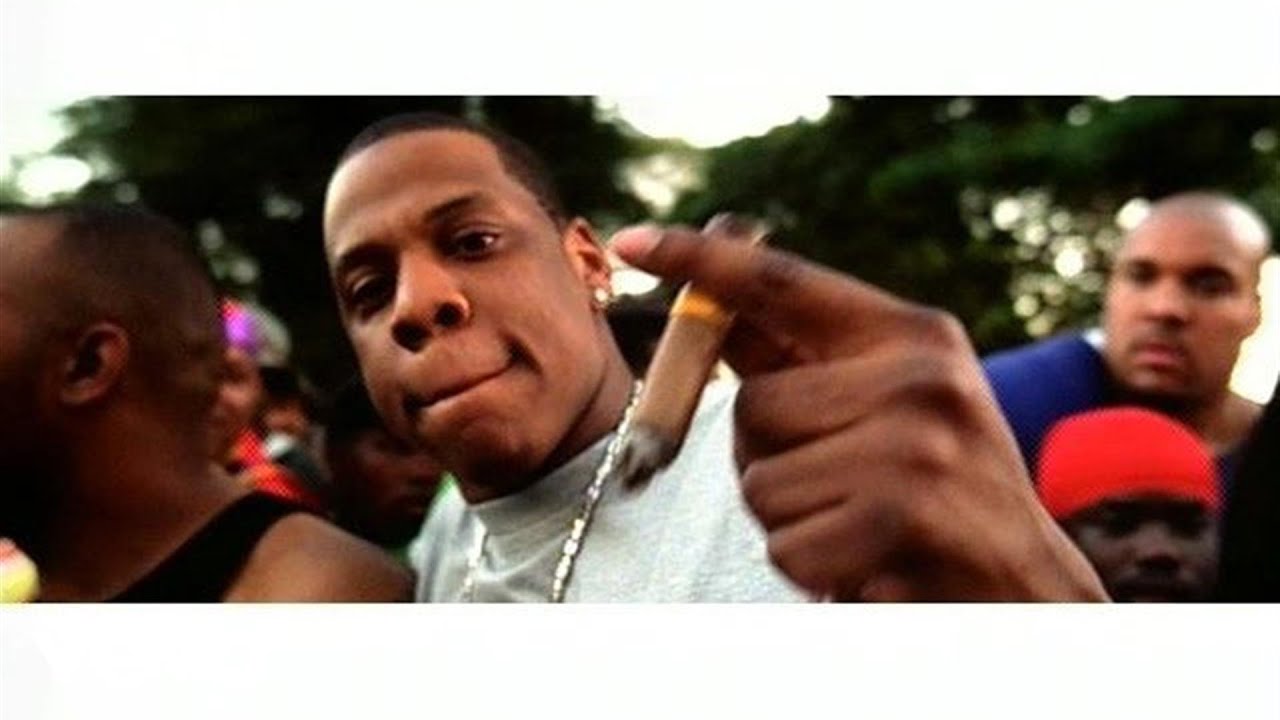
Timbaland looped a flute line from a 1957 Egyptian melody, Houston's UGK traded verses with Jay-Z, and the result was the yacht-party anthem of 2000. The song was iconic enough to fuel a decade-long copyright fight—and brash enough that Jay-Z himself later disowned the lyrics in the Wall Street Journal.
From Vol. 3... Life and Times of S. Carter (December 1999), released as a single in 2000, "Big Pimpin'" featured Houston's UGK—Bun B and the late Pimp C—over a beat by producer Timbaland. The production was Timbaland's signature move: a hypnotic flute loop that seemed to emerge from nowhere, built from "Khosara Khosara", a 1957 composition by Baligh Hamdi performed by Egyptian icon Abdel Halim Hafez. The song peaked at #18 on the Hot 100—respectable but not a smash—yet its cultural footprint was enormous. The Hype Williams music video, shot largely at Carnival in Trinidad, became the template for 2000s excess: money fluttering off a moving music truck, island beaches, champagne, and women in slow motion. Pimp C refused to fly to Trinidad to film his verse, so Williams shot him in Miami Beach instead, but the final cut stitched them seamlessly together, making the whole world feel like one yacht party.
The song's pleasures were real, but they came with a cost. In 2007, Osama Fahmy, the nephew of composer Baligh Hamdi, sued for copyright infringement, claiming the sample had never been properly licensed. The case went to trial in 2015, and Jay-Z testified about his use of the loop and the sample clearance process. The courts ruled in favor of Jay-Z and UGK. The Ninth Circuit Court of Appeals affirmed the decision in May 2018—a victory, but one that had stretched across a decade.
Years later came a rarer thing: the superstar disowning his own smash. Re-reading the lyric in a 2010 Wall Street Journal interview, Jay-Z said simply: "I can't believe I said that. And kept saying it. What kind of animal would say this sort of thing?" It was an admission of the gap between the man who made the hit and the man he'd become—and somehow the song's swagger survived the apology intact.
Similar items

Jay-Z
Shawn Corey Carter rose from Marcy Projects hustler to rap's defining CEO, making the 2000s the decade when hip-hop conquered the boardroom. His Imperial period—from Hard Knock Life through The Black Album and beyond—turned street rap into stadium singalongs and Grammy gold. Jay-Z didn't just make hits; he made an industry, proving rappers could own their own records and empires. The 2000s belonged to him.

Thong Song (Sisqó)
The platinum-blond Dru Hill frontman's solo signature — a 2000 smash so ubiquitous you couldn't escape it. 'She had dumps like a truck, truck, truck...' Sisqó turned a string section, a booming beat, and one very specific ode into the sound of that summer.

Hard Knock Life (Ghetto Anthem)
Jay-Z's breakthrough single samples the orphans' chorus from Broadway's Annie, turning the hardest block-level rap into a stadium singalong. The song that taught America—and taught Broadway—that hip-hop didn't need permission to reinvent itself. A masterclass in audacity that cleared the charts and rewrote the rules.

99 Problems
Rick Rubin stripped Jay-Z down to bare guitar and cowbell, and the Marcy Projects kid recited a real 1994 traffic stop so precisely that a law professor later published a journal article dissecting it. "99 Problems" was endlessly quotable, taught in law schools, and inescapable in 2004—the sound of Jay-Z staging his own exit.