Freddi Fish & Pajama Sam
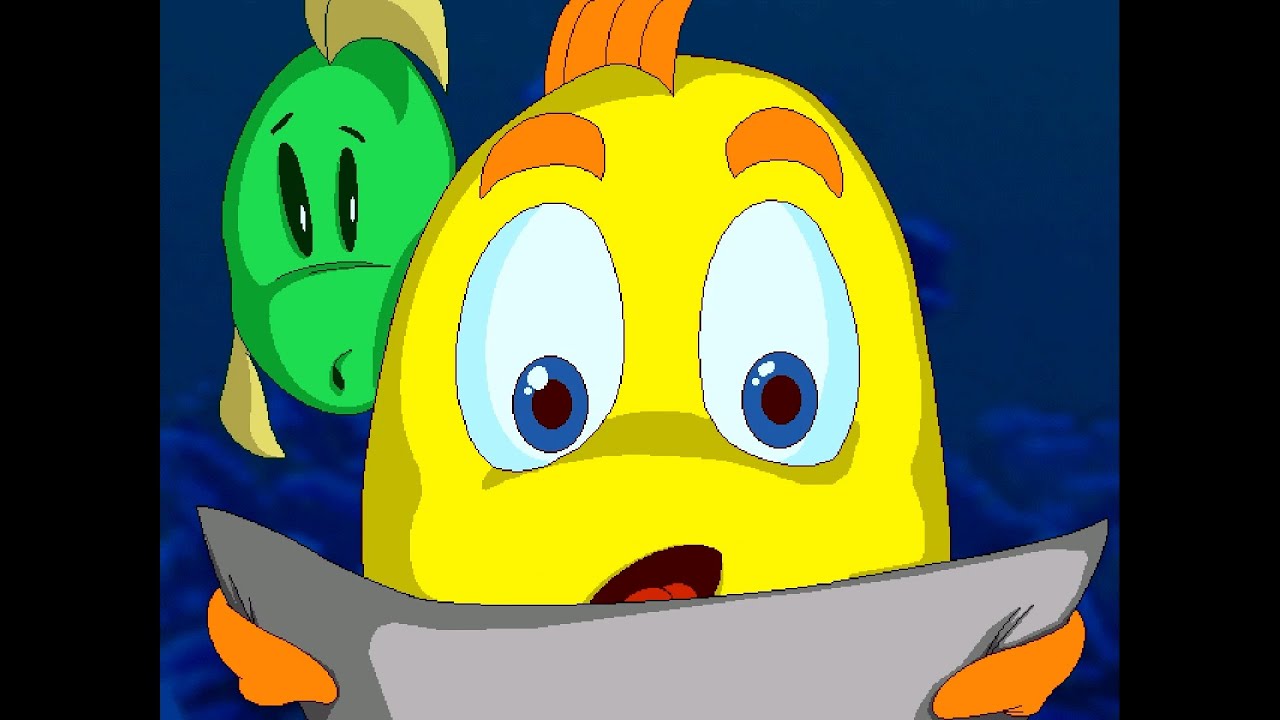
Humongous Entertainment's other Junior Adventures, the ones beside Putt-Putt on the family PC: a yellow fish detective and her friend Luther chasing Grandma Grouper's stolen kelp seeds from 1994, and a boy in a red cape who marches into his closet in 1996 to capture Darkness in his lunchbox. Point-and-click CD-ROMs on the LucasArts SCUMM engine, stuffed with click-anywhere gags.
Humongous Entertainment was formed in March 1992 in Woodinville, Washington, by Shelley Day and Ron Gilbert, the LucasArts veteran who had built the SCUMM engine; Tim Schafer suggested the name, and LucasArts licensed SCUMM to the new company, which ran every game on it until 2003. Its four Junior Adventure series for small children, Putt-Putt, Freddi Fish, Pajama Sam and Spy Fox, never crossed over, but each hid cameos of the others in the click-points that littered every screen, the animations that had nothing to do with the plot and were the reason kids kept clicking.
Freddi Fish and the Case of the Missing Kelp Seeds started in 1993 as a pixel-art MS-DOS game until Gilbert saw hand-drawn animation at a conference and had the whole thing restarted with painted art. Midway through, designer Tami Borowick changed Freddi from a boy to a girl, arguing that girls were always expected to play male characters and never the reverse, and cut lines the writer had added that made Freddi sound weak when a puzzle stumped her; she remains the only playable heroine among the Junior Adventures. Released November 7, 1994, with Annette Toutonghi and Mike McAuliffe voicing Freddi and Luther from Seattle's Bad Animals Studio, it sends the pair after Grandma Grouper's treasure chest of kelp seeds, stolen by two sharks, Boss and Spongehead, on behalf of the Squidfather. Quests were randomized each playthrough and sea urchins served as money. Computer Gaming World named it the number one family title of 1995, and sequels followed in 1996, 1998, 1999 and 2001.
Pajama Sam: No Need to Hide When It's Dark Outside arrived October 18, 1996, written by Dave Grossman and voiced by Pamela Adlon. Sam, facing his first night with the light off, copies his comic-book idol Pajama Man, puts on a red cape and purple mask, grabs a flashlight and lunchbox to capture Darkness, and falls through his closet into the Land of Darkness, where talking trees steal his gear. Darkness turns out to want a friend, and they play Cheese and Crackers, a tic-tac-toe variant. Sam had been designed as a pumpkin before getting his green head, a fact the third game nods to by making him wear a jack-o'-lantern. Three more Pajama Sam adventures followed through 2003, one of them ported to the PlayStation.
GT Interactive bought Humongous for $76 million in July 1996, and by October 2000 its games had passed 16 million copies sold. The label passed through Infogrames and Atari, went into Chapter 11 in 2013, and its characters went to Tommo, which re-released the originals in 2014 and, from 2022, put them on Switch and PlayStation 4, where a Freddi Fish Collection landed in May 2024.
Similar items

Putt-Putt
A cheerful purple convertible car who was born as a bedtime story and became a staple of 90s family PCs. Putt-Putt's point-and-click adventures were forgiving, consequence-free, and brimming with clickable animations — nothing to lose, everything to discover.
Backyard Baseball
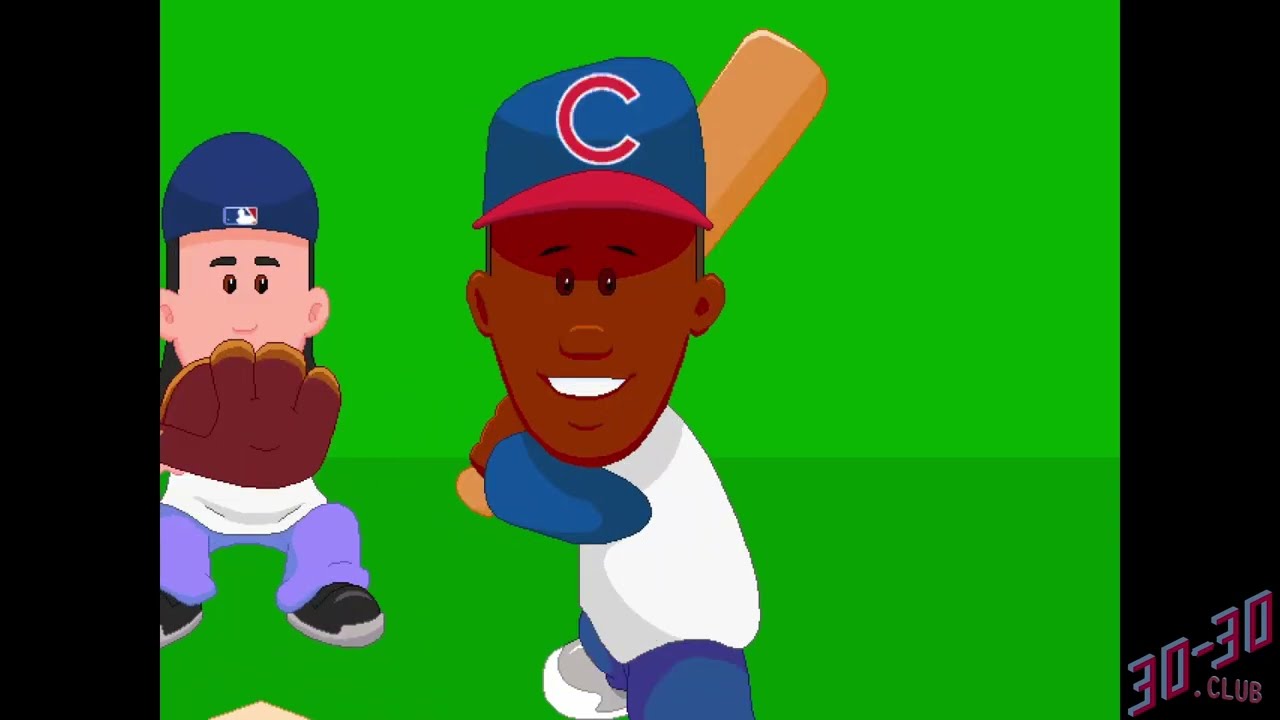
The kid-league sports game where you could draft a nine-year-old Ken Griffey Jr. — and still take Pablo Sanchez first overall. Humongous Entertainment's sandlot sim owned elementary-school computer labs, and its legend has only grown.

Living Books
Brøderbund's CD-ROM storybooks, starting with Mercer Mayer's Just Grandma and Me in 1992: a page read aloud, then a screen where everything you clicked did something. Arthur, the Berenstain Bears and Dr. Seuss followed, and a generation learned to read with a mouse in its hand.

Kid Pix
Broderbund's gloriously chaotic kids' drawing program — the one with the honking sound effects, the rubber stamps, and the stick of dynamite that blew your whole picture apart in a burst of black-and-white circles. For a generation of 90s kids it was the first "art" they ever made on a computer.