Elmer's Glue
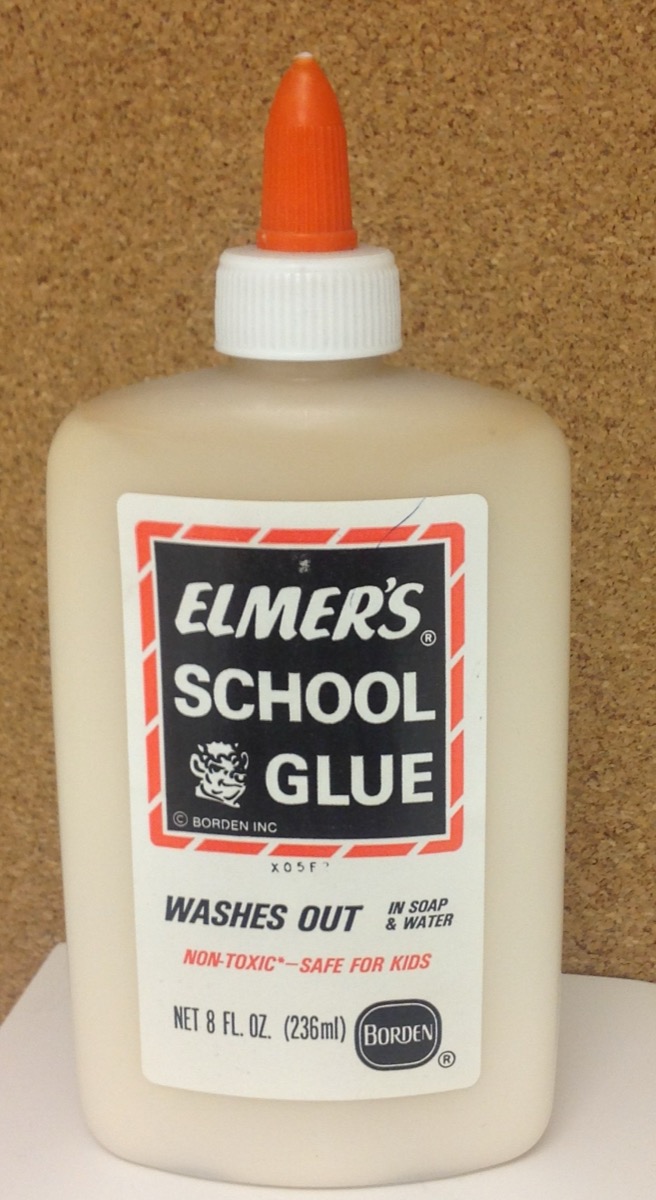
Photo credit: Photo: Apfenn1, CC BY-SA 4.0, via Wikimedia Commons
The white bottle with the orange twist cap and the bull on the label — the glue of every 90s classroom, and the raw material of two sacred rituals: peeling dried glue off your palm, and the (never-quite-true) legend of the kid who ate paste.
Borden — the dairy company founded by Gail Borden in 1857 — bought the Casein Company of America in 1929 and introduced its first consumer glue, Cascorez, in 1947. It became Elmer's Glue-All, the first multipurpose consumer white glue. The mascot came from Borden's existing barnyard: Elmer the Bull was created in 1940 as the husband of Elsie the Cow, Borden's dairy spokesanimal, and in 1951 Elmer was officially assigned to the whole adhesive line — which is why there's a bull on a bottle of glue.
The classroom bottle assembled itself piece by piece: the orange twist cap arrived in 1962, replacing an earlier glass bottle with a wooden applicator; Elmer's School Glue launched in 1968 as the first white glue that washed out of clothes, making it the standard for classrooms where macaroni art and popsicle-stick cabins were the curriculum; glue sticks followed in 1983, built at educators' request.
The corporate ownership shifted around the unchanging bottle: Borden spun off Elmer's in 1999, Berwind acquired it in 2003, and Newell bought it for $600 million in 2015. Then, in the later 2010s, the DIY slime craze made Elmer's the key ingredient of a new generation's after-school ritual — school glue selling out nationwide for the exact opposite of its intended purpose. The bull, the orange cap and the white bottle never changed.
Keep talking about it (Reddit)
Similar items
Rubber Cement
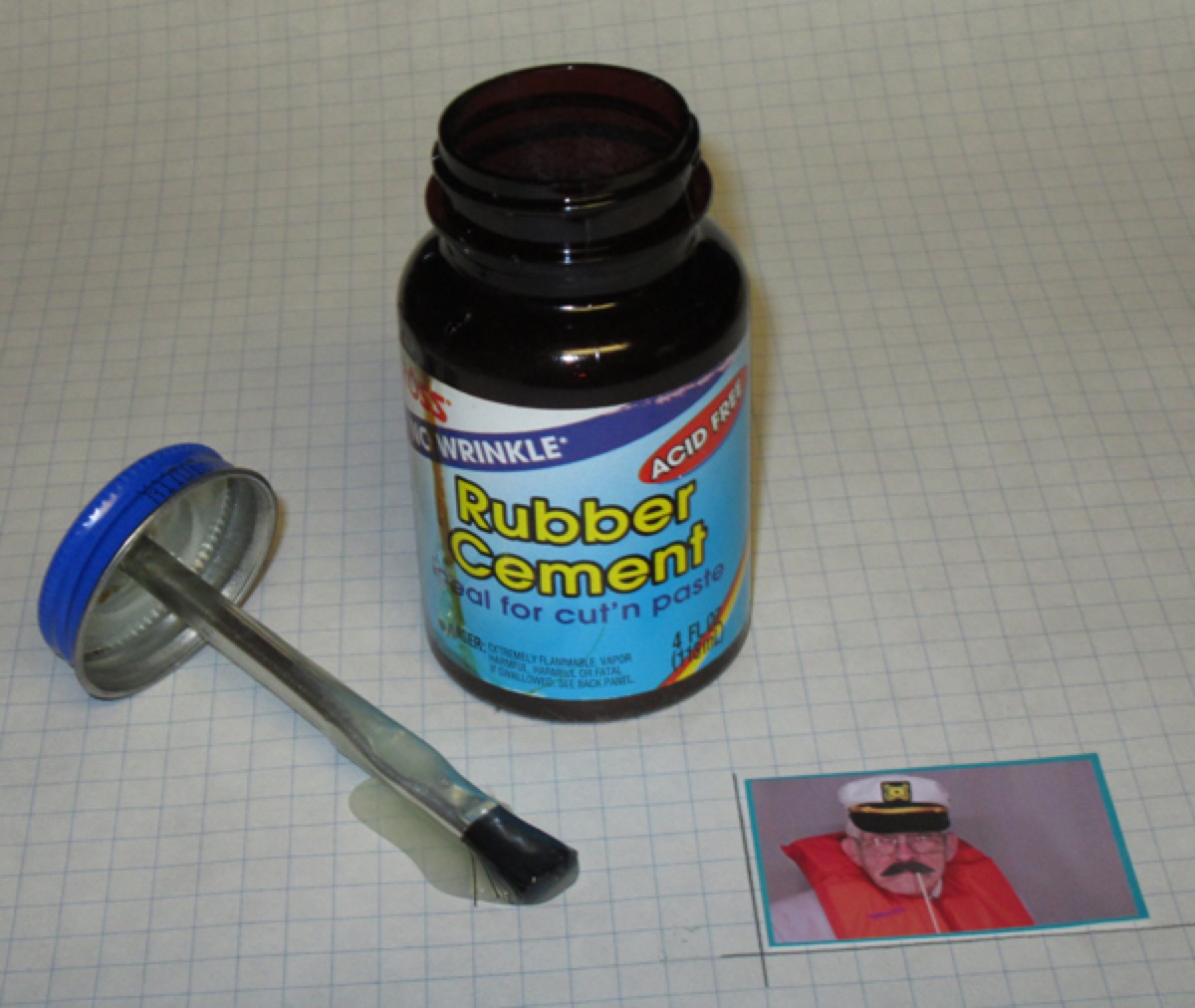
The brush-in-cap jar with the unmistakable chemical smell that made art projects actually work. Rubber cement let you unstick and re-stick paper without wrinkling—which meant you could revise, adjust, and experiment without destroying your work. The ritual of painting it on, peeling dried excess, and rolling it into bouncy little balls was as much the point as any finished project.

Yikes! Pencils
Pencils that didn't look like wood. Created by Ken Cooper at Empire Berol, Yikes! Pencils hit back-to-school 1993 in neon colors, wild patterns, and clashing dyes that made your standard wooden No. 2 look boring by comparison. They were a lunchbox status symbol and the kind of thing you'd trade or lose and actually care about.

Scholastic Book Club Order Forms
The monthly newsprint order form that landed on your desk — a tabloid catalog of paperbacks you circled with a stubby pencil, then begged your parents to fund. Ordering meant handing your teacher the torn-off form and some crumpled bills; the payoff was delivery day, when a stack of new books arrived with your name on it.

Covering Your Textbooks
The first week of school came with homework before you'd learned anything: take home the stack of hardcover textbooks the teacher just issued and cover every single one. You either cut open a brown paper grocery bag and folded it into a snug jacket, or slid on a stretchy fabric cover in a color you actually liked. Then you brought them back the next day for the teacher to check.