DKNY

Donna Karan's younger, cheaper, city-cool little sister — the four letters everyone could actually afford. DKNY's logo tees and sweatshirts made a designer name attainable for the '90s mall, half the price of the runway line and twice as casual.
DKNY — Donna Karan New York — was established in 1989 as a diffusion line: a younger, more budget-friendly companion to Donna Karan's main label, which had debuted in fall 1985. Karan created it inspired by her daughter, Gaby, wanting clothes meant for weekends and casual wear that ran closer to half the price of the primary collection. It was the era's classic move — a designer offering an attainable second line — and DKNY became one of the definitive examples.
Through the 1990s the four-letter logo did the heavy lifting: DKNY tees, sweatshirts, and jeans put a recognizable New York fashion name on ordinary bodies at ordinary budgets, exactly the shelf where Calvin Klein and Tommy Hilfiger were fighting for the same teenagers. The line expanded — DKNY Men launched in 1992 — and opened flagship stores in London in 1997 and New York City in 1999, cementing the brand as its own destination rather than a mere offshoot.
The ownership story turned corporate in the new century: the French luxury conglomerate LVMH (Louis Vuitton Moët Hennessy) purchased the company in 2001, and later sold it to the G-III Apparel Group in 2016 for $650 million. The runway prestige faded, but for a certain '90s shopper DKNY remains the label that made a designer name feel like it could be yours.
Similar items
Abercrombie & Fitch
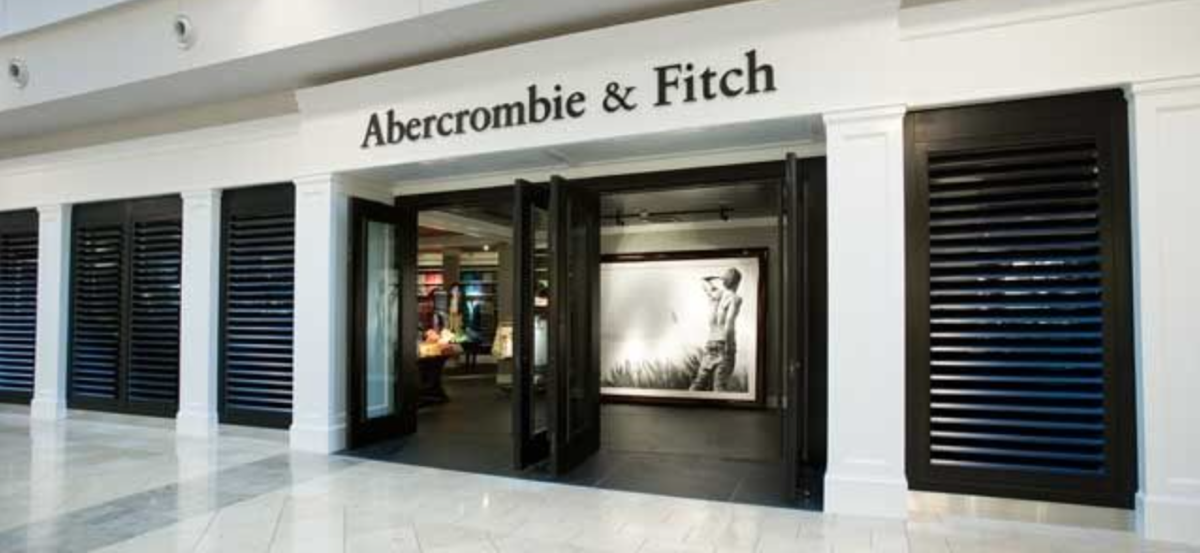
The dim-lit mall temple with impossibly loud music, a signature cologne so thick it hit you at thirty paces, and shopping bags plastered with shirtless male models. The Abercrombie & Fitch moose logo on polos and tees became a middle-school currency of cool in the 2000s. Wearing it meant you had money, taste, or both—or at least that's what everyone pretended to think. The brand launched its spinoff, Hollister, in 2000, spreading the gospel even wider.
Hollister Co.
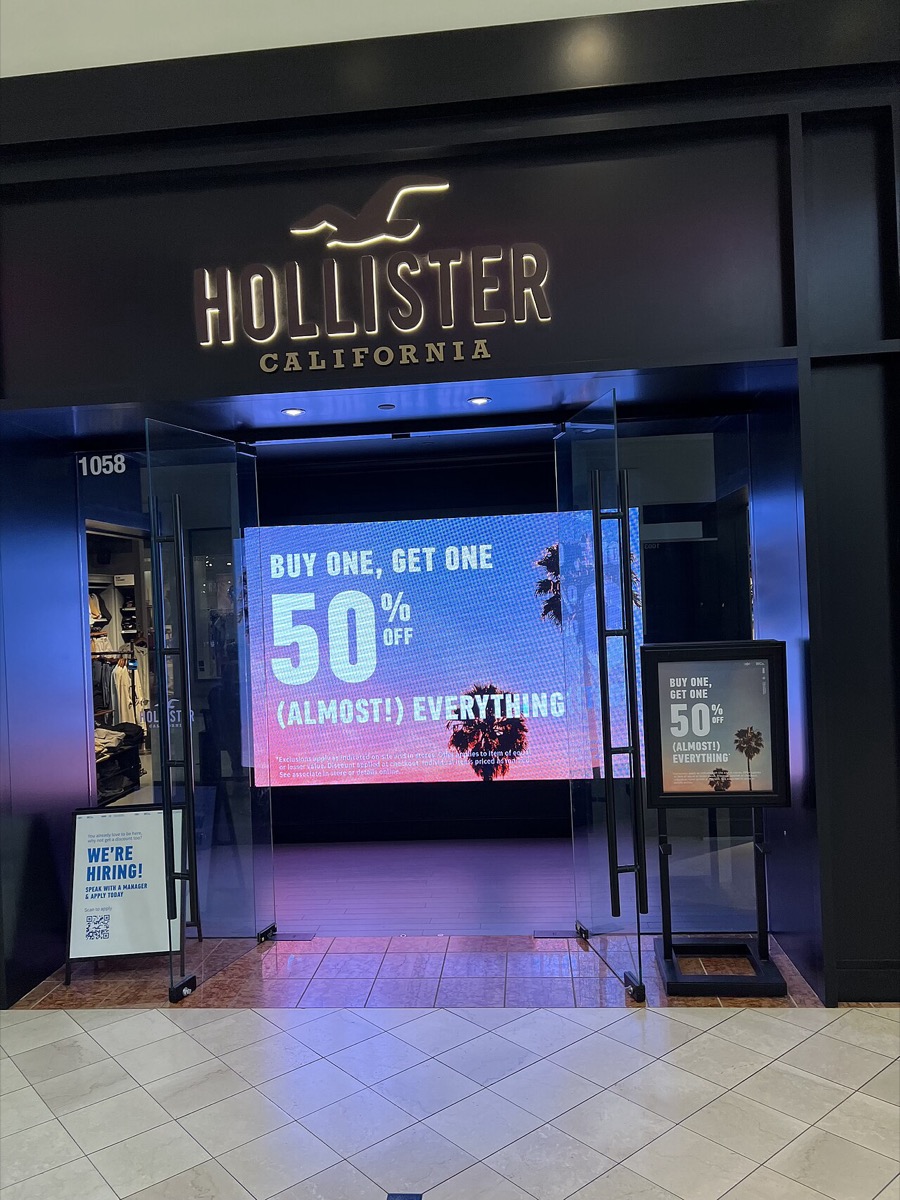
Abercrombie & Fitch's Southern-California-surf-themed spinoff brand, launched in 2000 and aimed at teens. Hollister stores were deliberately dim, cave-like spaces with beachy decor, a seagull logo, and an overwhelming signature cologne. Logo hoodies and tees were a 2000s teen status marker.

Steve Madden
The chunky platforms and stretch boots that owned the late-'90s teen mall — and a founder's story wild enough for a movie. Steve Madden built a shoe empire from the trunk of a car, then went to federal prison for stock fraud tangled up with the Wolf of Wall Street.

Tommy Hilfiger
Prep meets hip-hop: the flag logo of a 1985 New York label, co-opted by Snoop Dogg, Aaliyah, and every mall kid of the 90s who wore it oversized and felt instantly cooler. The red-white-and-blue became a uniform.