Steve Madden
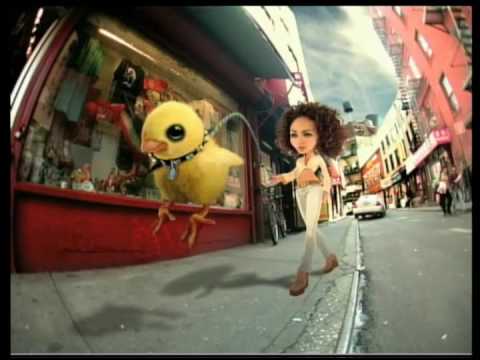
The chunky platforms and stretch boots that owned the late-'90s teen mall — and a founder's story wild enough for a movie. Steve Madden built a shoe empire from the trunk of a car, then went to federal prison for stock fraud tangled up with the Wolf of Wall Street.
Steve Madden started his company in 1990 with $1,100, selling shoes out of the trunk of his car. Born in Queens in 1958, he had an eye for a look teenage girls would sprint toward: chunky soles, platform slides, and stretchy boots that turned up in every mall through the late '90s. The shoes were affordable, of-the-moment, and everywhere, and the advertising was just as memorable: beginning in 1997 the brand ran its surreal "big head" campaign — models with cartoonishly oversized heads on tiny bodies, posed on city streets, art-directed by illustrator Tommy Kane — which ran into the mid-2000s and became instantly recognizable.
The money behind the growth is where the story turns dark. The brokerage Stratton Oakmont — cofounded by Madden's childhood friend Danny Porush — first lent him expansion capital and then underwrote his company's initial public offering. That connection put Madden inside one of the most notorious securities-fraud operations of the decade. In 2002 he was convicted of stock manipulation, money laundering, and securities fraud, sentenced to 41 months in prison, and forced to resign as CEO and board member. He was released in April 2005.
Remarkably, the label outlived the scandal. Revenue climbed by nearly $100 million in 2006 to $475.1 million, and by 2021 the company reported $1.9 billion in revenue. Madden's saga later reached a wider audience through The Wolf of Wall Street (2013), where he appears — played by Jake Hoffman — in a scene of Jordan Belfort pumping Madden's stock to a room of Stratton Oakmont brokers. The shoes, meanwhile, kept selling.
Similar items

DKNY
Donna Karan's younger, cheaper, city-cool little sister — the four letters everyone could actually afford. DKNY's logo tees and sweatshirts made a designer name attainable for the '90s mall, half the price of the runway line and twice as casual.

Nike Shox
The sneakers with the fat shock-absorber columns under the heel—sixteen years of Nike R&D that landed in 2000 and instantly became hallway status. Vince Carter wore them to jump clean over a 7'2" Frenchman at the Sydney Olympics. Boing.
Abercrombie & Fitch
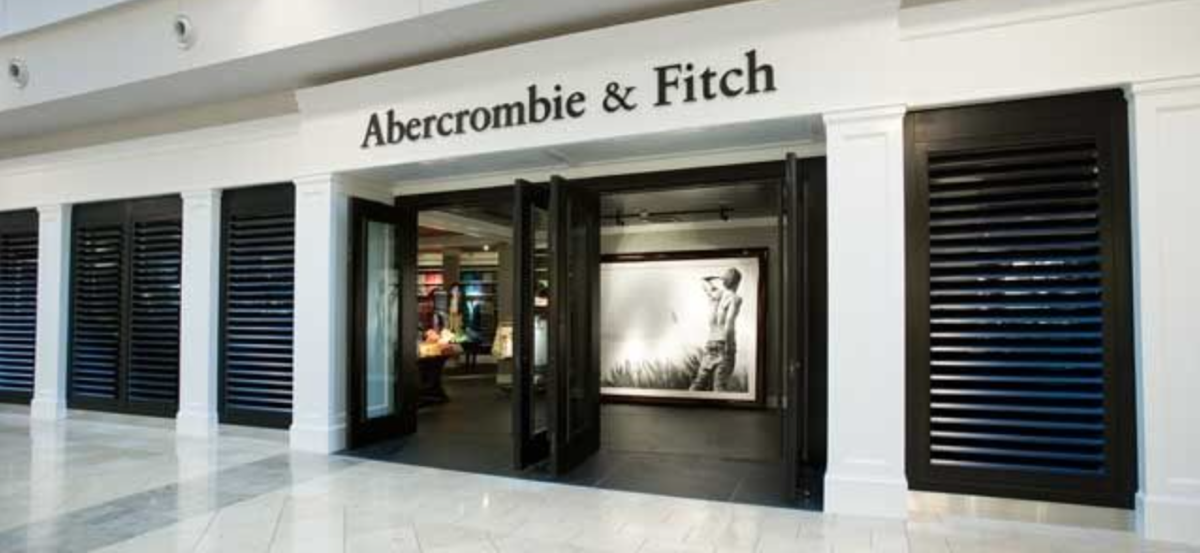
The dim-lit mall temple with impossibly loud music, a signature cologne so thick it hit you at thirty paces, and shopping bags plastered with shirtless male models. The Abercrombie & Fitch moose logo on polos and tees became a middle-school currency of cool in the 2000s. Wearing it meant you had money, taste, or both—or at least that's what everyone pretended to think. The brand launched its spinoff, Hollister, in 2000, spreading the gospel even wider.

Guess Jeans
Before the mall had logos, it had THE logo: the triangle with the question mark. Guess jeans were the begged-for denim of late-80s and 90s cool, sold by smoldering black-and-white ads that invented the whole idea of the "Guess Girl."