Digimon Virtual Pet
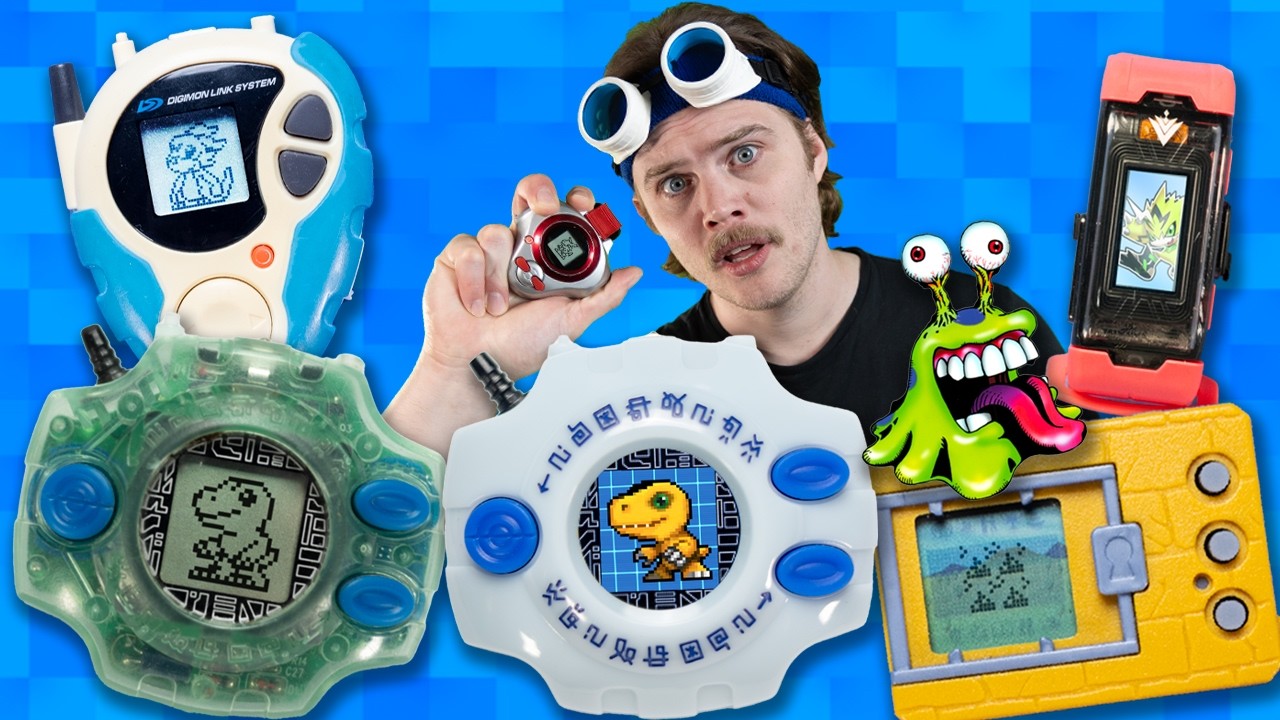
The boy's answer to Tamagotchi, and somehow more addictive: a digital monster you didn't just keep alive, you trained to fight. Snap your device to a friend's, and both creatures would duel on screen, their fate determined by every decision you'd made. The winning evolution wasn't the prettiest — it was the strongest.
In June 1997, Bandai and developer WiZ — the same partnership behind Tamagotchi — released Digimon, short for "Digital Monsters." Where Tamagotchi cast you as a nurturing caretaker, Digimon reframed the whole game. You still fed, trained, and cleaned up after your creature, but the real hook was the connector port: press two devices together and your monsters would battle, right there on the screen, with the win-loss record kept on the device. It was a single innovation that changed everything about how kids played together.
Every choice mattered more now. Neglect your creature and it wouldn't just be sad — it would lose. The digivolution tree wasn't about happiness; it was about strength. Slack on the training and you got a weaker form; put the work in and you raised a fighter. That loop became the entire point, a status marker on the schoolyard, a reason to dock devices before class and at recess.
The original Digital Monster device sold roughly 14 million units worldwide through March 2004. And the little brick spread beyond itself faster than anyone expected: a card game announced the same year it launched, the PlayStation game Digimon World released in Japan in January 1999, and the anime that debuted in March 1999 and gave the franchise a second, far bigger life. But for the generation that played it in those first few years, it was always about that moment of connection — the satisfying click of two devices linking up, and the knowledge that you'd either trained better, or you were about to lose.
Similar items

Tamagotchi
The egg-shaped digital pet that lived on a keychain and died if you ignored it during math class. Bandai's Tamagotchi demanded constant feeding, cleaning, and attention, sparking a global craze — and a wave of school bans.

Giga Pets
The keychain virtual pet you fed, cleaned, and played with between classes — America's answer to the Tamagotchi craze. Neglect it and it got sick; ignore it too long and it died right there in your backpack.

Nintendogs
You pet the puppy with the stylus, you called its name into the microphone, and it learned to sit — Nintendogs made grown adults coo at a plastic clamshell on the bus. The virtual puppy that sold the Nintendo DS to everyone's mom ended up one of the best-selling games ever made.

20Q
A palm-sized handheld electronic guessing game by Radica where you think of an object and the toy reads your mind through yes/no questions. Released around 2003–2004 and a holiday best-seller by 2005, it used AI to eerily predict what you were thinking.