Creative Zen & Nomad Jukebox

Your Nomad Jukebox or Creative Zen sounded better than any iPod — more formats, zero iTunes, pure PC-forum credibility — and it battled the white earbuds in every comment thread of the 2000s. Then came the wildest ending in the MP3 wars: Creative sued Apple over a music-navigation patent, and Apple paid $100 million to settle.
Creative Technology of Singapore — the Sound Blaster company — shipped the Nomad Jukebox in the US in September 2000: a chunky hard-drive player that held your entire MP3 folder in your pocket, months before the iPod existed. It sold 100,000 units by January 2001, proof that people wanted their whole library in a pocket. The Nomad Jukebox Zen, announced in October 2002, introduced the name that would define the line; from 2004 the players were branded Creative Zen outright — Zen Touch in June 2004, the tiny Zen Micro that November, and the Zen Vision:M in December 2005, which won Best of Show at CES 2006.
Creative picked its fight in the open. In November 2004 it declared "war" on the iPod — Engadget's headline was literally "Creative declares war on iPod" — and backed the talk with a $100 million marketing campaign. The PC-forum crowd enlisted happily: better audio formats, no iTunes required, real file-manager freedom. The market shrugged; Creative's US share hovered around 4% and slipped toward 2% by 2008. The white earbuds had won.
The twist came from the filing cabinet. Back in January 2001, Creative had applied for a patent on its music-library navigation interface — the artist/album/track drill-down every player used — and it was granted in August 2005 as the "Zen Patent." On May 15, 2006, Creative sued Apple for infringing it; Apple countersued the same day. The settlement was extraordinary: Apple paid Creative $100 million, and Creative joined the Made for iPod accessory program. The line itself wound down — the last Zen player, the X-Fi3, shipped at the end of 2011 as smartphones swallowed the category — but losing the war and walking away with $100 million of Apple's money remains the all-time moral-victory ending in consumer tech.
Similar items

iPod
Steve Jobs unveiled the iPod on October 23, 2001, promising "1,000 songs in your pocket." The original model packed a 5GB hard drive, mechanical scroll wheel, and FireWire connection—Mac-only, $399. The click wheel, iTunes Music Store (2003), and later Windows support made it the gateway device to digital music and one of the most influential electronics ever built.

Microsoft Zune
Microsoft's answer to the iPod arrived in November 2006 — thicker, later, and available in brown. The Zune became tech's favorite punchline, but the punchline hid real ideas: wireless song-sharing, a subscription music pass years before streaming won, and a UI so good it became the design language of Windows Phone.
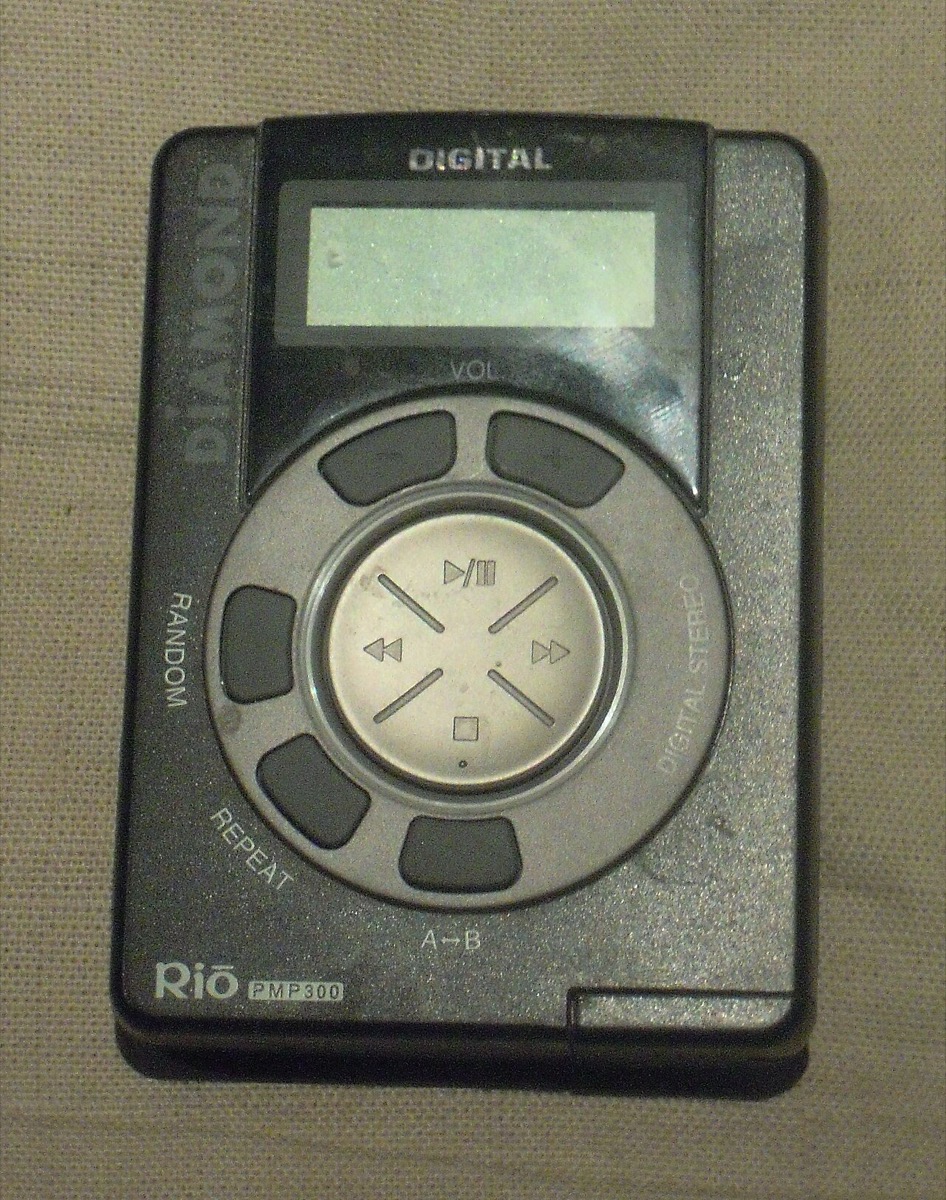
Early MP3 Players
The flash-memory bricks that freed your MP3s from the desktop. Diamond's Rio PMP300, arriving in September 1998 at $200, was the first MP3 player that actually caught on — deck-of-cards sized, running forever on one AA battery, holding maybe eight or ten songs. No moving parts meant no skips, a revelation after a decade of portable CD players. The RIAA sued to kill it; the courts sided with you instead.

LimeWire & Napster
The lawless era of free music: you queued up a download that would take three hours on dial-up, crossed your fingers it wasn't mislabeled, and hoped even harder it wasn't a virus. Napster and LimeWire were the P2P revolution that detonated the music industry, made kids into accidental outlaws, and eventually gave way to iTunes.