American Eagle
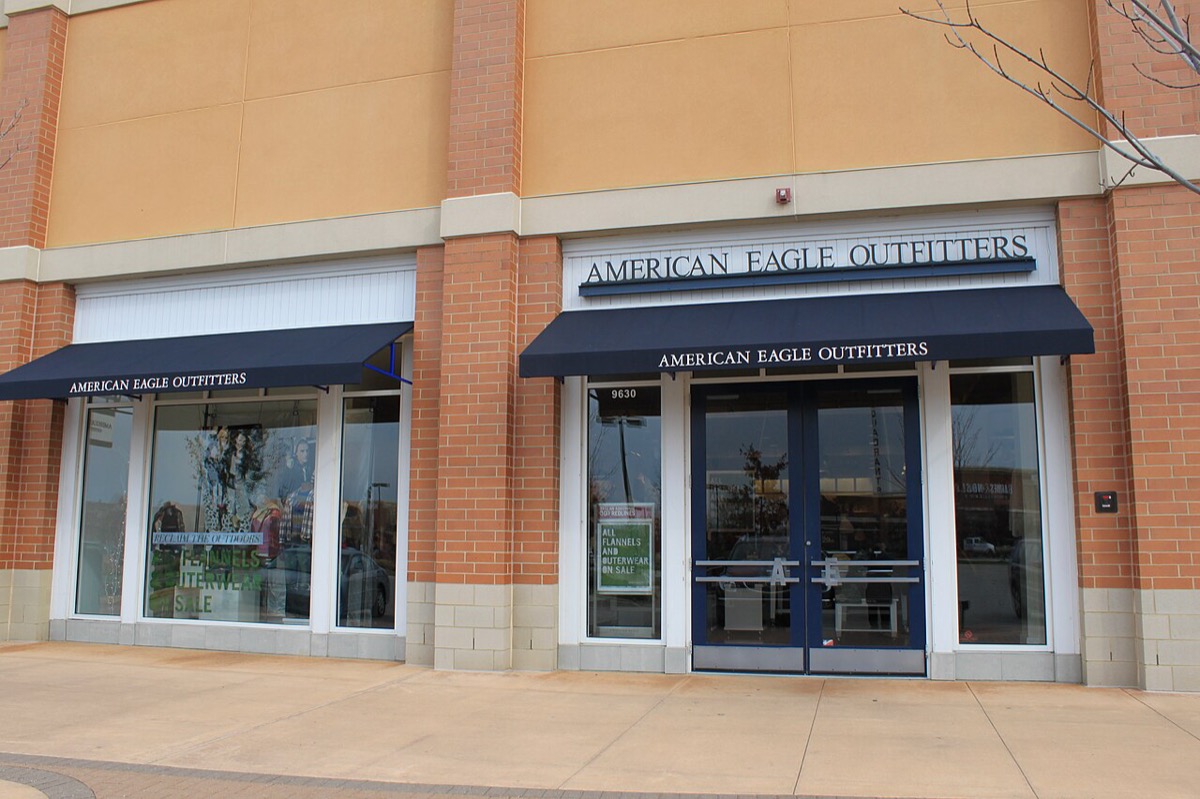
Photo credit: Photo: Dwight Burdette, CC BY 3.0, via Wikimedia Commons
The dependable middle of the 2000s mall — graphic tees, bootcut jeans, and eagle-emblazoned hoodies pitched right between Abercrombie's attitude and the clearance racks. For millions of teenagers, American Eagle was simply where you shopped.
American Eagle was founded in 1977 by brothers Jerry and Mark Silverman as a subsidiary of Retail Ventures, Inc., opening its first store at Twelve Oaks Mall in Novi, Michigan. The original concept was brand-name leisure wear and gear aimed at outdoor sports. The Silvermans sold half their interest to the Schottenstein family in 1980 and the rest in 1991, and for its first two decades the chain stayed a modest presence.
The transformation came in the mid-1990s. The company went public on NASDAQ in 1994, and new executives who arrived in 1995–96 repositioned it around a niche it never left: private-label casual clothing for teenagers and college kids. The strategy worked spectacularly — by 2000, revenues had climbed to $1 billion. Through the 2000s, American Eagle settled into its role as the mall's comfortable default: the place for a hoodie, well-fitting jeans, and a graphic tee without overthinking it, less exclusive than Abercrombie, a step up from the discount racks. It wasn't aspirational. It was attainable — which is exactly why the eagle ended up on half the chests in every yearbook photo.
The Pittsburgh-based company kept expanding the formula, launching the aerie lingerie sub-brand in February 2006 for 15-to-22-year-old women. Malls faded, e-commerce rose, and a hundred rival mall brands died — but American Eagle epitomized a specific retail moment: the back-to-school pilgrimage, the folded denim wall, the shopping bag that told your classmates roughly who you were.
Similar items
Abercrombie & Fitch
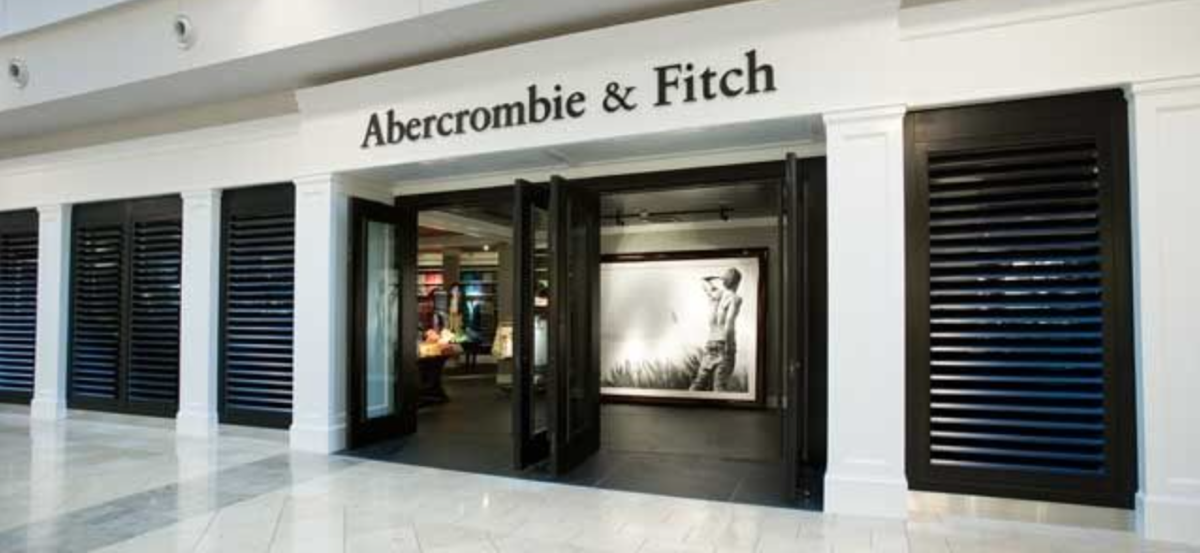
The dim-lit mall temple with impossibly loud music, a signature cologne so thick it hit you at thirty paces, and shopping bags plastered with shirtless male models. The Abercrombie & Fitch moose logo on polos and tees became a middle-school currency of cool in the 2000s. Wearing it meant you had money, taste, or both—or at least that's what everyone pretended to think. The brand launched its spinoff, Hollister, in 2000, spreading the gospel even wider.

Aéropostale
The mall-hierarchy middle class: not as expensive as Abercrombie, not as beachy as Hollister, and absolutely everywhere on 2000s middle-school bodies. If your hoodie said AERO in fat letters across the chest, you were dressed.
Hollister Co.
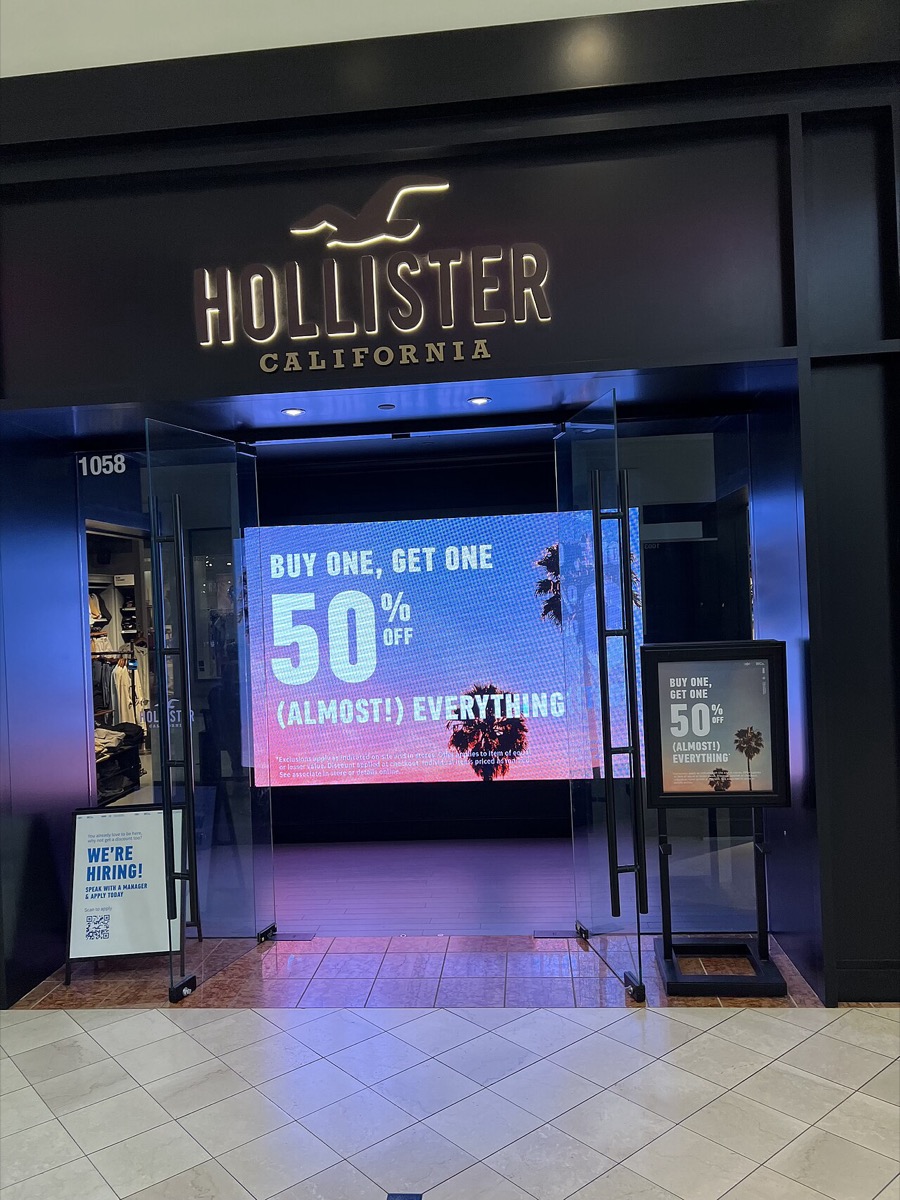
Abercrombie & Fitch's Southern-California-surf-themed spinoff brand, launched in 2000 and aimed at teens. Hollister stores were deliberately dim, cave-like spaces with beachy decor, a seagull logo, and an overwhelming signature cologne. Logo hoodies and tees were a 2000s teen status marker.
Body Glitter
Roll-on, gel, or powder with a puff — applied to the collarbones, the eyelids, and eventually the entire upper body before a school dance. It came in every color imaginable, and its single defining property was that it never came off. Not that night, not that week, not from your bedsheets.