Aéropostale

The mall-hierarchy middle class: not as expensive as Abercrombie, not as beachy as Hollister, and absolutely everywhere on 2000s middle-school bodies. If your hoodie said AERO in fat letters across the chest, you were dressed.
Aéropostale started, improbably, as a department-store experiment: R.H. Macy & Co. opened the first stores in 1987 in Thousand Oaks, California, and Short Hills, New Jersey, borrowing a name the company's own pronunciation video later explained as a simplified take on the French for "airmail service." Nobody agreed on how to say it — arrow-PAUSE-tall, arrow-PUS-tall-ee — and it never mattered, because by the 2000s the wordmark itself was the point: AERO in fat letters across hoodies, polos, and graphic tees in every American mall.
The brand's niche was precision-engineered. It competed head-on with Abercrombie & Fitch, Hollister, and American Eagle for teen wallets, but positioned itself as the accessible rung of that ladder — the logo look at a price a middle-schooler's allowance could actually reach. While Abercrombie sold exclusivity and dim lighting, Aéropostale sold comfort and volume, and for a stretch of the mid-2000s its glowing storefront was as much a fixture of the food-court circuit as the Orange Julius. A kids' offshoot, P.S. from Aéropostale, followed in 2009.
Then teens moved on, as teens do. The logo-tee era faded, fast fashion undercut the mall brands, and Aéropostale filed for Chapter 11 bankruptcy on May 4, 2016, with 739 U.S. stores. A $243 million rescue by a consortium including Authentic Brands Group and mall giants Simon and General Growth kept it alive — over 500 stores reopened by January 2017, and roughly 800 locations operate globally today. The brand survives; the specific memory it owns is narrower and warmer: the smell of a 2005 mall, and a folded pile of graphic tees that all said the same word.
Similar items
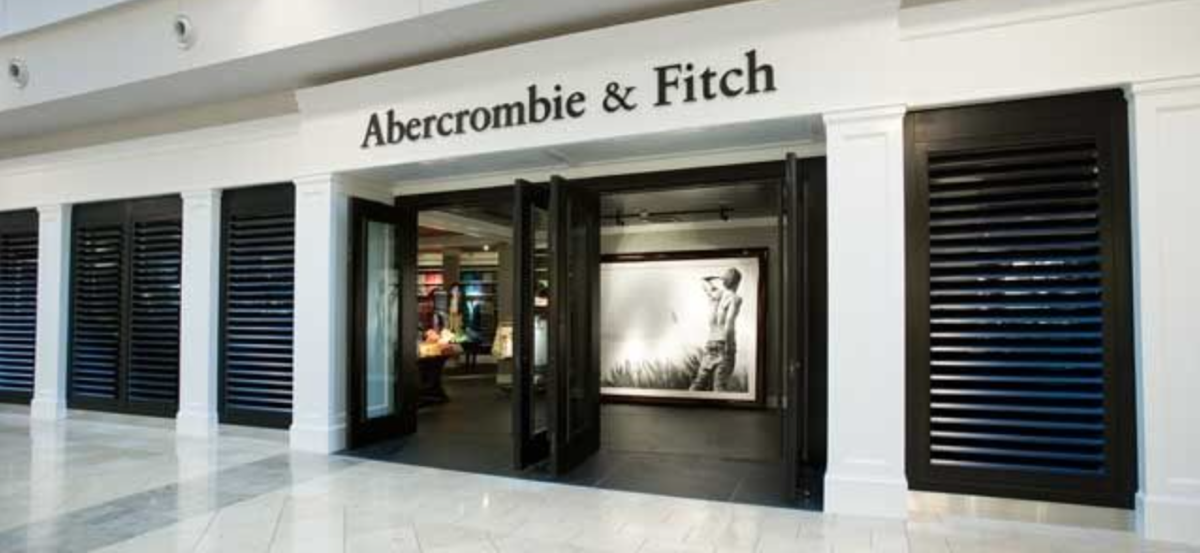
Abercrombie & Fitch
The dim-lit mall temple with impossibly loud music, a signature cologne so thick it hit you at thirty paces, and shopping bags plastered with shirtless male models. The Abercrombie & Fitch moose logo on polos and tees became a middle-school currency of cool in the 2000s. Wearing it meant you had money, taste, or both—or at least that's what everyone pretended to think. The brand launched its spinoff, Hollister, in 2000, spreading the gospel even wider.
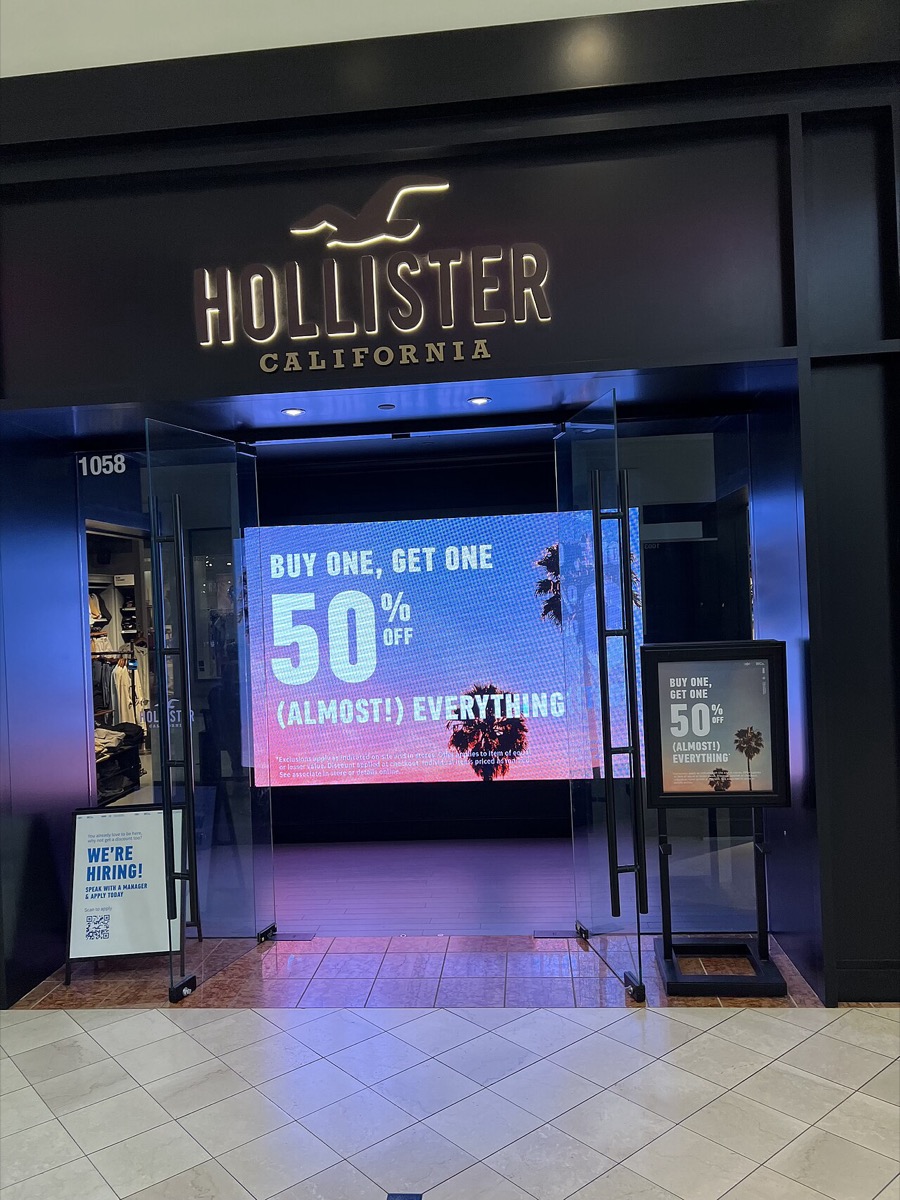
Hollister Co.
Abercrombie & Fitch's Southern-California-surf-themed spinoff brand, launched in 2000 and aimed at teens. Hollister stores were deliberately dim, cave-like spaces with beachy decor, a seagull logo, and an overwhelming signature cologne. Logo hoodies and tees were a 2000s teen status marker.
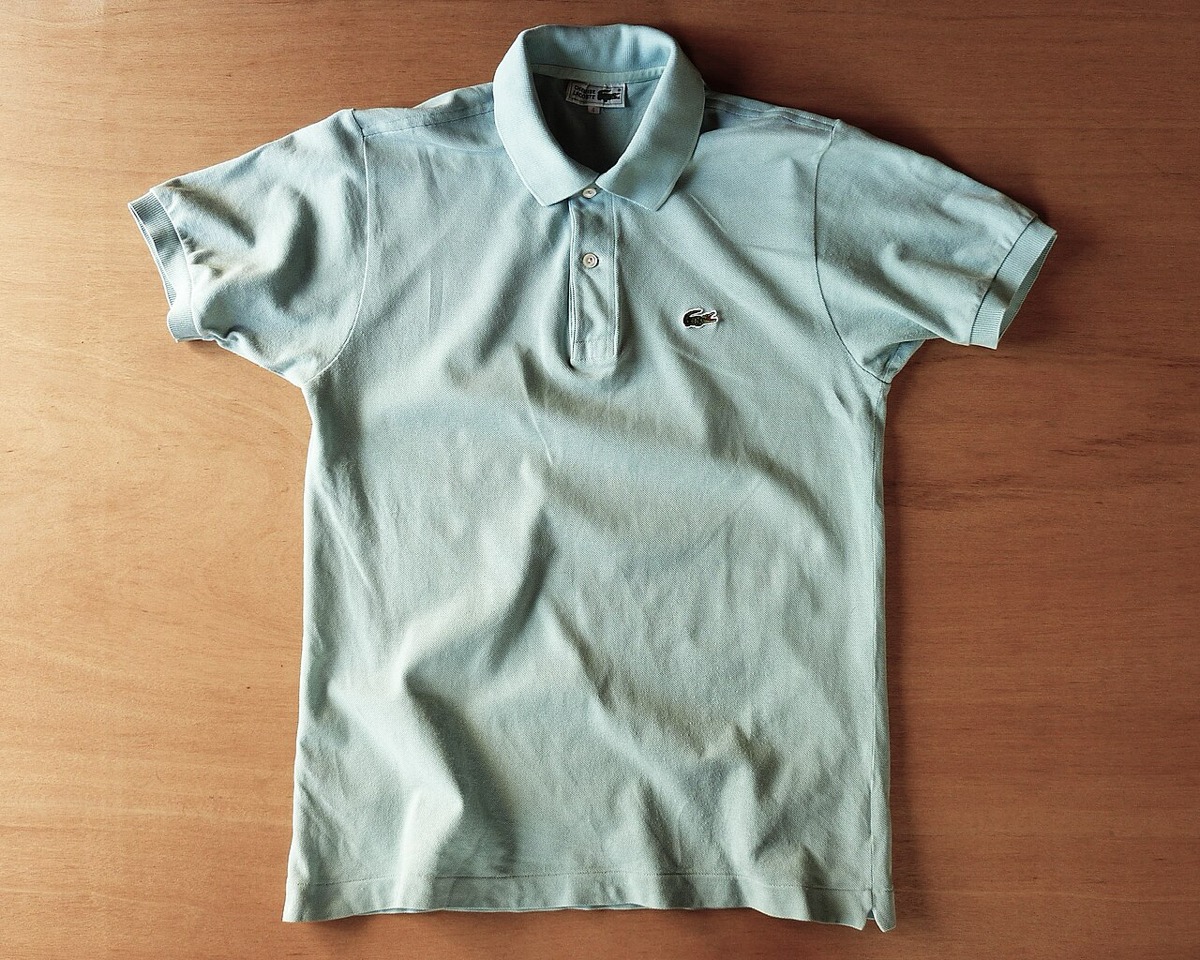
Popped Collars
Collar up. Sometimes two collars up, on two polos at once. The mid-2000s ritual that turned a tennis sun-shield into the international symbol of mall prep — and then, almost as fast, into a punchline.
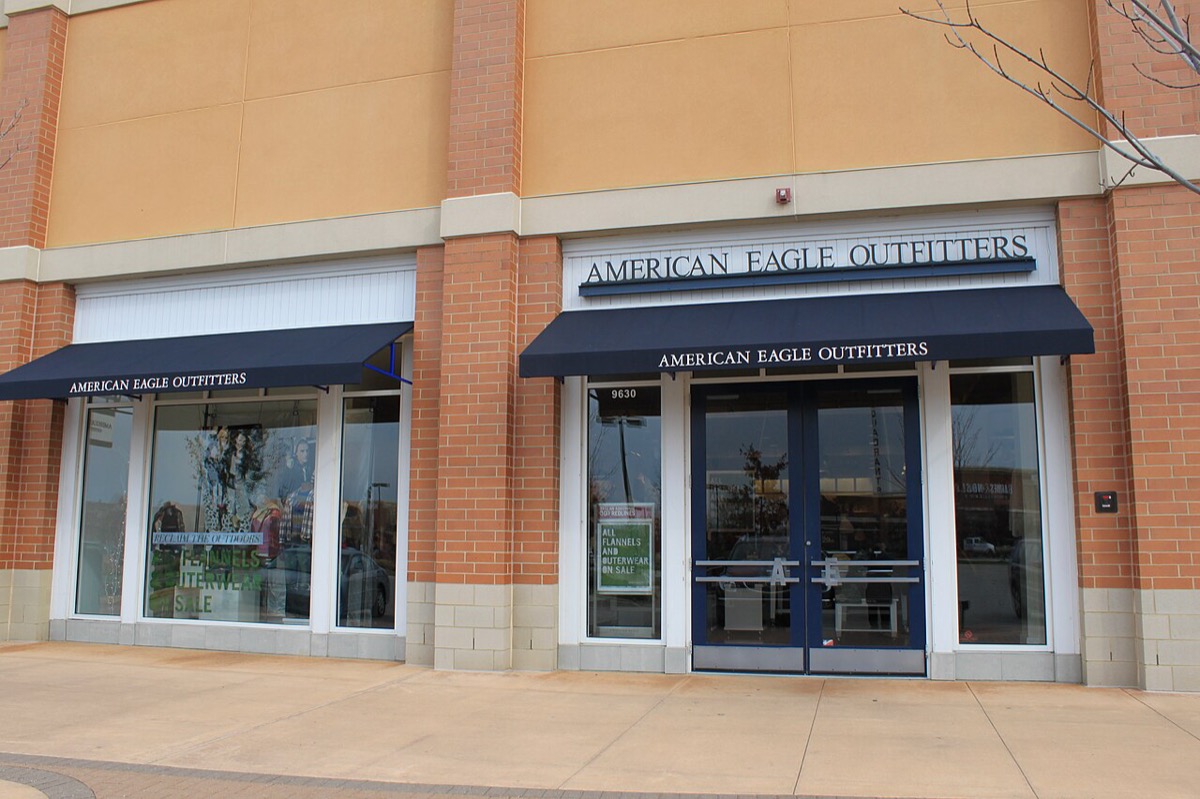
American Eagle
The dependable middle of the 2000s mall — graphic tees, bootcut jeans, and eagle-emblazoned hoodies pitched right between Abercrombie's attitude and the clearance racks. For millions of teenagers, American Eagle was simply where you shopped.