Yomega Brain

The yo-yo that thought for you. A centrifugal clutch inside meant a sleeper that worked on day one, even if you'd never held a yo-yo before. It wasn't about finesse — it was about giving your hand a fighting chance.
Yomega Corporation, founded in Fall River, Massachusetts in the early 1980s, built their reputation on a single innovation: Michael S. Caffrey's centrifugal clutch. Caffrey's U.S. patent (4,332,102, filed October 1980 and granted June 1982) described a mechanism that opened during a fast spin, letting the yo-yo sleep at the end of the string, then gripped again as the spin slowed, climbing back to your hand on its own. It was the first yo-yo with a brain of its own, hence the slogan.
The Brain reached toy shelves in 1984, positioned as the yo-yo for kids who'd fumbled every other attempt. No skill required for a sleeper — the thing did the work for you. It was training wheels with marketing that didn't apologize for it.
Then came the late-90s playground explosion. The 1997–1999 yo-yo craze made trick-spinning the currency of every schoolyard, and the Brain was the gateway. Total beginners landed sleepers on day one and felt like trick artists. While experienced kids graduated to Yomega's transaxle Fireball and the ball-bearing Raider, newcomers used the Brain to discover that they could actually do this. Yomega rode the boom hard: a partnership with Bandai on Japan's Hyper Yo-Yo line, even a McDonald's Happy Meal promotion. Schools started banning yo-yos at the peak of the madness.
The craze collapsed by decade's end, but the Brain never left the toy aisle. Four decades on, it's still the standard beginner's yo-yo — proof that one good idea, executed consistently, can outlast any fad.
Similar items

The Yo-Yo Craze
In the late 90s, playgrounds erupted into a worldwide yo-yo arms race fueled by technological breakthroughs—Yomega's "Brain" with its magical automatic return, ball-bearing transaxles that spun for ages, and trick hierarchies that drove kids to master walk-the-dog and around-the-world. Schools banned them, championships crowned them, and by decade's end it all collapsed just as suddenly.

Yomega Fireball
The workhorse of the late-90s yo-yo craze. Where the Brain was training wheels, the Fireball required actual skill — a free-spinning axle that let you sleep long enough to land tricks that looked impossible. This was the yo-yo you graduated to.

Duncan Yo-Yos
The brand that made the yo-yo an American institution — and then nearly lost it all in court. In 1963 alone, Duncan sold a reported 33 million units, but a legal fight over the word 'yo-yo' sent the company into bankruptcy. The brand recovered, and by the 1990s, every kid's entry yo-yo was still a Duncan Butterfly or Imperial.
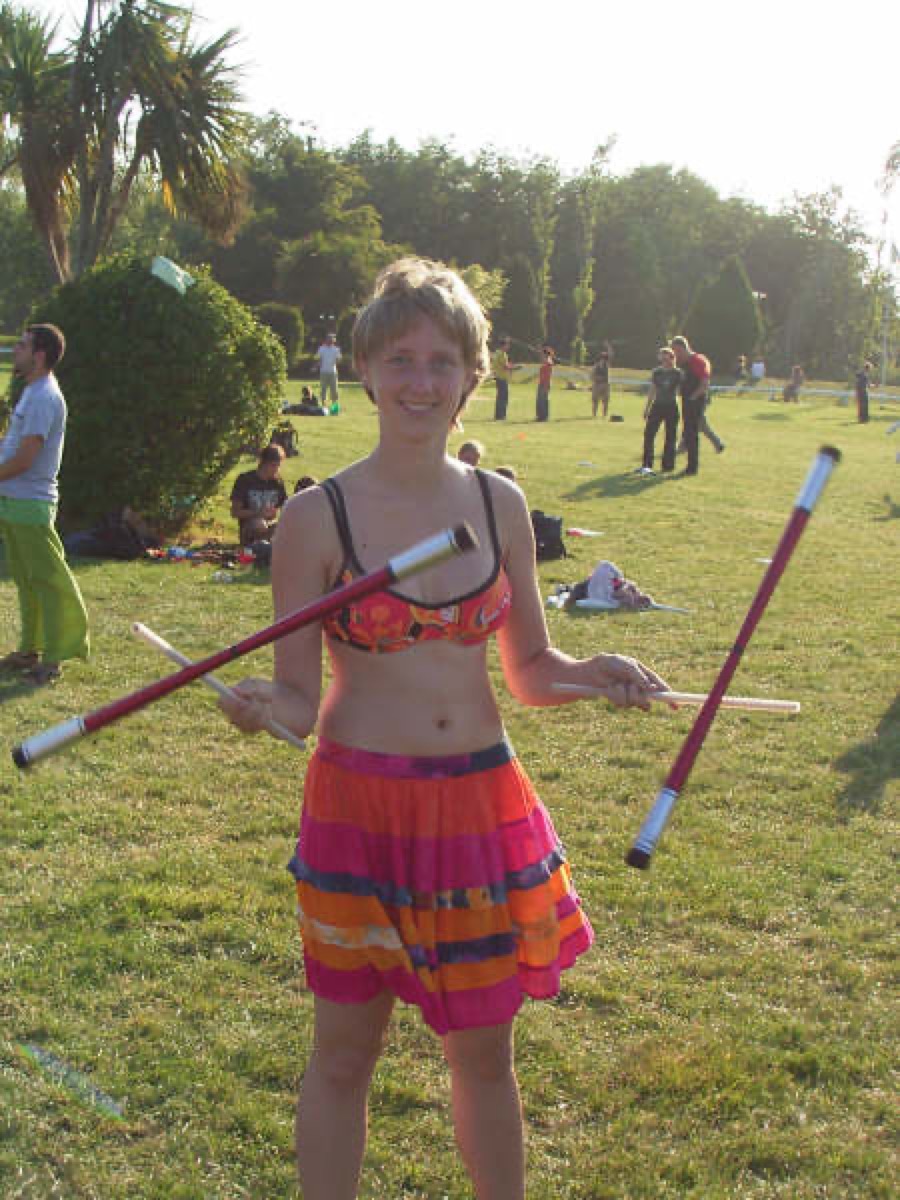
Devil Sticks
A centuries-old juggling prop — a tapered center stick twirled between two hand sticks — exploded as a US schoolyard and festival craze in the 1990s. Vendors at mall kiosks sold neon-taped and rubber-tipped versions to kids who spent recess mastering the mesmerizing spin alongside hacky sacks and classic yo-yos.