The Yo-Yo Craze

In the late 90s, playgrounds erupted into a worldwide yo-yo arms race fueled by technological breakthroughs—Yomega's "Brain" with its magical automatic return, ball-bearing transaxles that spun for ages, and trick hierarchies that drove kids to master walk-the-dog and around-the-world. Schools banned them, championships crowned them, and by decade's end it all collapsed just as suddenly.
The yo-yo craze exploded across playgrounds and school hallways roughly between 1997 and 1999, driven by innovations that made the ancient toy suddenly perform like nothing kids had ever seen. The breakthrough moment was Yomega's "Brain"—a yo-yo featuring a centrifugal clutch that made it "sleep" automatically and return to the hand without the user's intervention, turning the learning curve from steep to manageable overnight. Its stablemate, the Yomega Fireball, used a plastic transaxle that let it sleep far longer than any fixed-axle yo-yo — it became the playground workhorse — while the ball-bearing Yomega Raider was the step-up model everyone coveted.
The old guard cashed in too: Duncan, the brand that had defined the yo-yo for most of the century, rode the revival hard — its classic Butterfly and Imperial were still most kids' first yo-yo, the gateway before graduating to transaxle hardware.
The craze transformed the yo-yo into a skill-toy and status symbol rolled into one. Kids formed hierarchies based on trick mastery — walk the dog, rock the baby, around the world — each trick a rung on the playground ladder, and schools started banning yo-yos the same way they'd banned pogs and slap bracelets. Then, just as rapidly as it arrived, the craze deflated by decade's end—a textbook boom-and-bust cycle that left garages full of abandoned yo-yos by 2000.
Similar items
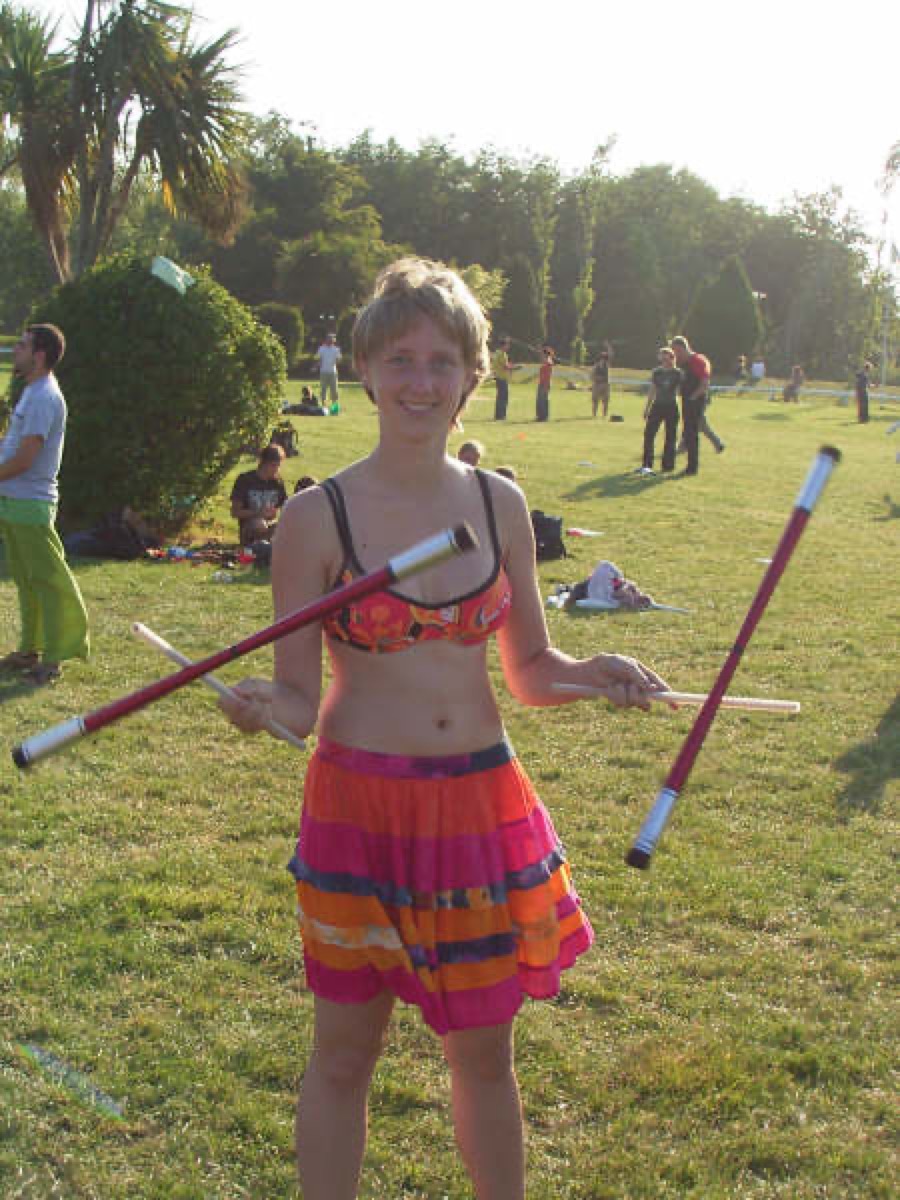
Devil Sticks
A centuries-old juggling prop — a tapered center stick twirled between two hand sticks — exploded as a US schoolyard and festival craze in the 1990s. Vendors at mall kiosks sold neon-taped and rubber-tipped versions to kids who spent recess mastering the mesmerizing spin alongside hacky sacks and classic yo-yos.

Duncan Yo-Yos
The brand that made the yo-yo an American institution — and then nearly lost it all in court. In 1963 alone, Duncan sold a reported 33 million units, but a legal fight over the word 'yo-yo' sent the company into bankruptcy. The brand recovered, and by the 1990s, every kid's entry yo-yo was still a Duncan Butterfly or Imperial.

Pogs
Circular cardboard caps stacked and slammed on playgrounds from coast to coast. A simple game descended from Hawaiian milk-cap traditions, Pogs spiraled into a full-blown craze—until schools banned them as gambling and the market collapsed.

Skip-It
A neon ankle hoop with a ball on a tether and a mechanical counter that kept score — the ultimate playground flex of the early 90s. Loop it around one ankle, swing it, hop the tether with your other leg, and chase your personal best. A deceptively simple toy that sparked a generation's skinned knees and fierce competition.