Duncan Yo-Yos

The brand that made the yo-yo an American institution — and then nearly lost it all in court. In 1963 alone, Duncan sold a reported 33 million units, but a legal fight over the word 'yo-yo' sent the company into bankruptcy. The brand recovered, and by the 1990s, every kid's entry yo-yo was still a Duncan Butterfly or Imperial.
Pedro Flores, a Filipino immigrant, opened the Yo-yo Manufacturing Company in Santa Barbara, California in 1928. By late 1929 he was operating at fever pitch: 600 workers reportedly spinning out 300,000 yo-yos a day. Entrepreneur Donald F. Duncan bought Flores' business around 1930 and made it his name — a smart move that would echo for a century.
Duncan released the Imperial in the mid-1950s, but it was the Butterfly in 1958 that changed the game. The flared wings made string tricks dramatically easier to land — suddenly kids didn't need years of practice to make the yo-yo do something impressive. Duncan ran its first television commercials in 1959, debuting in Philadelphia; sales there jumped from $20,000 to $100,000. The boom that followed was staggering: by 1962 the company reported annual revenue near $7 million, and 1963 was the company's record year — a reported 33 million yo-yos sold.
Then came the legal catastrophe. Duncan sued the Royal Tops Company over ownership of the word 'yo-yo,' a fight that dragged through the courts for years. In 1965 a federal appeals court ruled that 'yo-yo' had become a generic term — the trademark was unenforceable. Duncan's legal costs were ruinous, and the company went bankrupt. In 1968, Flambeau Products bought the Duncan name and carried it forward.
By the 1990s, Duncan had become what every kid encountered first — a Butterfly or an Imperial in a toy aisle, the gateway yo-yo before graduating to Yomega's transaxle models during the late-90s craze. When that boom hit in 1998, industry sales reached an estimated $35 million, with Duncan claiming roughly 65 percent of the market by one trade estimate. The Duncan yo-yo's run across nearly seven decades earned it a place in the National Toy Hall of Fame in 1999.
Similar items

The Yo-Yo Craze
In the late 90s, playgrounds erupted into a worldwide yo-yo arms race fueled by technological breakthroughs—Yomega's "Brain" with its magical automatic return, ball-bearing transaxles that spun for ages, and trick hierarchies that drove kids to master walk-the-dog and around-the-world. Schools banned them, championships crowned them, and by decade's end it all collapsed just as suddenly.

Yomega Brain
The yo-yo that thought for you. A centrifugal clutch inside meant a sleeper that worked on day one, even if you'd never held a yo-yo before. It wasn't about finesse — it was about giving your hand a fighting chance.

Yomega Fireball
The workhorse of the late-90s yo-yo craze. Where the Brain was training wheels, the Fireball required actual skill — a free-spinning axle that let you sleep long enough to land tricks that looked impossible. This was the yo-yo you graduated to.
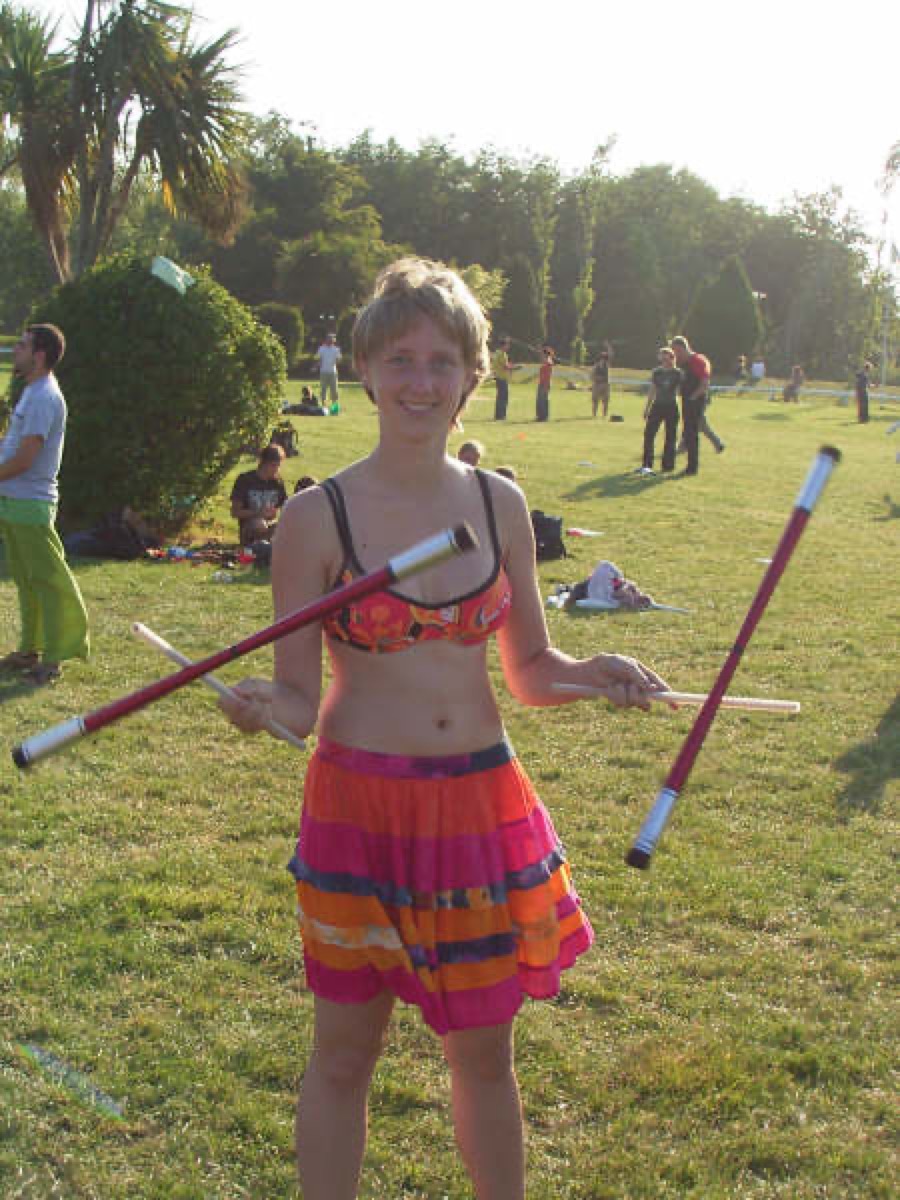
Devil Sticks
A centuries-old juggling prop — a tapered center stick twirled between two hand sticks — exploded as a US schoolyard and festival craze in the 1990s. Vendors at mall kiosks sold neon-taped and rubber-tipped versions to kids who spent recess mastering the mesmerizing spin alongside hacky sacks and classic yo-yos.