Pogs

Circular cardboard caps stacked and slammed on playgrounds from coast to coast. A simple game descended from Hawaiian milk-cap traditions, Pogs spiraled into a full-blown craze—until schools banned them as gambling and the market collapsed.
The game's family tree runs deeper than the 90s: it descends from menko, a Japanese disc-flipping game played since the Edo period, by way of Hawaiian children who had been playing with milk-bottle caps since the 1920s and 30s. In 1991, teacher Blossom Galbiso revived the game at Waialua Elementary on Oʻahu as a nonviolent playground alternative, working it into her fifth-grade curriculum. The name came from POG, a Passionfruit-Orange-Guava juice from Haleakala Dairy whose bottle caps kids played with.
By 1993 the game had jumped to the mainland and gone supernova. Entrepreneur Alan Rypinski (of Armor All fame) bought the POG trademark from Haleakala Dairy in September 1993 and founded the World POG Federation—complete with a mascot, Pogman—which hit over $25 million in sales within about 18 months, while "pog" went generic, Kleenex-style, for every brand of milk cap. Gameplay was ruthless: stack the caps face-down, hurl the heavier slammer, keep what lands face-up. Playing "for keeps" meant your collection was genuinely at stake, and the slammers themselves—brass heavies, holographic foils—became a collecting culture of their own.
That keepsies economy was the fad's undoing. Schools in the US, Canada, the UK, Australia, Sweden, Germany, and Iceland banned pogs as kid-sized gambling that sparked recess scuffles. The fad collapsed as suddenly as it had erupted—by 1997 even major manufacturer Canada Games had gone under—leaving binders of tubes and caps in closets across the millennial world.
Similar items

POG Slammers
The heavy disc you hurled at a stack of pogs to flip them face-up and make them yours. Brass beasts, holographic foils, skull art, thin plastic lightweights—your slammer was your signature piece, and it was a whole collecting culture of its own.
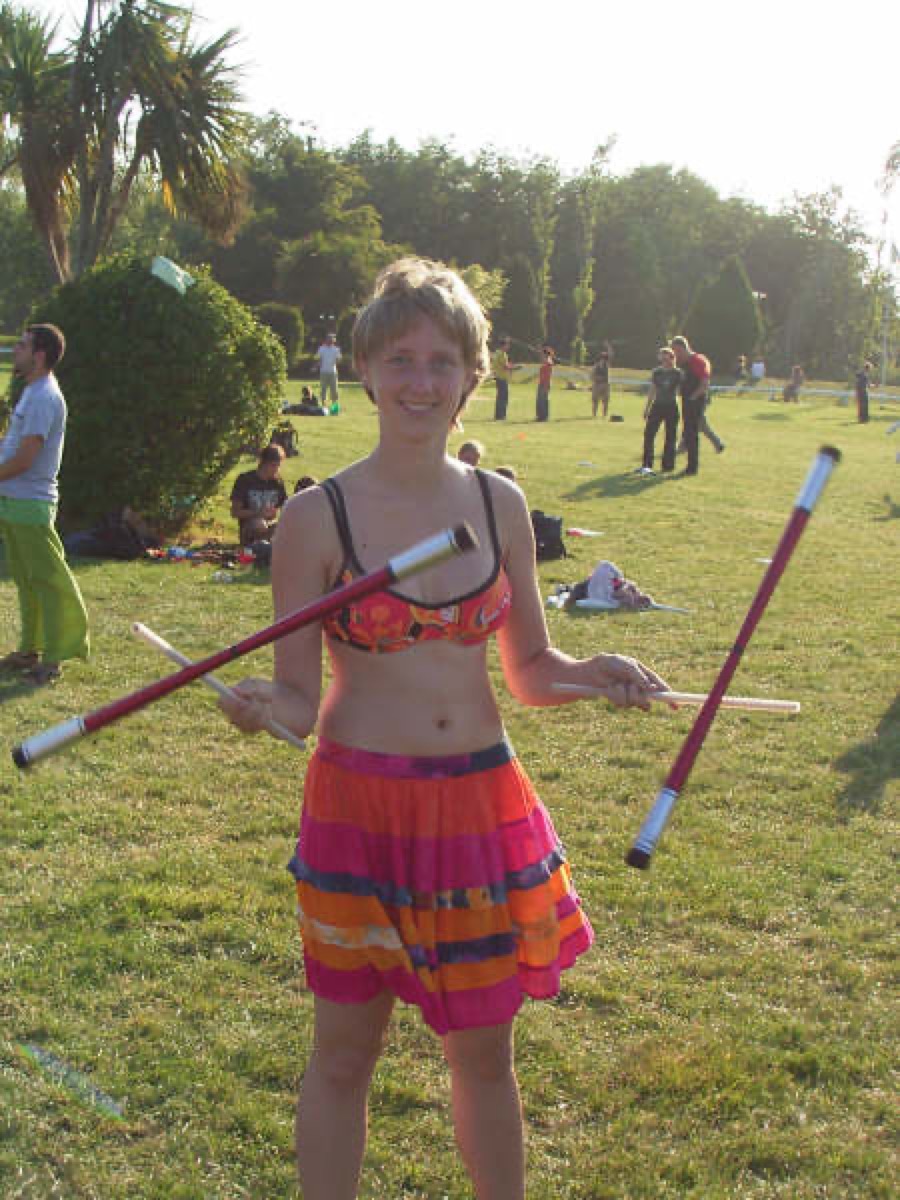
Devil Sticks
A centuries-old juggling prop — a tapered center stick twirled between two hand sticks — exploded as a US schoolyard and festival craze in the 1990s. Vendors at mall kiosks sold neon-taped and rubber-tipped versions to kids who spent recess mastering the mesmerizing spin alongside hacky sacks and classic yo-yos.

Beanie Babies
Ty Warner's small, under-stuffed plush animals launched in 1993 with a genius (and cynical) business strategy: artificial scarcity through deliberate 'retirements' sparked a mid-90s speculative mania. Kids and desperate adults bought price guides, protected tags with plastic sleeves, camped out for McDonald's Teenie Beanies, and treated them as retirement investments before the bubble collapsed around 1999.

Razor Scooters
The folding aluminum kick scooter that showed up in 2000 and sold millions before parents and shin guards became mandatory equipment. Named Spring/Summer Toy of the Year in 2000, Razor Scooters were on every driveway and schoolyard by 2001 — until suddenly they weren't, and the brand settled into a comfortable half-life of summer rentals and nostalgia.