Yahoo! Answers
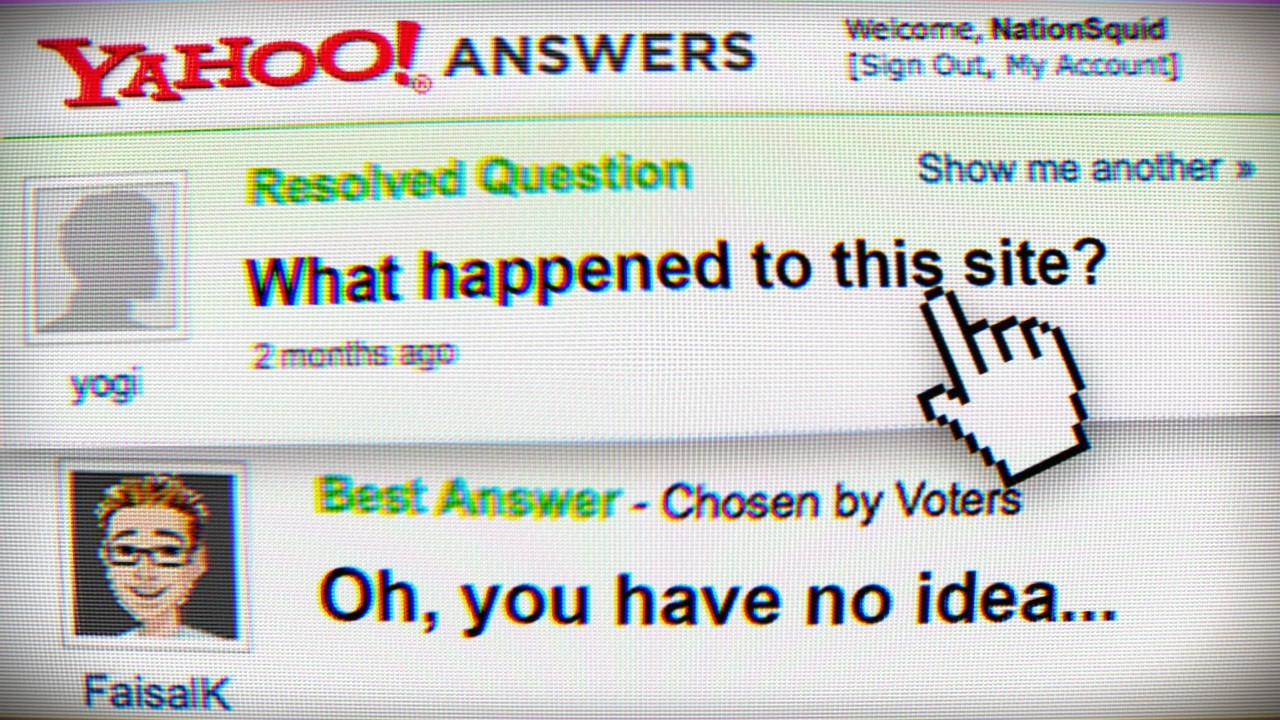
The internet's town square of homework panic and genuine confusion. Anyone could ask, anyone brazen enough could answer, and askers crowned a "Best Answer" from strangers of wildly varying wisdom. At its 2009 peak, Yahoo claimed 200 million users were on the site asking the things they were too shy to Google.
Yahoo! Answers launched in beta on December 8, 2005, opened fully in May 2006, and replaced the older Ask Yahoo! feature. The premise was radical in its flatness: no authority, no editorial gate, just a crowd-sourced pile of human knowledge and panic. A seven-level points system kept people answering — with bonus points when an asker picked your reply as "Best Answer" — turning the site into a reputation economy where strangers competed to be the most helpful voice in the room.
By 2009, staff claimed 200 million users worldwide and 15 million visitors a day. But the site's truest magic was the unhinged question — the sincere, desperate, unfiltered thing you'd never say aloud. The 2006 post "how is babby formed? How girl get pragnent?" became a copypasta and YouTube-remix meme after Something Awful's Jon Hendren surfaced it, and it captured the spirit of the place: real confusion, zero shame, a million strangers trying to help. Homework questions, relationship panics, "is this normal" confessions — all answered by people who may have just made up their credentials.
By 2015 the party was over: the US monthly audience had shrunk 77% to 5.6 million, per Quantcast. The site went read-only on April 20, 2021 and closed entirely on May 4, 2021. The volunteer Archive Team saved 4.75 terabytes before the lights went out — a partial snapshot of humanity asking everything it was too embarrassed to Google, mourned now mostly in screenshots.
Similar items

Ask Jeeves
The search engine with a cartoon butler you asked full questions in plain English. Type "How tall is the Eiffel Tower?" and Jeeves would fetch the answer — a friendlier face on the early web.

Early Facebook
Mark Zuckerberg launched TheFacebook from a Harvard dorm in 2004, and it spread to college campuses like a virus — exclusive, intimate, and gated behind a .edu email address. By 2006, when it opened to anyone with an email address, the velvet rope had fallen and the era was over.

AddictingGames.com
The flash-game portal that gave "I'm bored" a URL. AddictingGames launched in 2002 as a constantly updated grid of free browser games, became one of the sites school IT departments most loved to block — and somehow outlived Flash itself.

AIM & MSN Messenger
The after-school ritual: logging on to a dial-up modem, scanning your buddy list, typing AIM away messages packed with song lyrics and veiled drama, and knowing your 12-year-old screen name would haunt you forever. AIM and MSN Messenger were the social nervous system of the '90s and 2000s — instant, informal, and utterly addictive.