XM vs. Sirius

Two companies, two satellite fleets, a hundred-plus channels each, and a decade of "which one has Stern?" XM had baseball, Oprah and Bob Dylan; Sirius had the NFL and Howard. They burned billions, then merged.
Satellite radio was a lobbying war before it was a product. Martine Rothblatt founded Satellite CD Radio in Washington in 1990 and was the first to ask the FCC for frequencies, provoking "a furor" among terrestrial broadcasters. David Margolese took control in 1992, renamed it CD Radio, spent five years winning FCC approval and five more raising $1.6 billion, and in 1999 renamed it Sirius to shed the aging CD association. The FCC sold only two licenses, in 1997: Sirius bid $83.3 million for its own, and the other went to XM, a spin-out of the American Mobile Satellite Corporation whose backers included General Motors, DirecTV and Clear Channel, with a 12-year deal to put XM in GM cars through OnStar.
XM launched first, on September 25, 2001, in San Diego and Dallas–Fort Worth with 100 channels, going nationwide that November from satellites named "Rock" and "Roll." Sirius, with three satellites launched from Kazakhstan, followed on February 14, 2002, in Denver, Houston, Jackson and Phoenix, promising commercial-free music and talk free of FCC decency rules. Then came the talent race. Sirius signed Howard Stern on October 6, 2004 — five years at $100 million a year, exclusive from January 9, 2006, with Stern citing intensified FCC enforcement after the Super Bowl halftime scandal — having already bought seven years of NFL games for $220 million in cash and stock in December 2003. XM had put Opie and Anthony on the air that same week, and answered with an 11-year, $650 million Major League Baseball deal, a $55 million Oprah Winfrey deal in 2006 and Bob Dylan's Theme Time Radio Hour from May 2006. Receivers — Sirius's Stiletto and Sportster, XM's Inno and Helix — hung off dashboards and home docks, and the RIAA sued XM over the portables' recording feature.
Neither could afford the war. When the merger was announced on February 19, 2007, the two had nearly 14 million subscribers combined, nearly 8 million of them XM's. The FCC had said a month earlier that its own licensing rules forbade a merger; after a 57-week review the Justice Department approved it in March 2008, the FCC voted 3–2 in July, and Sirius XM Radio was born on July 29, 2008, with 18.5 million subscribers, $19.7 million in fines for past rule violations, and a condition that it sell a radio that could receive both services within a year. The lineups merged that November, the company prepared to file for Chapter 11 in early 2009 before a Liberty Media loan, and the separate XM and Sirius brands were retired by February 2011.
Similar items

Dashboard GPS Units
Before your phone knew where you were going, a suction-cupped gadget on the windshield did. Punch in an address, obey the robotic voice, and brace for the deadpan "Recalculating…" every time you missed a turn. It ruled the dashboard for a decade — then evaporated into the phone.

iPod
Steve Jobs unveiled the iPod on October 23, 2001, promising "1,000 songs in your pocket." The original model packed a 5GB hard drive, mechanical scroll wheel, and FireWire connection—Mac-only, $399. The click wheel, iTunes Music Store (2003), and later Windows support made it the gateway device to digital music and one of the most influential electronics ever built.
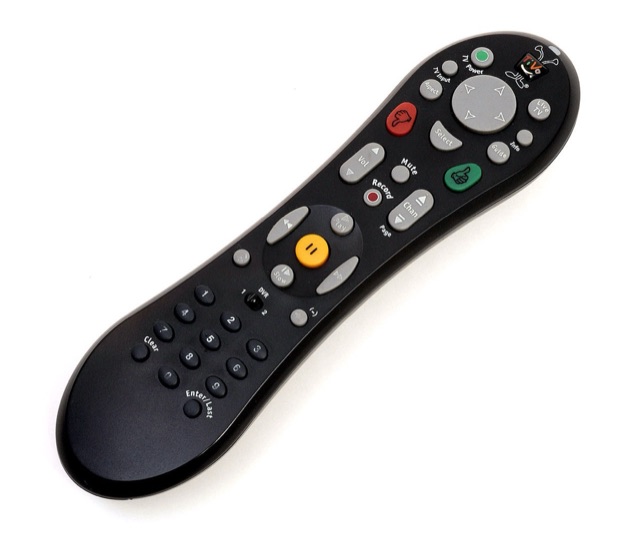
TiVo
The machine that finally bent television around your schedule instead of the other way around. Pause live TV, rewind the play you just missed, record a whole season by name — no tapes, no timers. "TiVo it" became a living-room verb.

Cingular Wireless
The orange X, the "Raising the Bar" signal bars, Rollover minutes, and a name that vanished days before the iPhone went on sale. Cingular was America's biggest wireless carrier for not quite three years.