Waldenbooks

The bookstore in every mall, where paperbacks, magazines and calendars met a kid's allowance — more than a thousand stores at the peak, and a Preferred Reader card nearly five million people signed up for in its first year. The superstores ate it from the inside.
Waldenbooks began in the Depression as a lending library. On March 4, 1933, Lawrence Hoyt, a former Simon & Schuster sales manager, and Melvin T. Kafka opened a rental library inside a department store in Bridgeport, Connecticut, lending books for three cents a day, and named the business after Thoreau's Walden; Hoyt had grown up near Walden Pond. By 1948 they had 250 rental locations. As cheap paperbacks replaced rentals, they moved into selling, and in 1962 the first Waldenbooks store opened in the Northway Mall in Pittsburgh. The shopping mall made it: after the department-store chain Broadway-Hale bought the company in 1969, and Kmart bought it in 1984, Waldenbooks was the largest bookstore chain in the country, and it opened its 1,000th store in 1986.
By the turn of the 1990s the chain had crossed $1 billion in sales, and in March 1990 it launched its Preferred Reader program, a frequent-buyer club with a small annual fee, ten percent off everything and a $5 certificate for every $100 spent. It signed up a million members within months and approached five million by the end of the year. Under Kmart, Walden had also launched sister chains, Waldensoftware for computer games and software and Waldenkids for educational toys, and it bought the U.S. stores of Canada's Coles in 1987. In 1991 a new chief executive cut back on toys, games and videos to get the chain's 1,300 stores "back to basics." But the mall store was the whole model, and that became the problem: as big superstores caught on, mall-based stores accounted for only about 20 percent of bookselling.
In October 1992 Kmart bought the superstore chain Borders, and in 1994 it merged Waldenbooks, Borders and Brentano's into one company, which went public on its own in 1995 as the Borders Group. Waldenbooks became the parent's small-format mall arm. From 2004 many stores were rebranded Borders Express, and in January 2010 about 200 more closed, nearly two-thirds of those left. On July 18, 2011, Borders Group filed to liquidate, and the last Waldenbooks went with it. In 2018 a teaser for the third season of Stranger Things, styled as a 1985 mall commercial, advertised a "newly opened" Waldenbooks among the stores.
Similar items
Borders
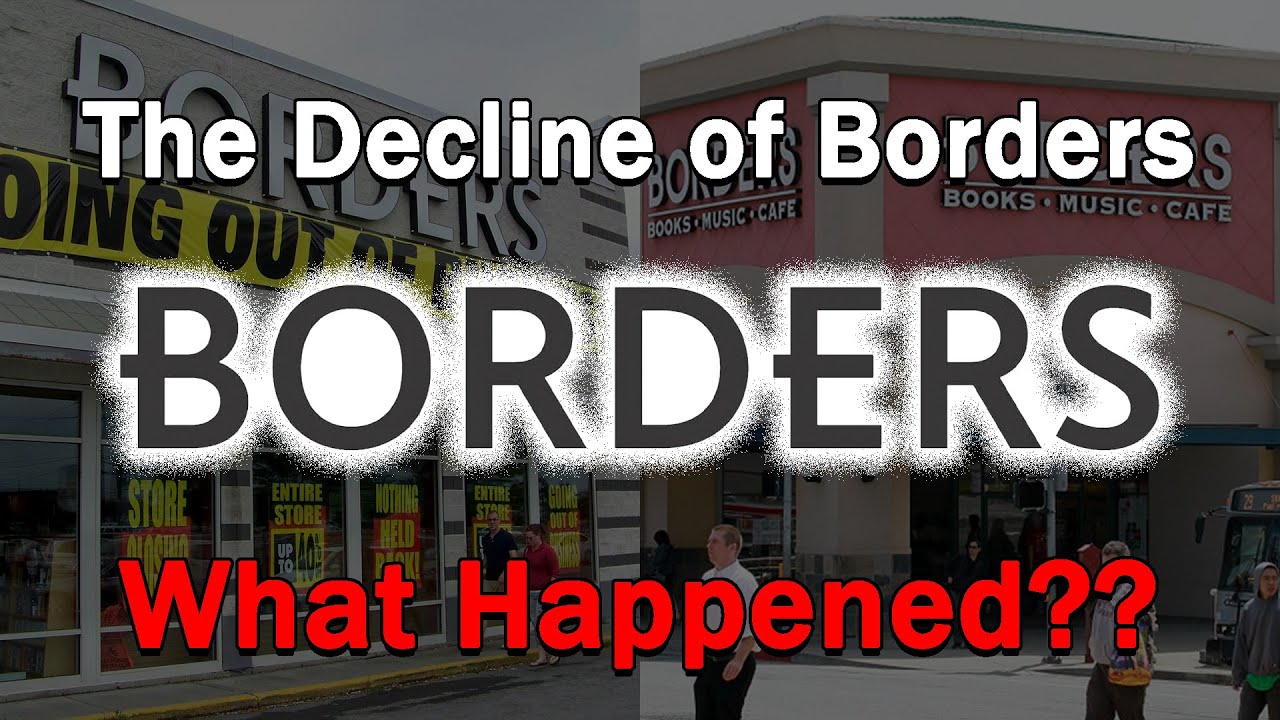
Three hours in the armchairs with a stack of books you never bought, a chai from the café, and a lap through the CD listening stations — Borders wasn't a store so much as a place to be. Then it was gone, all of it, in a single September.

Sam Goody
The ubiquitous mall record store where 90s kids bought CDs, cassettes, and band tees. Sam Goody was the go-to destination for new releases and the social hub of music shopping before big-box discounters and digital downloads reshaped retail.

KB Toys
The cramped, stacked-to-the-ceiling toy store tucked into every American mall — smaller and more chaotic than Toys "R" Us, with clearance bins spilling into the aisles. It was the impulse-buy toy stop on any mall trip, right up until it liquidated for good in 2009.

Mall Madness
The electronic board game that let you live out the ultimate '90s fantasy: a shopping spree at the mall. A battery-powered voice called out sales — "Attention shoppers, there's a sale in the..." — while 2 to 4 players raced around a two-story plastic mall to buy everything on their list first.