V-Link

Half walkie-talkie, half cell phone, the V-Link let 90s kids call each other's handsets — and even leave voicemail — years before any of them had a real phone. It was chunky, it was expensive, and if your whole crew had one, it was the coolest gadget on the block.
The V-Link came from YES! Entertainment, the Pleasanton, California toy company founded in 1992 by Donald Kingsborough — the showman who had come up through Atari's consumer business and then founded Worlds of Wonder, the 80s sensation behind Teddy Ruxpin. YES! built its name on voice gadgets: the Yak Bak mini-recorder, TV Teddy, talking storybooks. Its catalog aimed squarely at two-to-twelve-year-olds — until the V-Link, the company's one big swing at teenagers.
Billed as a "personal voice-link system" and pitched at ages ten through seventeen, the V-Link was a chunky handset that worked like a private phone network for your friend group. Within a range of about a thousand feet you could call another V-Link directly and chat in real time, or — the killer feature — leave a recorded voice message, built on the same ChipCorder voice-chip technology that ran the Yak Bak. There were no tolls, no monthly charges, and no parents picking up the other line: kids could reach each other at school, at the mall, or around the neighborhood, completely free of the family phone.
Then everything went wrong at once. The devices shipped to retailers without the FCC approval their low-power transmitters required, ongoing shipment delays kept them out of stores until very late in the 1996 Christmas selling season, and the kids who did get one found the performance underwhelming — the general verdict, as one company history put it, was that V-Links were "an overpriced version of the walkie-talkie, but with less operating range." For a product whose whole promise was reaching friends across the neighborhood, that was fatal: a V-Link was only ever as good as the number of friends who had one.
YES! Entertainment never recovered its footing and filed for bankruptcy in early 1999, taking the V-Link down with it. The idea, though, was simply early: a phone-shaped gadget that let kids message each other without minutes, bills, or a landline was exactly what the next decade delivered, first through Nokia bricks on free nights and weekends and then through texting itself. Surviving V-Links now trade as curiosities on eBay — but for the lucky cliques where everyone had one, pulling a private phone out of a backpack in 1997 felt like living in the future.
Similar items
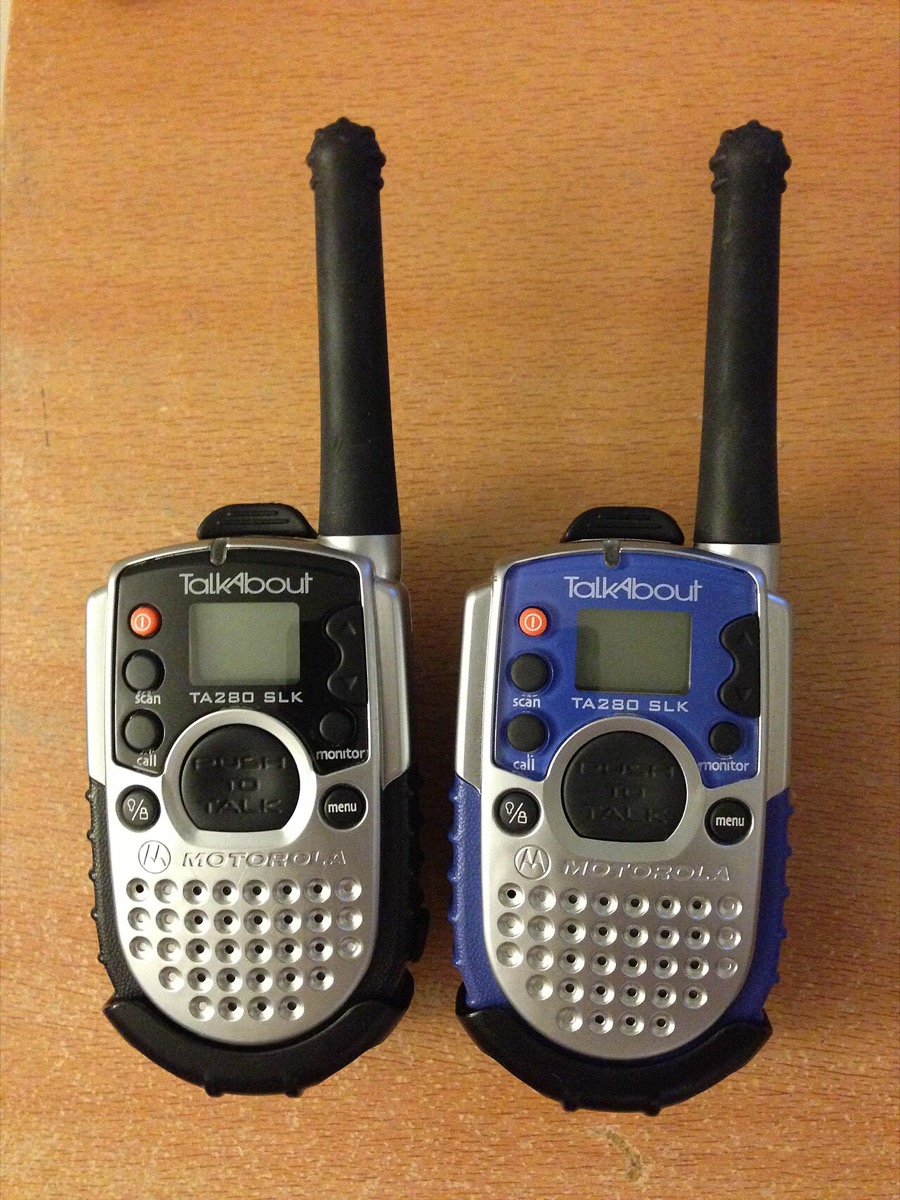
Motorola Talkabout
The chunky yellow walkie-talkies that kept families connected before everyone had a cellphone — two-car road-trip caravans, ski slopes, theme parks, and kids roaming the neighborhood with a two-mile leash. Over.

Talkboy
The handheld cassette recorder that Kevin McCallister made famous in Home Alone 2—a toy Tiger Electronics built for the movie before kids could buy it. Tape your voice, rewind it, slow it down: every kid who owned one immediately did the voice trick from the movie, and that simple gimmick was the entire appeal. Tiger Electronics' most beloved and oddly random toy, it came perilously close to being just a footnote in cinema history.

Nokia 3310
The brick phone that became a meme—Nokia's 3310 was the phone that survived drops that would kill any modern device. Released in 2000 and sold over 126 million times, it was famous for its indestructibility, the built-in Snake II game, interchangeable colored covers, and the iconic Nokia tune ringtone. It was the anti-smartphone years before the smartphone era, representing the peak of durable simplicity.

Build-A-Bear Workshop
Maxine Clark left her job running a shoe empire to open a store where kids could build their own stuffed animals. The ritual — picking the unstuffed animal, watching it fill at a machine, kissing a fabric heart and placing it inside, printing a birth certificate — became a pilgrimage rite for generations.