Take 5

Pretzel, caramel, peanuts, peanut butter and milk chocolate: five things in one bar, which is where the name comes from. Hershey launched it in December 2004 and then spent fifteen years trying to get people to notice it.
The story
Hershey released Take 5 in December 2004, with the name printed as one word, TAKE5, and a recipe that was the whole pitch. The five are a pretzel, caramel, peanuts, peanut butter and a coating of milk chocolate, sweet and salty in the same bite. Hershey tried variations (a chocolate cookie in place of the pretzel, a marshmallow version, coatings of peanut butter and white chocolate) and sold the bar in Canada as Max 5.
Hershey never quite knew what to do with it. The company cut the bar's advertising in 2011, unsure how to market it, and in 2016 tried a comeback aimed at millennials, handing the wrapper redesign to a panel of students who gave it a black background and a lime-green logo. The bar kept its admirers anyway. In 2019 the Los Angeles Times put it at the top of its candy-bar power rankings, and it was reported to be the favorite of Hershey's own chief executive, Michele Buck.
The fix turned out to be someone else's name. In June 2019 Hershey revealed that the peanut butter inside had been Reese's all along, renamed the bar Reese's Take 5 and changed the wrapper from black to orange. Sales rose more than 50 percent after the rebrand, the company said. Then, on February 2, 2020, it bought the bar a Super Bowl commercial, Hershey's first for a candy brand since 2008, in which an office worker discovers that none of her colleagues has heard of it: one has been living under a rock, another was raised by wolves and a third has his head in the sand. The tagline was "the best bar you've never heard of." Two days before the game Hershey also built a 5,943-pound Take 5, a Guinness record for the largest chocolate nut bar.
Bring it back
More like this

Hershey's Kissables
2005–2009
Miniature Hershey's Kisses in a crunchy candy shell — red, orange, yellow, green, and blue, poured straight from the pouch. Hershey's answer to M&M's lasted less than four years before quietly vanishing in 2009, leaving behind one of the 2000s' most specifically mourned candies.
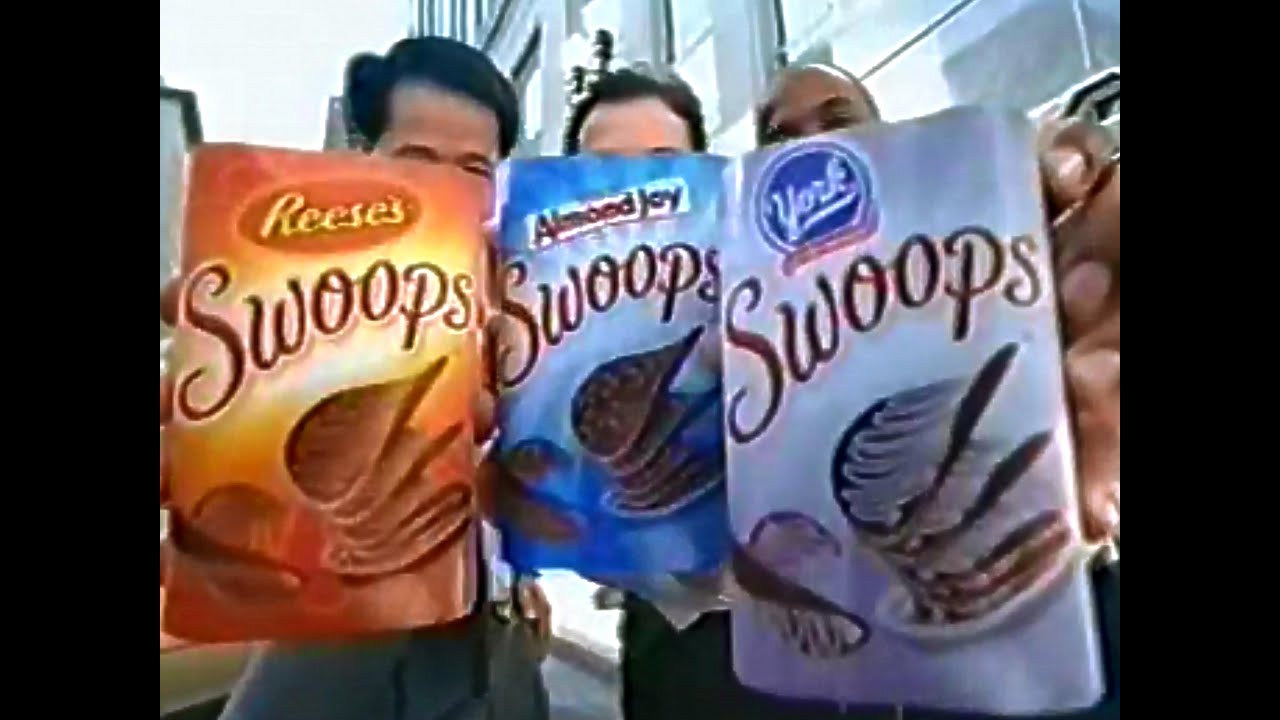
Hershey's Swoops
2003–2006
Chocolate slices shaped like Pringles potato chips, for reasons nobody could explain — and almost nobody knew they existed anyway. From 2003 to 2006 they came in snack cups, flavored like the Hershey lineup: Milk Chocolate, Reese's, York, Almond Joy. The perfect 2000s grocery-aisle experiment: an idea that made sense on a whiteboard and nowhere else.
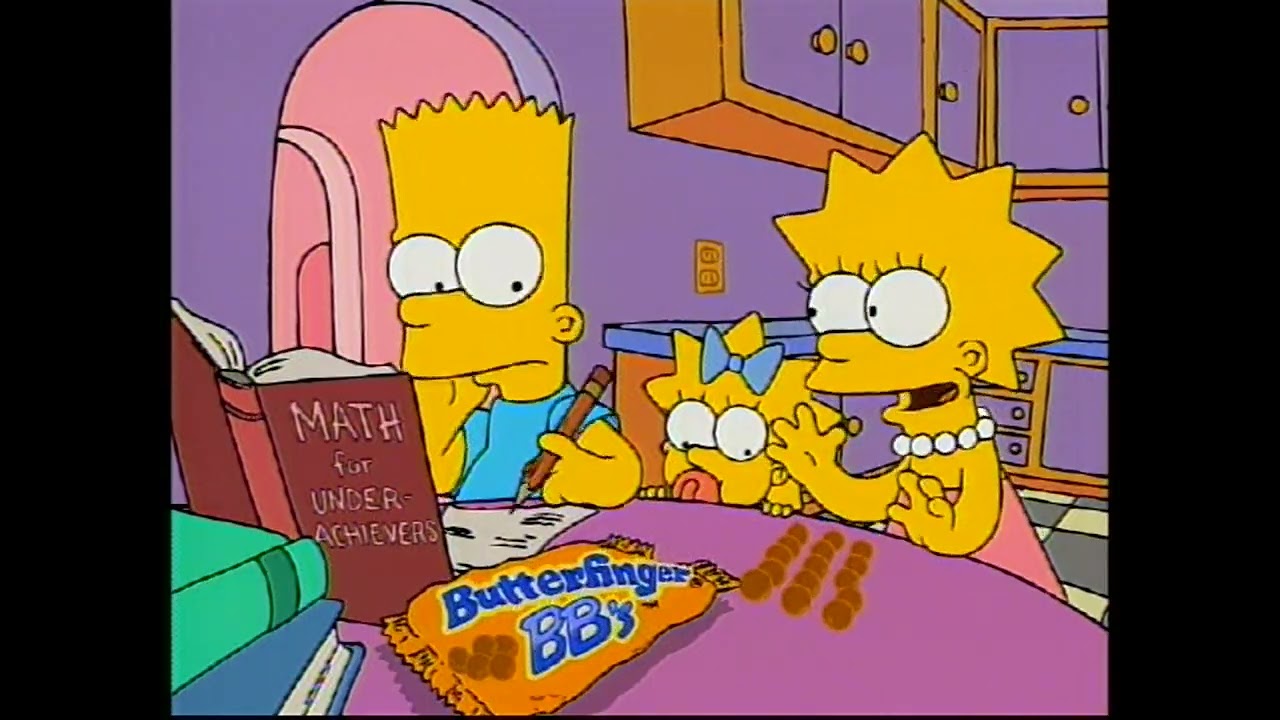
Butterfinger BB's
1992–2006
Marble-sized spheres of Butterfinger — crispy peanut-butter core wrapped in chocolate — sold in resealable pouches and at movie-theater counters. The Simpsons were the face: Homer eternally scheming to get at Bart's stash, Bart warning that nobody better lay a finger on his Butterfinger. Launched in 1992, discontinued in 2006 with no explanation — and fans never stopped asking for a comeback.

TasteTations
1996–early 2000s
TasteTations were Hershey's answer to Werther's Originals — creamy hard candies that arrived in the mid-1990s with a lineup of chocolate-inspired flavors: Chocolate, Chocolate Mint, Chocolate Raspberry, Chocolate Caramel, Caramel, Peppermint, and Butterscotch. Heavily promoted with TV spots and in-store samples, they were the candy that felt sophisticated and indulgent. Yet despite the hype, they couldn't survive the early 2000s and faded from shelves, leaving a devoted nostalgic following.