
3D Pinball: Space Cadet
The space-themed pinball table hidden in the Windows Games folder that ate untold hours in the computer lab. Rack up ranks from Cadet to Fleet Admiral, one launched ball at a time.
11 items
The space-themed pinball table hidden in the Windows Games folder that ate untold hours in the computer lab. Rack up ranks from Cadet to Fleet Admiral, one launched ball at a time.

Sierra's Dynamix studio broke the rules of pinball with 3-D Ultra Pinball in 1995—animated spaceships, UFOs, and mining drones appeared on the table as temporary targets, multiple themed tables connected at once, and the whole thing was colorful, chaotic, and absurdly entertaining. It sold over 250,000 copies in its first year, becoming a staple of family PC gaming in the shovelware era. Except it was actually *good*.

A purple gorilla who lived on your desktop, told you jokes, and quietly went through your business. BonziBuddy is the friendliest thing ever classified as adware by two antivirus companies. Half the internet remembers installing it on purpose.

The grid of gray squares you clicked to uncover numbers — and the flags you planted over the mines you hoped weren't there. Bundled with Windows for years, it was equal parts logic puzzle and nerve test.

The software that turned a blank disc into a mix CD, a backup, or a copy of something you probably shouldn't have had. Nero came bundled with drive after drive, so for a lot of people it wasn't the disc burner they chose — it was simply the one that was there. Its icon is a burning Colosseum, which is both a pun and a historical error.
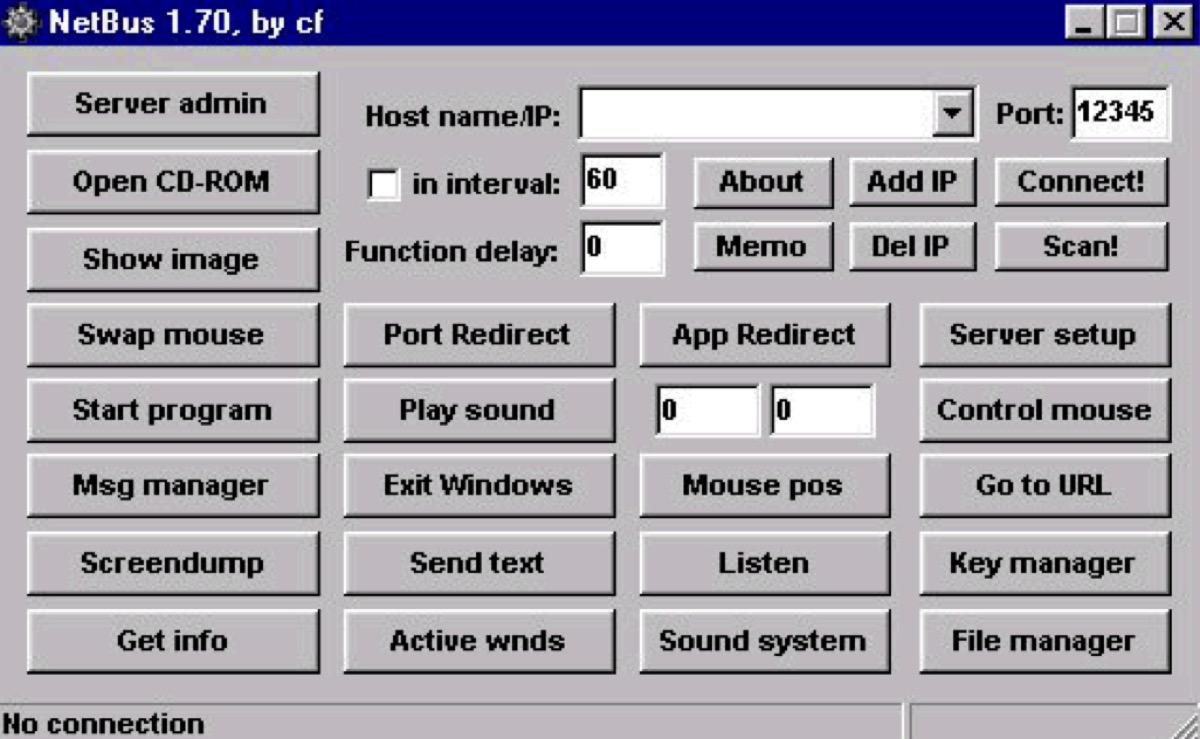
The prog that turned a friend's computer into a puppet: they ran the file, and suddenly their CD tray wouldn't stay shut. NetBus arrived in March 1998 and became one of the two names everybody in the AOL-era prog scene knew. Its author insisted it was a prank tool — and its Swedish name says exactly that.

They weren't supposed to exist — they were meant to prevent screen burn. Instead, screensavers became entertainment, the reason you stopped moving your mouse on purpose and just watched.

You picked a mode, pointed your pixel skier downhill, and raced a Windows 3.0 mountain — until the moment at 2,000 meters when something terrible crested the hill behind you. The Abominable Snow Monster of SkiFree ate a generation of office workers, and most of them never learned about the F key.
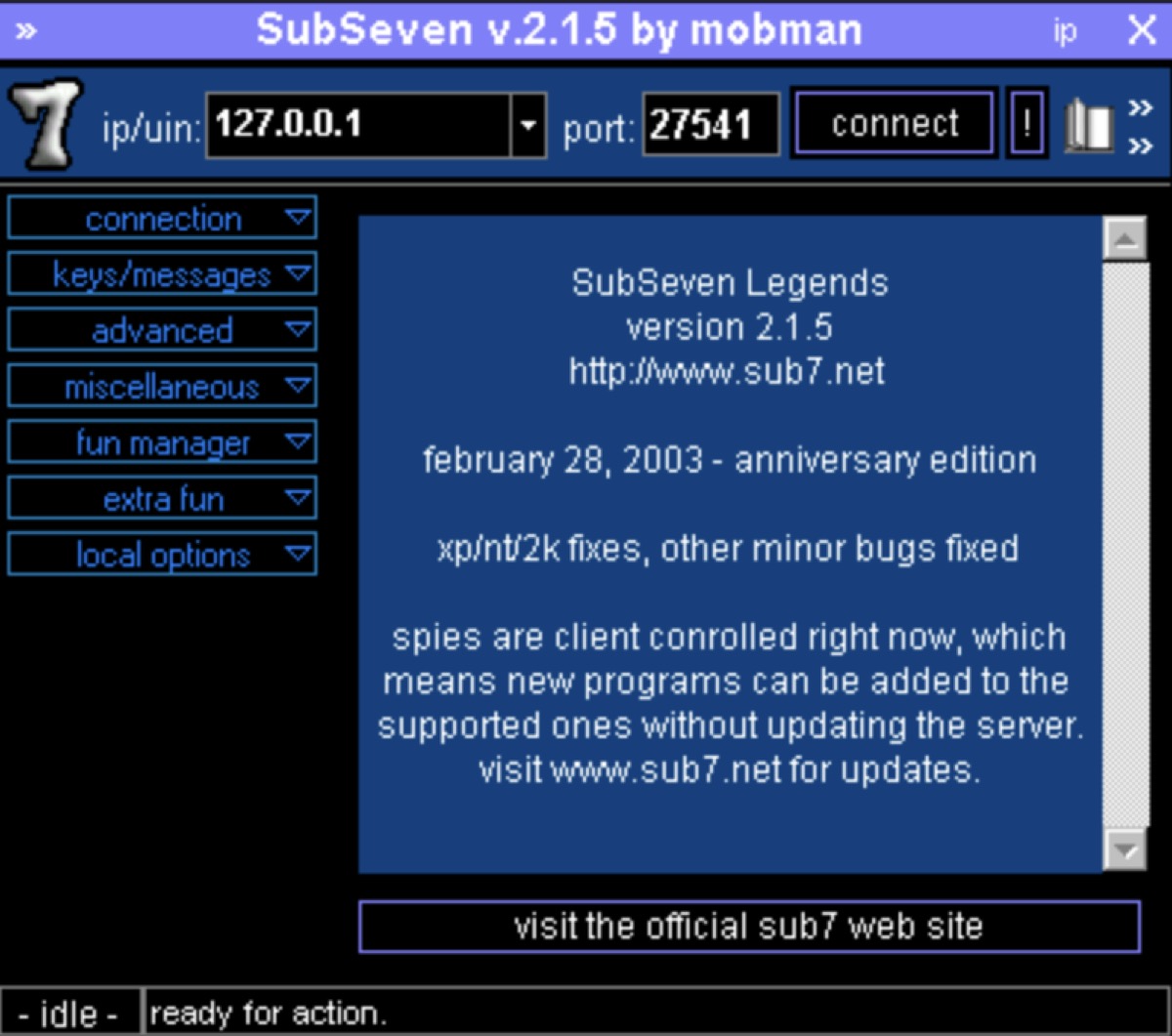
The other name every prog kid knew, and the one that got the reputation. SubSeven arrived in February 1999 doing what NetBus did but with more of everything, and it became the era's definitive "double-click this" mayhem. Its author has never been convincingly identified — and that fight is still going.

Rip the CD, hit play, go fullscreen, lights off: the swirling neon ribbons of Windows Media Player turned every family PC into a bedroom planetarium. Nobody chose to watch Alchemy exactly — it just happened to you, for hours.

The Klondike card game that shipped with virtually every Windows PC — and quietly taught a generation how to use a mouse. The real reward was winning: the whole deck cascading off the stacks and bouncing across the screen.