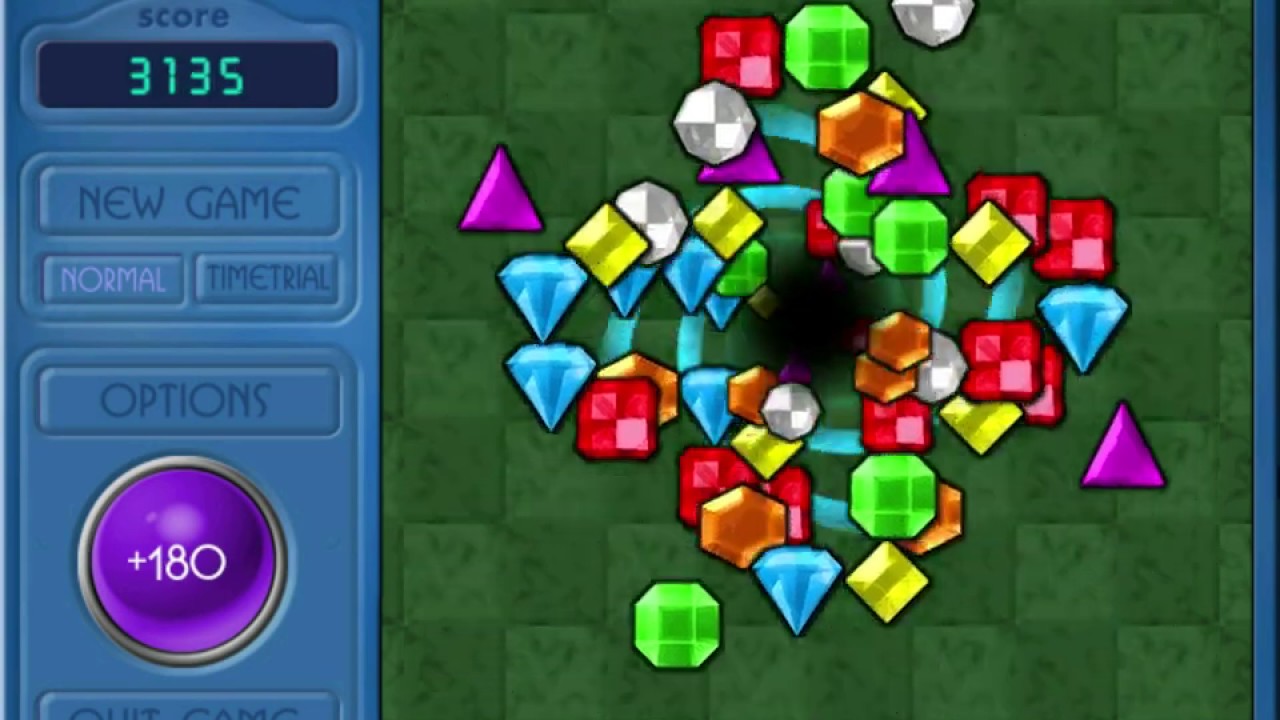
Bejeweled
Swap two gems, line up three, watch them vanish and the rest cascade down. PopCap's match-three puzzle turned a simple web game into one of the most-copied ideas in casual gaming.
19 items
Swap two gems, line up three, watch them vanish and the rest cascade down. PopCap's match-three puzzle turned a simple web game into one of the most-copied ideas in casual gaming.

The game that put a Nintendo DS in your mom's hands. You held the DS like a book, scribbled math answers with the stylus, and a floating polygonal professor told you your brain was 47 years old — so you came back tomorrow, and so did every parent and grandparent in America.
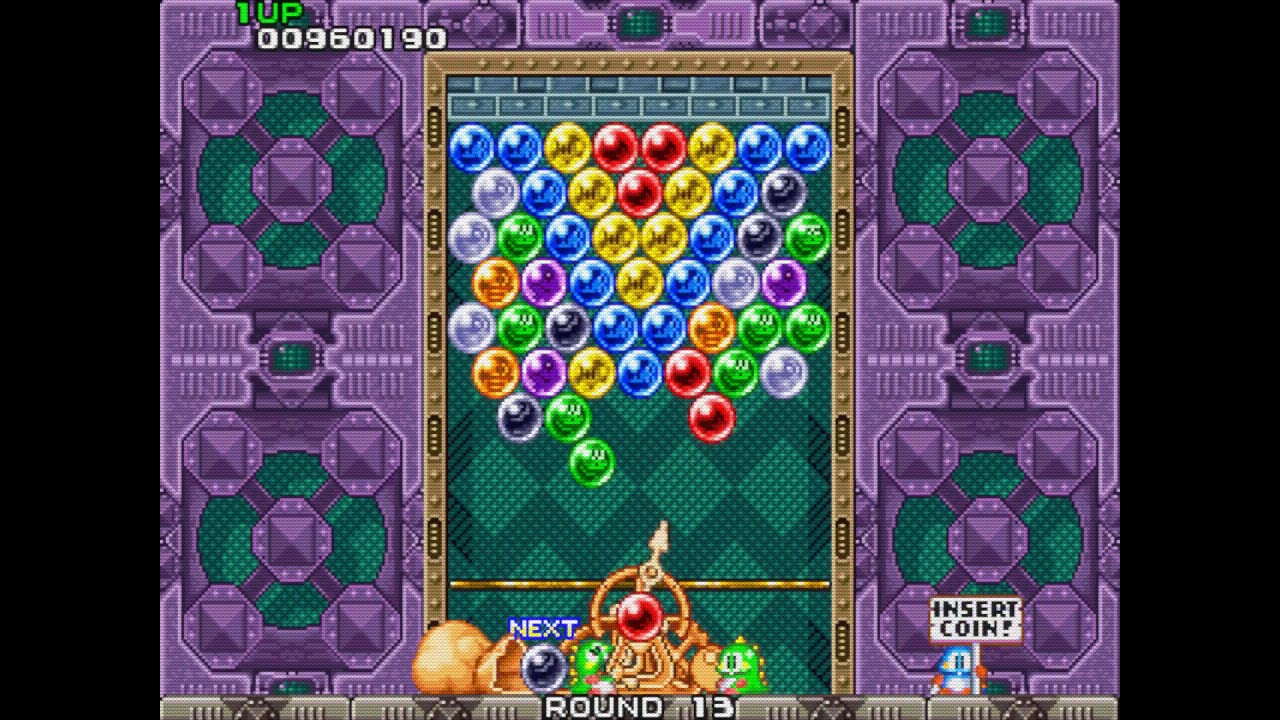
The cabinet at every bowling alley, skating rink, and pizza place: cute dinosaurs working a bubble cannon, three-of-a-color pops, and a slowly descending wall of doom. Bust-a-Move was the arcade game everybody's mom was secretly great at — and the formula was so good it never stopped being made.

The gloriously weird PS2 game where you roll a sticky ball that picks up thumbtacks, then cats, then cars, then whole skyscrapers. A candy-colored oddity with an unforgettable soundtrack that became an instant cult classic.

Guide a horde of dim, green-haired lemmings to safety by handing out jobs — Digger, Builder, Blocker, Bomber — before they walk blindly off a cliff. The 'Let's go!' squeak, the 'Oh no!' self-destruct, and one of the most-ported games ever.

Four boxes of tiny Windows games — JezzBall, Rodent's Revenge, Chip's Challenge, SkiFree, Tetris — sold to office workers under the slogan "No more boring coffee breaks." Minesweeper and FreeCell started here before Windows itself swallowed them, and a sampler disk came free in packs of blank floppies.

The grid of gray squares you clicked to uncover numbers — and the flags you planted over the mines you hoped weren't there. Bundled with Windows for years, it was equal parts logic puzzle and nerve test.
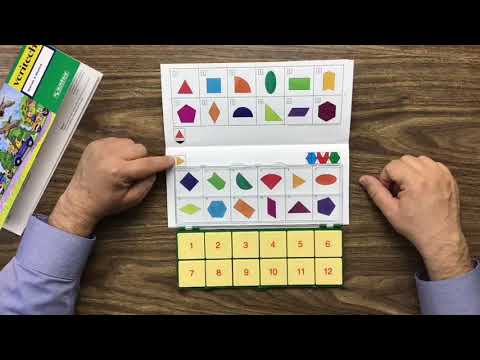
A self-checking tile puzzle: twelve numbered tiles in a clear plastic case, each with a fragment of a geometric pattern on the back. You worked through a workbook puzzle, placed each numbered tile on its answer, then flipped the case closed — if the pattern matched what was printed in the book, every answer was right. The game told you before the teacher could.

An island with no instructions, no timer, no way to die — just a series of machines to solve, each more surreal than the last. Myst proved a computer game could be a slow, atmospheric mystery with no combat and endless patience.

Abe, a stitch-mouthed floor waxer at the RuptureFarms meat plant, overhears that his people are the next product and runs, chanting, possessing guards and leading 99 fellow Mudokons to safety. The PlayStation puzzle-platformer of 1997 that let you talk to the level, and killed you constantly.

Aim a ball at a field of pegs, pray for the bounce, and when the last orange peg falls the game slows down, zooms in, shouts "EXTREME FEVER" and plays Beethoven's "Ode to Joy" at you. PopCap's February 2007 pachinko-with-unicorns sold slowly until Valve tucked a free version into The Orange Box, and then it passed 50 million downloads.

A portal gun, a passive-aggressive AI, and a promise of cake. Portal shipped in 2007 as the little extra in Valve's Orange Box — built by fewer than ten people — and walked away with the whole bundle's spotlight, a Game of the Year trophy, and half the internet's vocabulary.

Launch goofy grimacing faces up the board, match three, and watch the ceiling ratchet down — while your AIM away message covered for you. Snood was the shareware puzzler installed on every dorm and computer-lab machine at the turn of the millennium, and it was written by a geology professor as a gift for his wife.
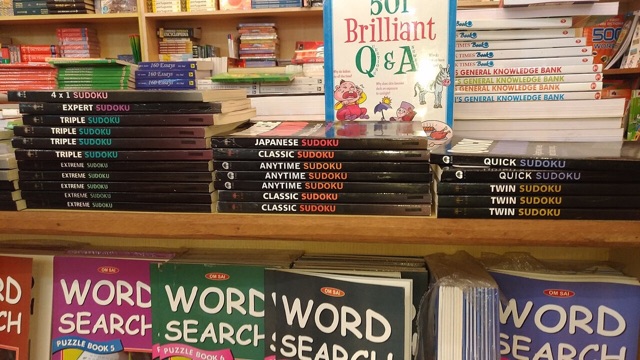
Remember when sudoku grids were suddenly everywhere — newspapers, airport bookstores, that one waiting room where time moved differently? The mid-2000s delivered the last great pencil-and-paper puzzle obsession, and it trained a generation of commuters to genuinely fear the word "fiendish."

The 1993 haunted-mansion puzzle game that came on two CD-ROMs when most PCs had no CD drive, and sold the drives anyway. Ghostly actors in a pre-rendered house, 19th-century brainteasers, a toymaker named Stauf (an anagram of Faust), and Bill Gates calling it "the new standard in interactive entertainment."
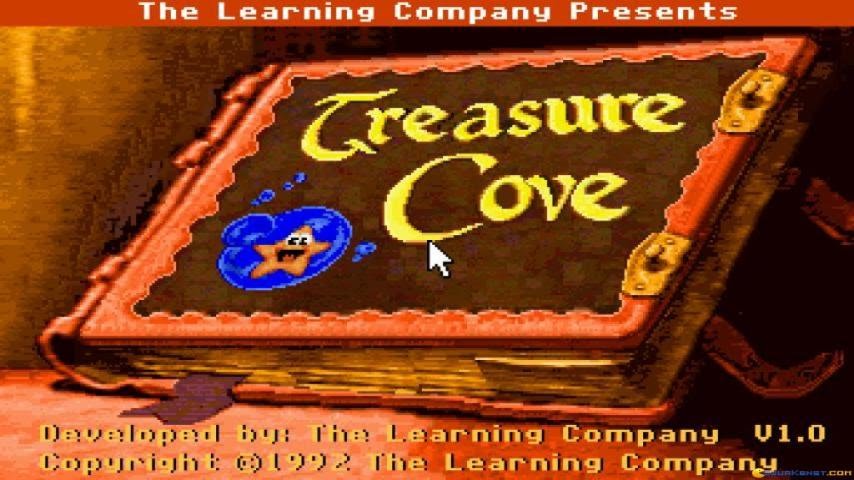
An underwater educational adventure game where kids explored a cove, collected gems and treasures, and solved reading and science puzzles. A sibling title to Treasure Mountain! from The Learning Company's edutainment catalog, released in 1992.

An educational adventure game where kids climbed a mountain solving reading, math, and logic puzzles to catch the Master of Mischief's elves and collect treasure. A classroom-and-home edutainment staple of the early 1990s, published by The Learning Company for DOS, Windows, and Mac.

Find the man in the red-striped shirt hiding in impossibly crowded scenes — a simple concept that became a full-blown craze when American kids discovered Where's Waldo? in the early 1990s. It swept schools, Halloween parties, and bookstore displays.
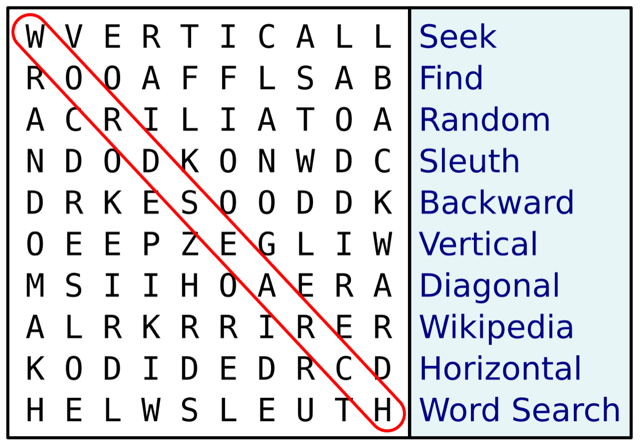
The themed word-search worksheet the teacher photocopied for Friday afternoons and holiday parties — a grid of letters hiding a list of words, hunted down with a highlighter. Fall leaves, Halloween, Thanksgiving: there was a seasonal one for everything.