Star Trek

The franchise that started in 1966 hit its cultural zenith in the 1990s, when two series aired simultaneously, a film franchise thrived alongside them, and Trek's technobabble and ethics debates penetrated the mainstream. From TNG's syndication dominance to Voyager's network-launching premiere, Star Trek was inescapable.
Gene Roddenberry's original Star Trek premiered on NBC on September 8, 1966, and spawned a devoted following that never died. But the franchise's true saturation came in the 1990s. The Next Generation (1987–1994) bowed out in May 1994 while still syndication's top-rated drama, Deep Space Nine (1993–1999) proved there was room for a darker, more serialized Trek, and Voyager's two-hour "Caretaker" premiere on January 16, 1995 literally launched the United Paramount Network — 21.3 million viewers tuned in, a number UPN would never see again.
For most of the decade, two Trek series aired simultaneously while the film franchise kept pace: Generations arrived in November 1994, then First Contact in November 1996, the box-office high point of the TNG-era films. Convention culture flourished, "Resistance is futile" entered everyday speech, and technobabble became the lingua franca of sci-fi fandom. There was simply more Star Trek on the air in the mid-90s than at any point before.
The peak faded after the decade closed. Enterprise's final episode aired on May 13, 2005, ending an unbroken eighteen-year run of new Star Trek on television. A hit reboot film followed in 2009, but the relentless two-shows-and-a-movie factory that defined the 1990s never quite returned.
Similar items

Star Trek: First Contact
The Borg Queen haunted the multiplex in Jonathan Frakes's feature directorial debut, with James Cromwell as the boozy, reluctant legend who invents warp drive. It became the highest-grossing and best-reviewed of the TNG-era films — the moment 90s Trek proved it could do full Hollywood scale.

Star Trek: Insurrection
Jonathan Frakes's second Trek film is the cozy one — Picard defying Starfleet to defend a peaceful people and their rejuvenating planet. Critics shrugged that it played like a long TV episode; for a lot of fans, that was exactly the appeal.
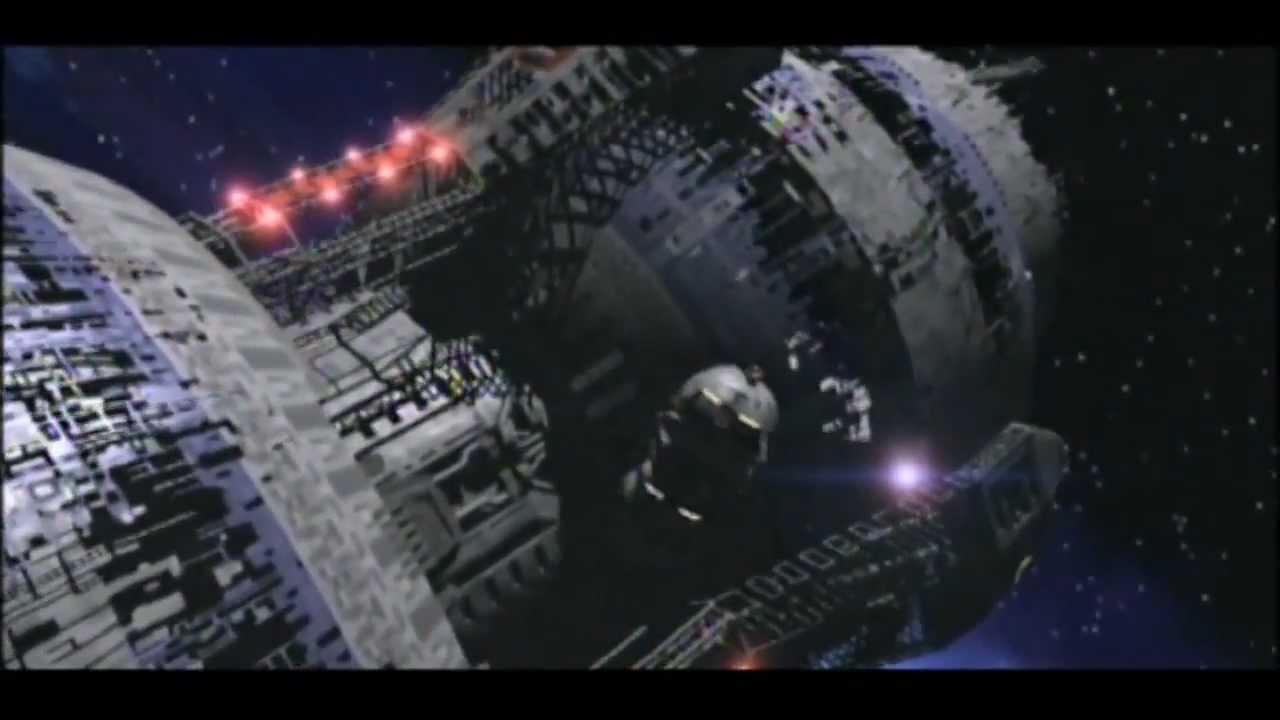
Babylon 5
Before serialized television was the norm, J. Michael Straczynski pitched a "novel for television" — one five-year story with a planned beginning, middle, and end, most of it written by him alone. Babylon 5 was the scrappy syndicated space station that proved appointment sci-fi didn't need a Trek badge.
UPN
The United Paramount Network launched in January 1995 on the back of a Star Trek premiere that drew 21 million viewers — a number it spent the next eleven years chasing. UPN was scrappy, ambitious, and chronically broke, but it gave us Voyager, Moesha, SmackDown, and Buffy's final seasons — and in your town it wasn't "UPN," it was UPN 9, or UPN 50, or whatever your channel was.