Sega CD

The CD-ROM deck that bolted under your Genesis and turned it into a two-story tower of futuristic black plastic. At $299 in 1992 it promised arcade-quality full-motion video — and the grainy FMV era it kicked off became gaming's most fondly mocked experiment. Night Trap's live-action thrills even landed it in front of Congress.
Sega's CD-ROM add-on arrived in Japan as the Mega-CD in late 1991 and hit North America on October 15, 1992, at $299, promising to bring full-motion video and CD-quality sound to the Genesis. The pitch was intoxicating: real actors, real cinematics, the future of gaming on a shiny disc. Sewer Shark came bundled in.
Night Trap, an FMV adventure by Digital Pictures, sat at the center of the 1993 congressional hearings on video game violence. Following the hearings, Sega and other manufacturers came together in 1994 to establish a unified rating system under the ESRB. Meanwhile, Sonic CD proved the format could deliver a genuinely acclaimed game — but the bright spots couldn't carry the platform's weight.
Sega discontinued the add-on on January 1, 1996, after 2.24 million units sold — a $299 bet that the future belonged to FMV. The grainy video sequences became gaming's most beloved punchline, and the era is remembered half-fondly, half as a cautionary tale about chasing novelty over substance.
Similar items

Sega Genesis
Sega's 16-bit home console arrived in 1989 and dominated the early 90s with its attitude, speed, and Sonic the Hedgehog. The Genesis ('Mega Drive' everywhere else) promised 'Blast Processing' and delivered games that felt faster and edgier than what Nintendo offered, winning hearts — and quarters — across a generation.
![Video thumbnail — Sega Saturn - It's Out There (1995 Launch Commercial) [HD]](https://i.ytimg.com/vi/cyv6ZehQyTQ/hqdefault.jpg)
Sega Saturn
Sega's answer to the PlayStation: a cartridge-free arcade powerhouse with dual processors, a CD-ROM drive, and a cult library of 3D fighters and dreamers. The Saturn dominated Japan but stumbled spectacularly in the West after Sega's infamous E3 surprise launch—a retailer and developer betrayal that became business-school legend.

3DO
The 3DO was an audacious gamble: a roughly $700 CD console that The 3DO Company didn't even build itself — partners like Panasonic manufactured it under license, with royalties flowing back to Trip Hawkins' company. Time magazine called it 1993's "Product of the Year." No amount of prestige could overcome the price.
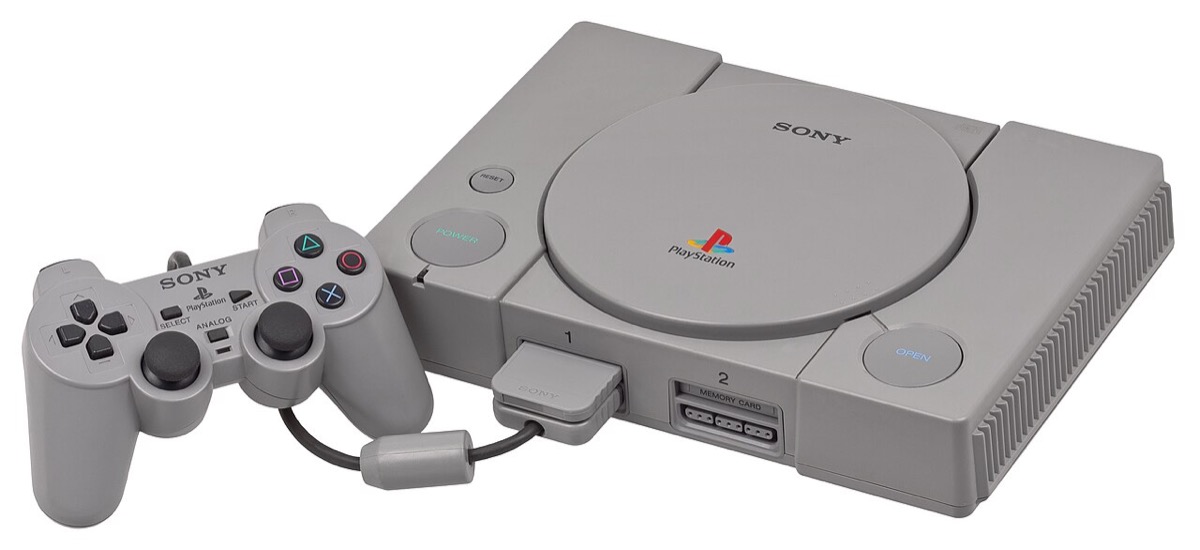
PlayStation
The grey box that took gaming off the cartridge and onto the CD — and took it away from Nintendo and Sega while it was at it. Sony's first console arrived in Japan at the end of 1994 and in America the following September, and it made a generation fluent in memory cards, load screens, and demo discs. It started as a Nintendo project that Nintendo walked away from.