3DO

The 3DO was an audacious gamble: a roughly $700 CD console that The 3DO Company didn't even build itself — partners like Panasonic manufactured it under license, with royalties flowing back to Trip Hawkins' company. Time magazine called it 1993's "Product of the Year." No amount of prestige could overcome the price.
Trip Hawkins, the founder of Electronic Arts, conceived the 3DO around a revolutionary business model. Rather than manufacture hardware itself, The 3DO Company licensed its design to partners — Panasonic, Sanyo, GoldStar — who built the machines while 3DO collected royalties. Hawkins pitched developers a sweeter deal, too: lower per-game royalties than Nintendo or Sega demanded. The strategy sounded brilliant on paper.
The market seemed to agree, at least initially. The console launched in the US on October 4, 1993, and Time magazine named it the 1993 "Product of the Year." But the roughly $700 price tag made it a luxury purchase, and sales estimates run only from 1.38 to 2 million units. The promised M2 successor, which might have reset the competitive position, never shipped as a console.
By 1996, PlayStation and Saturn pricing had squeezed the 3DO out and it was discontinued. It remains the paradigm case study in console economics: no matter how innovative the business model or how strong the reviews, a $700 game console cannot win against $300 competitors.
Similar items

Atari Jaguar
The Atari Jaguar launched in November 1993 at $249.95 with a bold claim: the world's first 64-bit home console. Critics immediately cried foul — its two 32-bit chips didn't quite add up. The PowerPad controller, bristling with 17 buttons including a phone-style keypad, didn't help. It became Atari's last console.

Sega CD
The CD-ROM deck that bolted under your Genesis and turned it into a two-story tower of futuristic black plastic. At $299 in 1992 it promised arcade-quality full-motion video — and the grainy FMV era it kicked off became gaming's most fondly mocked experiment. Night Trap's live-action thrills even landed it in front of Congress.
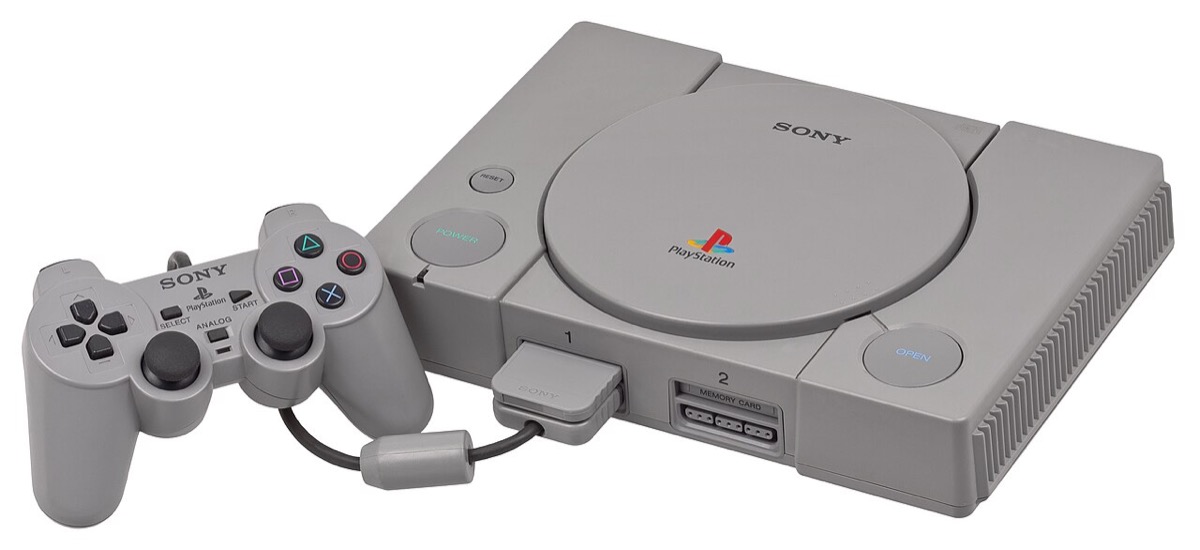
PlayStation
The grey box that took gaming off the cartridge and onto the CD — and took it away from Nintendo and Sega while it was at it. Sony's first console arrived in Japan at the end of 1994 and in America the following September, and it made a generation fluent in memory cards, load screens, and demo discs. It started as a Nintendo project that Nintendo walked away from.

Nintendo Virtual Boy
Nintendo's red-and-black 3D machine that sat on a table and asked you to press your face into it. It was on sale in Japan for about five months and in America for about a year, and it is the lowest-selling standalone console Nintendo ever put its name on. Everyone remembers the demo unit at the toy store, and everyone remembers the headache.