Quiksilver
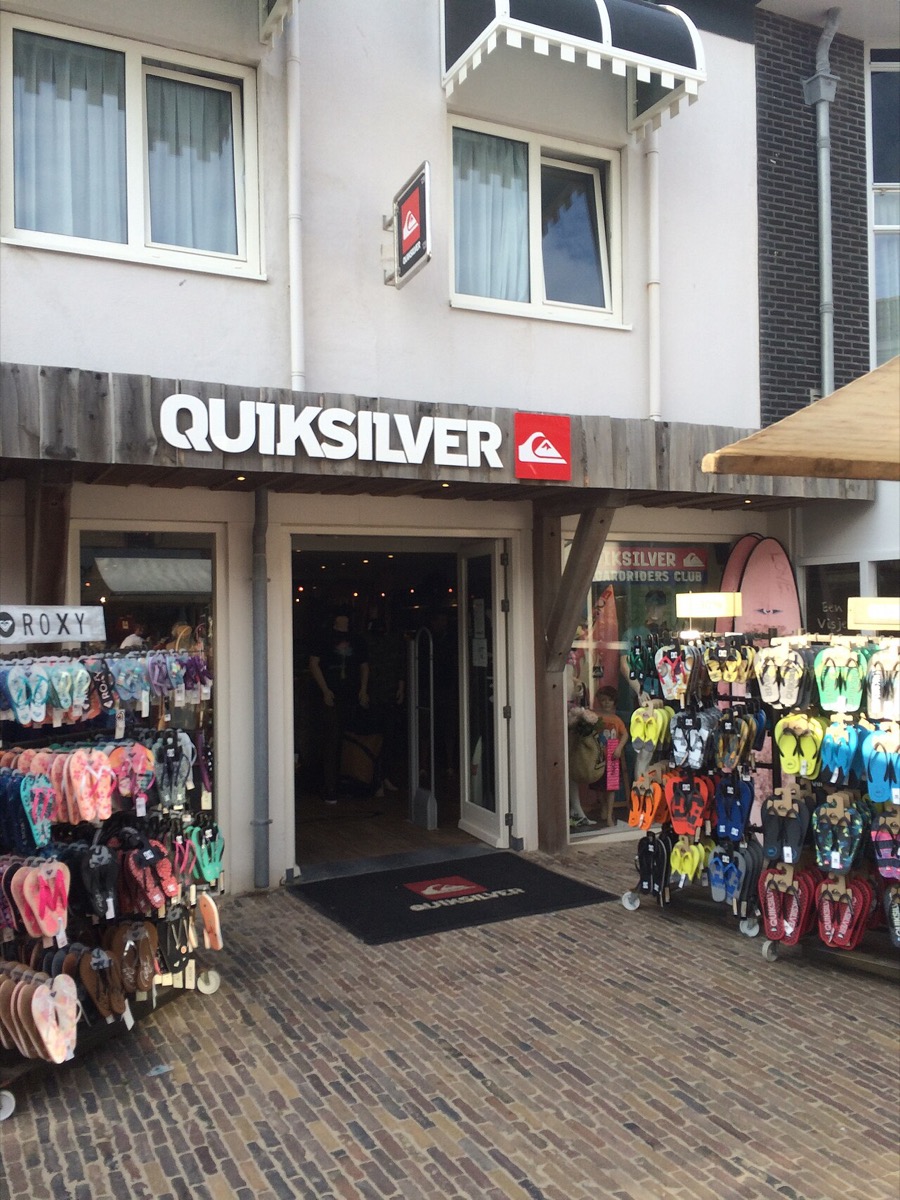
Photo credit: Photo: Jan Hagelskamp1, CC BY 4.0, via Wikimedia Commons
The mountain-and-wave logo that ruled 90s school hallways a thousand miles from any ocean — spelled Quiksilver, no "c". Boardshorts built for surfers became a hallway uniform for landlocked kids who'd never touched a board.
Quiksilver began in 1969 in Torquay, Victoria, Australia, when surfers Alan Green and John Law started making better boardshorts. The logo arrived in 1973, inspired by Hokusai's woodblock print "The Great Wave off Kanagawa" — a snowcapped mountain inside a curling wave.
The US chapter began in April 1976, when Hawaiian surf star Jeff Hakman won a competition in Australia, stayed up all night over dinner and champagne with Green and Law, and walked away with the US license. With USC business grad Bob McKnight aboard, Quiksilver USA launched that year; their first production run of 600 boardshorts in six designs sold out of three Southern California surf shops in nine days. By the early 1980s Quiksilver was one of the surf industry's leading makers, and in December 1986 it went public with annual sales of $19 million.
The 90s brought the mainstreaming that defined the brand's peak: surf style went landlocked, and Quiksilver tees, backpacks and boardshorts filled malls and school hallways worn by teenagers who'd never seen the ocean. Sister brand Roxy launched in 1990 (briefly shuttered in the 1991 surf-industry crash, revived in 1992) and became a juggernaut in its own right.
The later corporate arc took the expected turns: Chapter 11 bankruptcy in September 2015, emergence under Oaktree Capital, a parent-company rebrand to Boardriders, Inc. in 2017, the acquisition of old rival Billabong in 2018, and a sale to Authentic Brands Group in 2023 in a deal valued around $1.25 billion. The brand survives — but the wave logo as a universal hallway badge is the memory.
Similar items
Abercrombie & Fitch
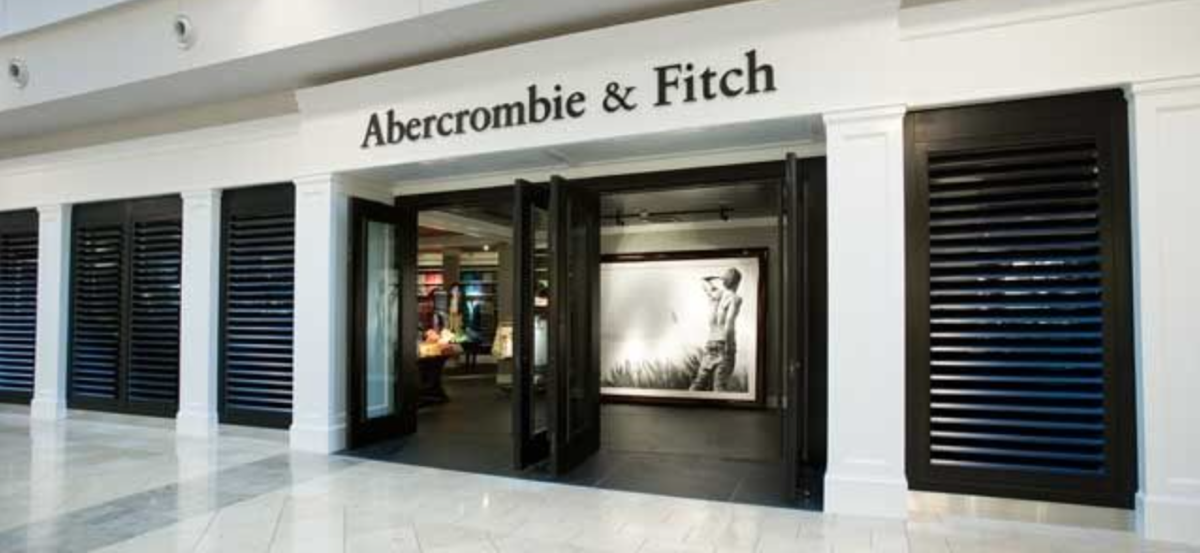
The dim-lit mall temple with impossibly loud music, a signature cologne so thick it hit you at thirty paces, and shopping bags plastered with shirtless male models. The Abercrombie & Fitch moose logo on polos and tees became a middle-school currency of cool in the 2000s. Wearing it meant you had money, taste, or both—or at least that's what everyone pretended to think. The brand launched its spinoff, Hollister, in 2000, spreading the gospel even wider.
Hollister Co.
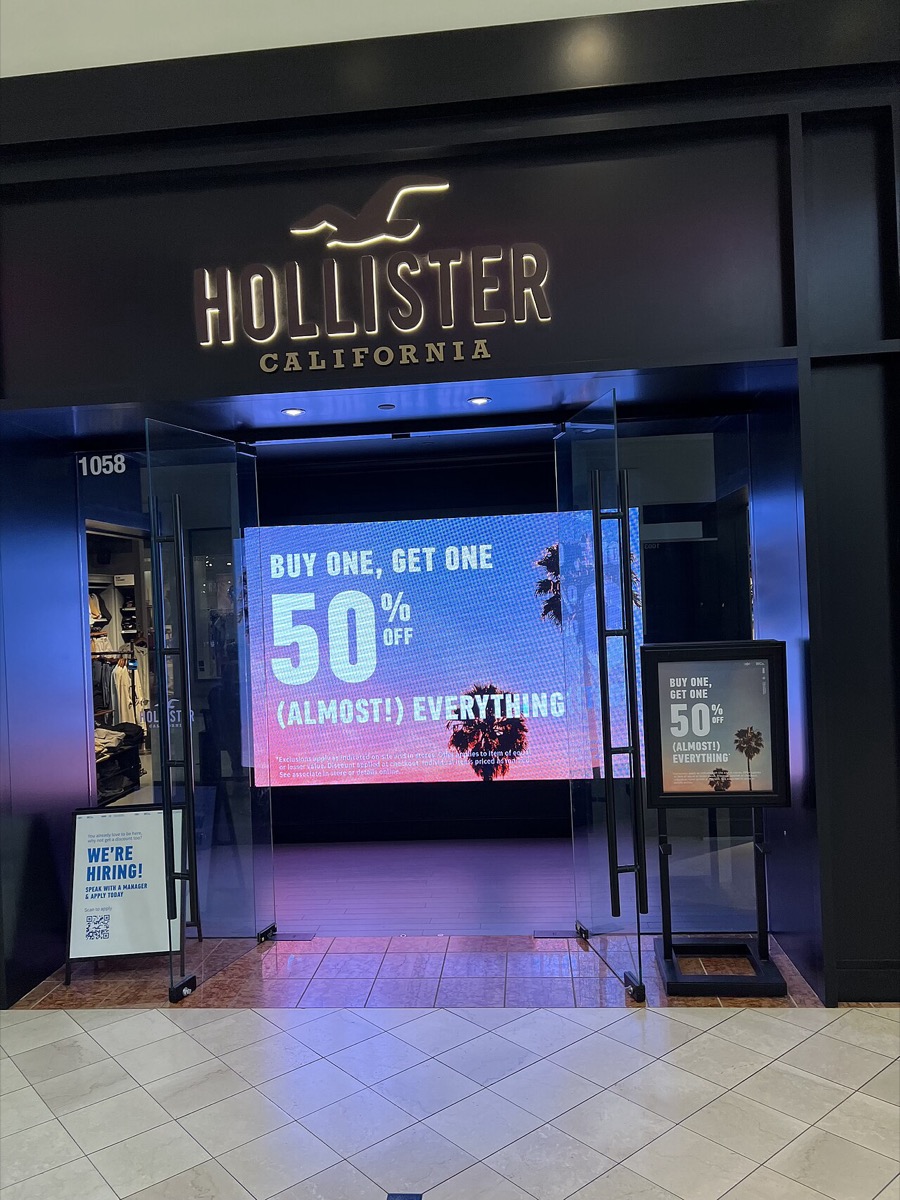
Abercrombie & Fitch's Southern-California-surf-themed spinoff brand, launched in 2000 and aimed at teens. Hollister stores were deliberately dim, cave-like spaces with beachy decor, a seagull logo, and an overwhelming signature cologne. Logo hoodies and tees were a 2000s teen status marker.
Starter Jackets
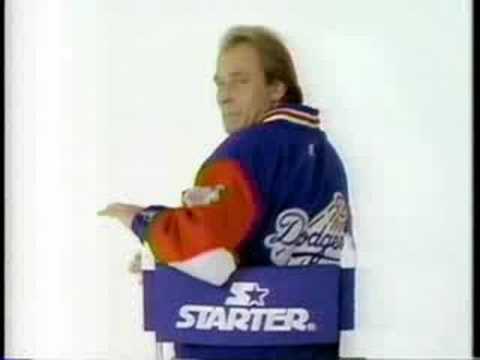
Starter's nylon and satin team jackets were the uniform of 90s cool — oversized windbreakers emblazoned with NBA and NFL team logos that transformed playground basketball courts and city streets into stadiums of style. Starter jackets became so coveted they sparked robberies, making them perhaps the decade's most dangerous fashion statement.
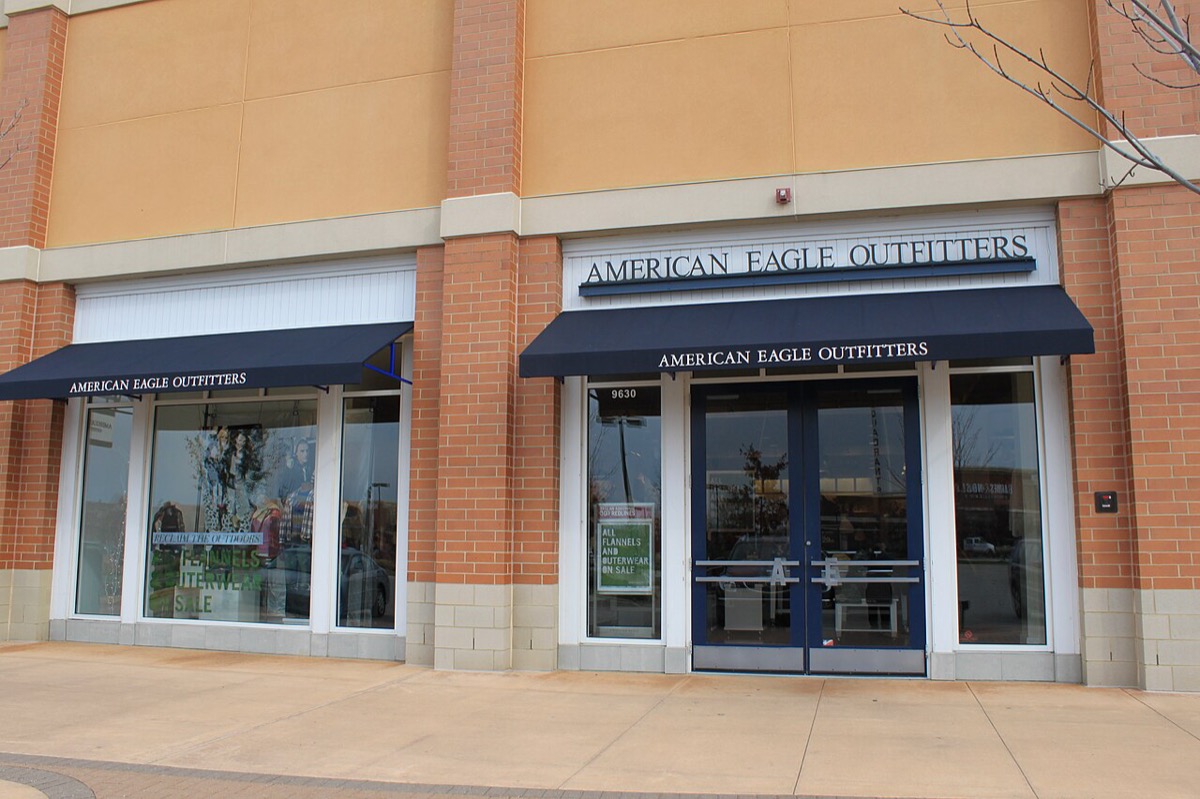
American Eagle
The dependable middle of the 2000s mall — graphic tees, bootcut jeans, and eagle-emblazoned hoodies pitched right between Abercrombie's attitude and the clearance racks. For millions of teenagers, American Eagle was simply where you shopped.