Nostradamus
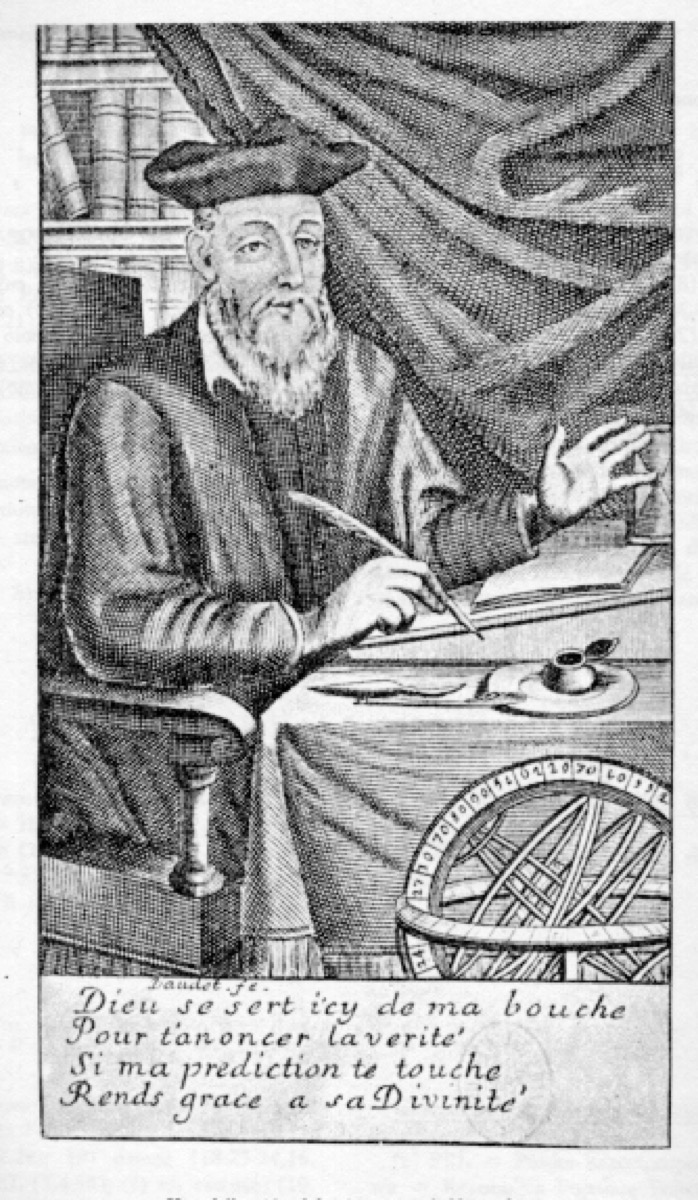
Photo credit: Engraving c. 1690, public domain, via Wikimedia Commons
A 16th-century French seer who came roaring back as the year 2000 approached, thanks to one ominous quatrain about '1999, seventh month' and a King of Terror falling from the sky. Paperbacks, TV specials, and a spooky old Orson Welles documentary made Nostradamus the patron saint of millennium dread — and scared a lot of kids in the process.
Michel de Nostredame (1503–1566), Latinized as Nostradamus, was a French astrologer and physician whose book 'Les Prophéties' — first published in 1555 and expanded across later editions — eventually collected 942 cryptic four-line verses, or quatrains. Vague and open to endless interpretation, they were rediscovered by each anxious generation — and as the 1990s wound toward the year 2000, they found their biggest modern audience.
One verse did most of the work. Quatrain X.72, in its popular English translation, reads: 'The year 1999, seventh month, / from the sky will come a great King of Terror.' It anchored a wave of paperbacks and TV specials as Y2K anxiety built, and the VHS-era primer for many kids was 'The Man Who Saw Tomorrow' (1981), a documentary hosted and narrated by Orson Welles that laid out apocalyptic readings of the prophecies. (Scholars note the popular translation is shaky — the word rendered 'of terror' doesn't appear in the original printing, and the verse most plausibly refers to a 16th-century event, not the future.)
July 1999 arrived and departed without a King of Terror, but Nostradamus had a strange coda. After the September 11, 2001 attacks, a chain email spread a fake 'prophecy' — 'In the City of God there will be a great thunder, / Two brothers torn apart by Chaos' — whose lines had actually been written by a Canadian student, Neil Marshall, in 1997 to demonstrate how easily prophecy can be stretched to fit events. It was the perfect epitaph for a 90s obsession: a prediction that predicted nothing, believed by everyone.
Similar items
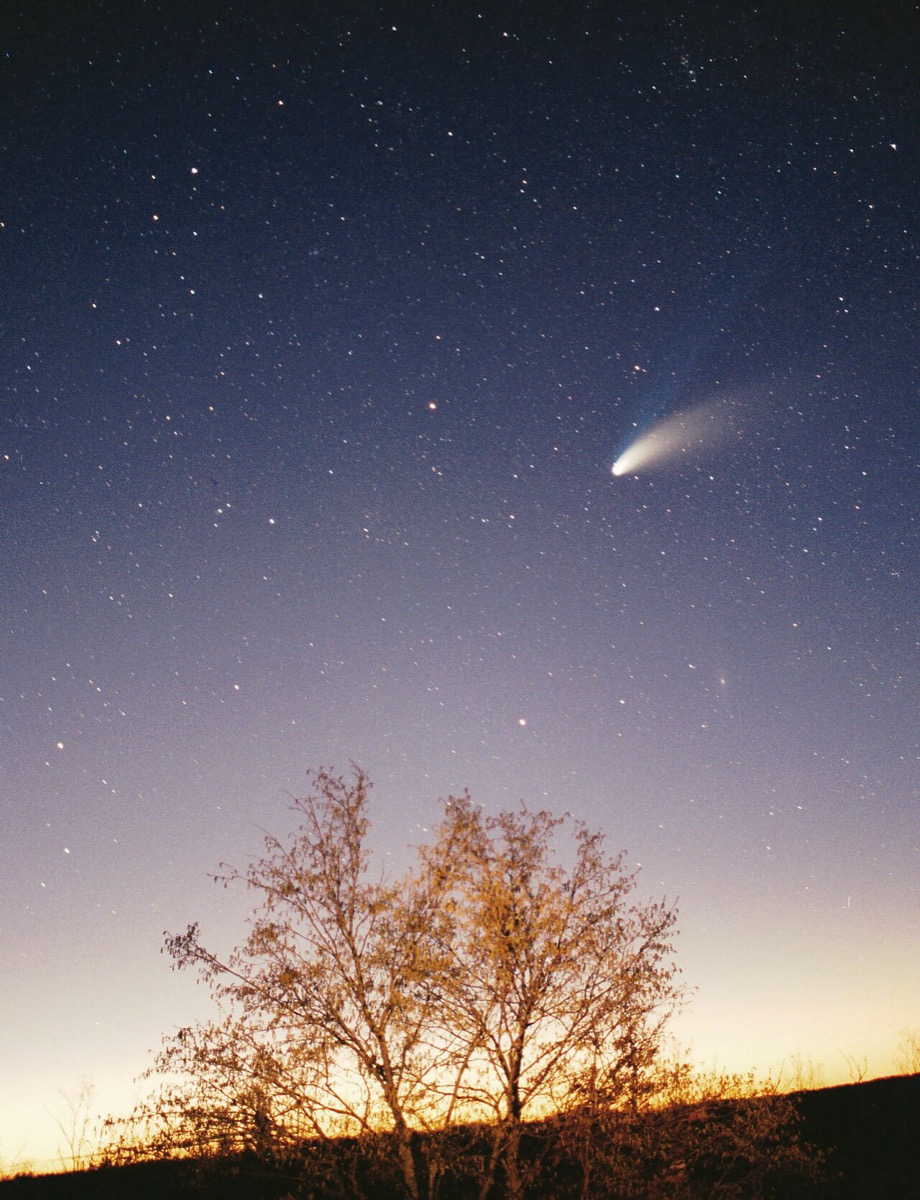
Comet Hale-Bopp
The Great Comet of 1997 — the bright, hanging smudge of light that had entire families standing in the driveway looking up. Visible to the naked eye for a record stretch, Hale-Bopp was the comet everyone actually saw, a shared sky-watching moment that also collided with one of the decade's strangest tragedies.

Y2K Panic
Computers stored the year as two digits, so 2000 looked identical to 1900. By the late '90s, the fear that systems worldwide would catastrophically fail on January 1st had built to a fever pitch — and the world spent hundreds of billions of dollars to prevent a disaster that, when midnight arrived, barely happened at all.

Accelerated Reader Points
Finish the book, march to the library computer, pass the quiz, collect the points. Accelerated Reader turned a generation's independent reading into a full-blown economy — with leaderboards, prize walls, and kids doing cold calculations about whether a fat book was worth the point risk.
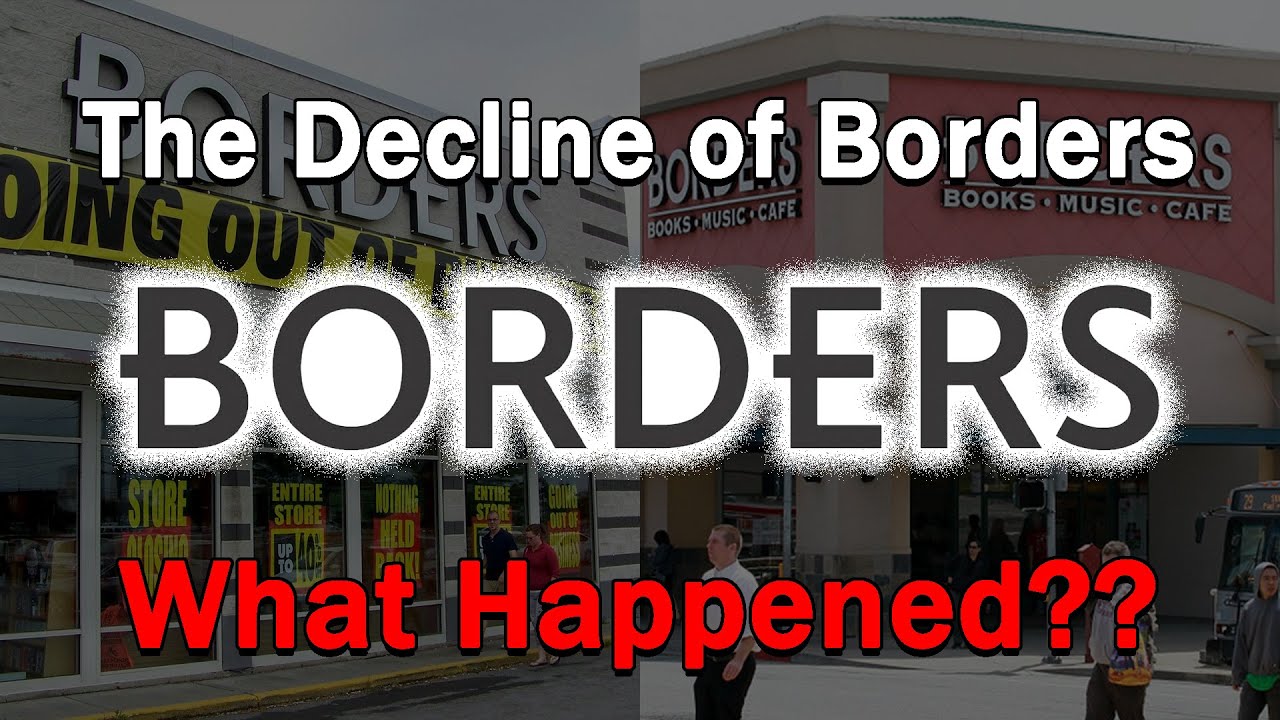
Borders
Three hours in the armchairs with a stack of books you never bought, a chai from the café, and a lap through the CD listening stations — Borders wasn't a store so much as a place to be. Then it was gone, all of it, in a single September.