Nextel Push-to-Talk Chirp

The two-tone chirp that echoed across every construction site, warehouse, and parking lot of the 2000s. Nextel's Direct Connect made a cellphone work like a walkie-talkie — press the side button, talk instantly — and everyone within fifty feet heard both sides of the conversation.
Nextel Communications — founded in 1987 as FleetCall and renamed in 1993 — built its network on iDEN, a Motorola-developed technology that combined a trunked two-way radio and a cellular phone in one device. When Nextel launched it commercially in the US in September 1996, the killer feature was Direct Connect: push-to-talk, announced by a distinctive two-tone chirp before and after each transmission. Contractors, dispatchers, and job sites adopted it first — it was faster than dialing and built for people whose hands were busy.
By the early 2000s the chirp had escaped the construction site and become a soundtrack of public space. Nextel put its name on NASCAR's top series in a deal announced in June 2003 — the Nextel Cup ran from 2004 — and by the time its merger with Sprint closed on August 12, 2005, Nextel had more than twenty million US subscribers.
The iDEN network survived the merger by eight years, until Sprint shut it down at 12:01 a.m. on June 30, 2013. The chirp vanished from parking lots and warehouse floors with it — one of those sounds, like the dial-up handshake, that once meant business and now only means an era.
Similar items

Motorola Razr
The Razr V3 launched in late 2004 as the world's thinnest clamshell phone at a shocking $500. Its anodized-aluminum body, laser-etched keypad, and impossible thinness made it a fashion statement. When the price dropped in 2005–2006, everyone had one—and snapping it shut after a call was the whole point.

BlackBerry
The thumb-typed email machine that owned the boardroom, then the teen universe — the hottest phone in America right up until the iPhone ate it. Push email, the blinking red light, BBM: BlackBerry was so addictive that Webster's New World made "CrackBerry" its 2006 Word of the Year.
Pay Phones
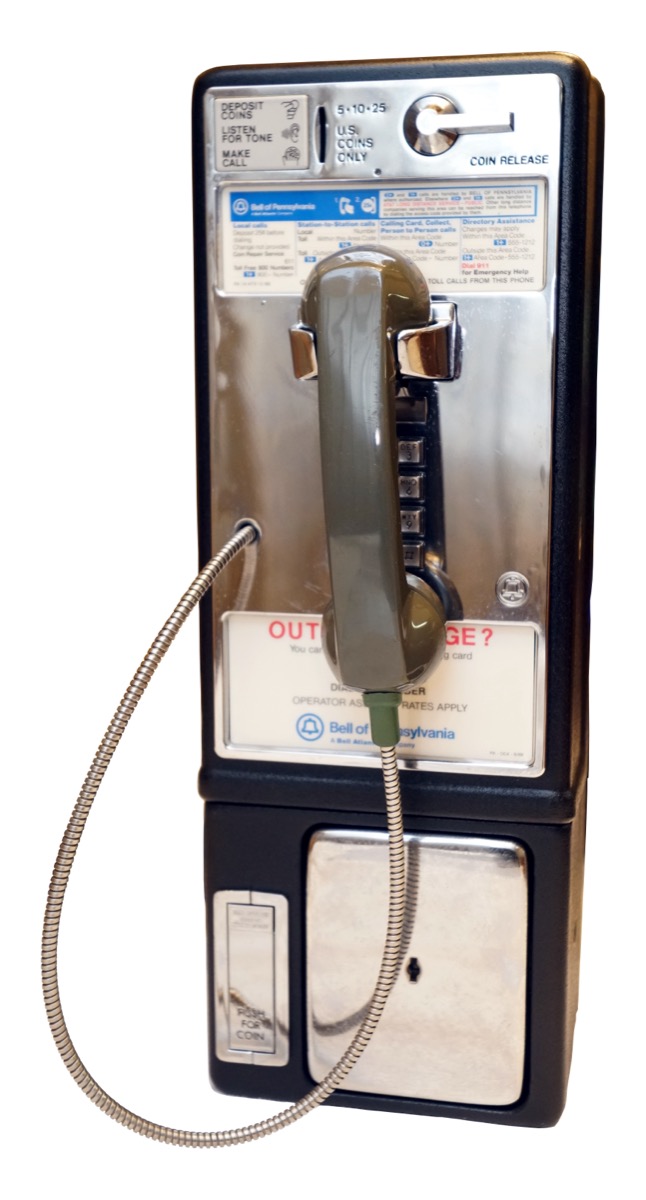
Coin-operated public telephones on street corners, in malls, and outside every gas station — the fallback when you needed to call home or were out of pocket change. At their 1990s peak, the US had over 2 million payphones; by the 2010s, they'd nearly vanished.

Free Nights & Weekends
The entire cell-phone economy of the 2000s, distilled into one ritual: watching the clock tick toward 9 p.m. so a call wouldn't burn a daytime minute. Anytime minutes were precious. Nights and weekends were free. Every family had someone doing the math.