Marvel Trading Cards

Impel's 1990 Marvel Universe set turned the comic shop into a card shop: heroes, villains and famous battles with stats on the back, and five holograms hiding roughly one to a box. For five years the binder pages, the Power Ratings and the hunt for a Cosmic Spider-Man were as much a part of being a Marvel kid as the comics themselves.
Impel Marketing was brand new in 1990, the non-tobacco half of a corporate split at cigarette maker Liggett, and its Marvel Universe Series I was built like a sports-card set. There were 162 base cards, the last one a checklist, sorted into Super Heroes, Super Villains, Rookies, Famous Battles and Team Pictures, each with a character or event on the front and stats and a short bio on the back. The set even carried a Stan Lee card and a run of "Spider-Man Presents" interview cards. The chase was five holograms, Cosmic Spider-Man, Magneto, Silver Surfer, Wolverine and Spider-Man vs. Green Goblin, inserted at roughly one per box, or about one in 36 packs.
Series II in 1991 kept the 162-plus-five format, introduced Power Ratings, and came with its own binder and Impel binder pages, which is why so many of these cards survive in nine-pocket sheets. Impel renamed itself SkyBox International in April 1992, and Series III that year grew to 200 cards with holograms tinted a different color for each character (Wolverine blue, Hulk green) plus factory tins numbered to 10,000. The same year brought an X-Men set of all-new Jim Lee art with its own gold holograms as the chase. Series IV in 1993 hid a Spider-Man vs. Venom hologram in one of every 180 packs and turned its first 135 cards into nine-card puzzle pictures, and Series V in 1994 added clear plastic "suspended animation" cards promoting the Saturday-morning cartoon.
The comic-card boom peaked about as fast as the comic boom did. Marvel Entertainment announced it was buying SkyBox in March 1995 for $150 million, closed the deal in May and merged it with Fleer as Fleer/SkyBox International, whose Ultra lines pushed the X-Men into glossier premium sets; the card company was sold on again in February 1999. The 1990 set was never rare, and plenty of it still sits unopened, but it remains the cornerstone of Marvel card collecting and, for a lot of people, the first card set they ever chased.
Similar items
X-Men: The Animated Series
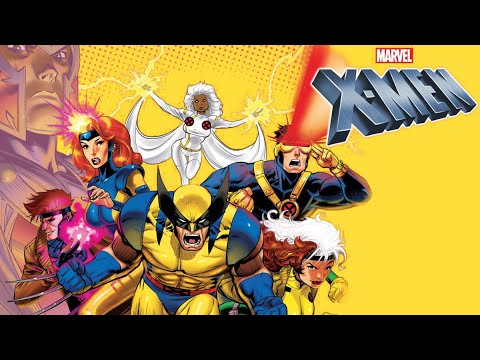
To a generation of Saturday-morning kids, this was the real X-Men: five seasons on Fox Kids, one impossibly urgent guitar theme, and stories lifted straight from the comics. Wolverine, Rogue, and Gambit were household names years before Hollywood caught up.

Baseball Card Collecting
Every kid's shoebox of commons was going to pay for college. Junk-wax-era baseball cards — Topps, Fleer, Donruss, Score, Upper Deck — were printed by the billions while Beckett price guides promised the binder was a portfolio.

Pokémon Trading Card Game
Trading cards that turned every backpack into a vault and every playground into a market. Pokémon cards hit US schools in 1999 and became instant contraband — the holographic Charizard was the mythical grail, and somehow every kid in your class claimed to have a mint copy.

Magic: The Gathering
Richard Garfield's 1993 creation, Magic: The Gathering invented the collectible card game genre and became a phenomenon that consumed thousands of hours and dollars from basement dwellers and tournament pros alike. Casting spells, summoning creatures, and crushing opponents with clever deck construction, Magic made trading-card games respectable — and obsessive.