Mario Party
Four players, a board, dice blocks, a minigame at the end of every turn, and a Chance Time space that could swing the whole game on one spin. Mario Party hit the Nintendo 64 in February 1999, spun its analog sticks until kids got blisters, and grew into a series that has sold over 84 million copies and, as the joke goes, ended a few friendships along the way.
Hudson Soft, the Bomberman studio, built it for Nintendo with Shigeru Miyamoto supervising and Yasunori Mitsuda on music. Released in Japan on December 18, 1998, and in North America on February 8, 1999, it put Mario, Luigi, Peach, Yoshi, Wario, and Donkey Kong on themed boards to settle an argument over who was the "Super Star." Blue spaces paid three coins and red ones took three, Boo stole coins for free or a star for fifty, and the end of every turn triggered one of 50 minigames, four-player free-for-alls, two-on-two, or one-against-three. A game ran 20, 35, or 50 turns, and the sting was the three bonus stars awarded at the very end, which could flip the whole night. Critics called it slow and praised the multiplayer; Metacritic says 79. Players did not need critics: it was the fourth best-selling N64 title of 1999 in the United States.
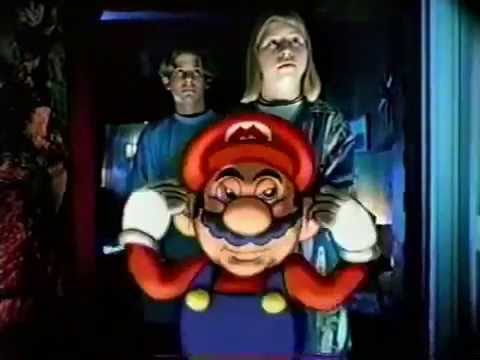
It also hurt. Several minigames, Paddle Battle and Tug O' War among them, rewarded spinning the analog stick as fast as possible, and kids learned, from a Japanese commercial no less, that grinding a palm over the stick was faster than using a thumb. Blisters and friction burns followed, complaints reached New York's attorney general, about 90 of them by Nintendo's count, and a spokeswoman noted "how little time some of these children spent playing the game before they were injured." Nothing was filed in court; in March 2000 Nintendo of America agreed to supply padded gloves, up to four per family with proof of purchase, and cover $75,000 in the state's legal fees. With about 1.2 million copies sold in the US, the papers reported a worst-case cost of $80 million, though ZDNet noted it could be as little as $20,000 in gloves if few people claimed. The original never appeared on the Wii's Virtual Console, and when it finally returned on Nintendo Classics in November 2022, it opened with a warning.
Hudson kept the series through 2007: Mario Party 2 and 3 on the N64, 4 through 7 on the GameCube, a Game Boy Advance spin-off, and finally Mario Party 8 on the Wii and Mario Party DS, its last, which became the best-selling handheld entry at 9.31 million. Nintendo's NDcube took over with Mario Party 9 in 2012. Super Mario Party (2018) is the series' biggest at 21.16 million, Superstars (2021) brought the N64 boards back, and as of March 2025 the whole series had passed 84 million copies.
Similar items

Nintendo 64
Nintendo's leap into three dimensions, the N64 brought 3D polygon gaming into living rooms with its quirky three-pronged controller and a cartridge library anchored by Super Mario 64 and The Legend of Zelda: Ocarina of Time. Its rumble pak added tactile feedback, while its four controller ports made it the console of couch multiplayer legends.

Mario Kart 64
The first 3D Mario Kart brought four-player split-screen racing to the Nintendo 64, turning every sleepover and dorm room into a competitive battleground. Shells flew, friendships were tested, and players argued eternally about which character had a hidden advantage.

Super Smash Bros.
Masahiro Sakurai's Nintendo crossover brawler launched on the N64 with twelve iconic fighters smashing each other on floating stages in four-player chaos. Released April 1999, Super Smash Bros. sold 5.5 million copies and created the template for a franchise that would define competitive gaming and casual multiplayer for the next 25 years.

GoldenEye 007
The Nintendo 64 first-person shooter that redefined console multiplayer: four players split-screen deathmatch, and an iron-clad house rule banning Oddjob because his short stature slipped under auto-aim. Rare's landmark game sold over 8 million copies and owned living rooms until Halo arrived.