Magic 8 Ball
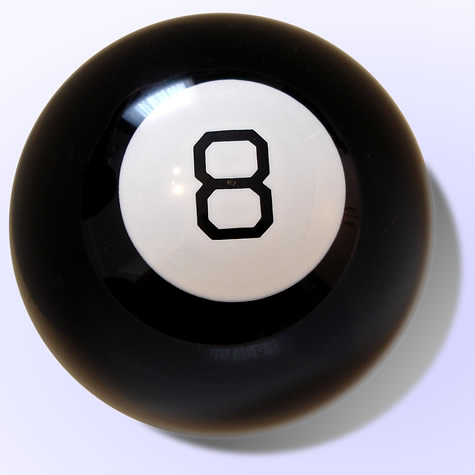
A black ball filled with mysterious blue liquid promised to answer any question: yes, no, maybe, or "Ask again later." The Magic 8 Ball has been the same since 1950, which is why it was still the first place you looked when you needed an answer your crush wouldn't give you.
Albert C. Carter, inspired by a spirit-writing device his mother — a Cincinnati clairvoyant — had used, filed a patent for a fortune-telling tube called the Syco-Slate in 1946 (granted in 1948). He partnered with Abe Bookman, and their company, Alabe Crafts (ALbert + ABE), began selling it. But the definitive form came in 1950, when Brunswick Billiards commissioned Alabe to reshape it into a black-and-white 8 ball — that shape, that weight, that mysterious heft. Inside floated a 20-sided die suspended in blue liquid.
The answers — 10 affirmative ("It is certain," "Outlook good"), 5 negative ("Don't count on it," "Very doubtful"), and 5 neutral ("Ask again later," "Reply hazy, try again") — were calibrated by Lucien Cohen, a University of Cincinnati psychology professor. The ball's corporate life moved through Ideal Toys (1971), then Tyco Toys (1987), then Mattel (1997), but the product barely changed; as of 2015 it was still selling about a million a year.
What changed was the ritual: by the '90s, the Magic 8 Ball had become the object at every sleepover, the arbiter of crushes, the thing you shook when you needed permission to believe something impossible. The irony, of course, is that your parents shook it at their sleepovers too — the toy is old enough to have its own nostalgia.
Similar items

Ouija Board
Fingers on the planchette, lights off, and the solemn oath that nobody is pushing it. The Ouija board lived in the same closet as Monopoly but carried a whole different charge — every 90s sleepover had one kid who swore it moved on its own and another who slept with the lights on afterward.
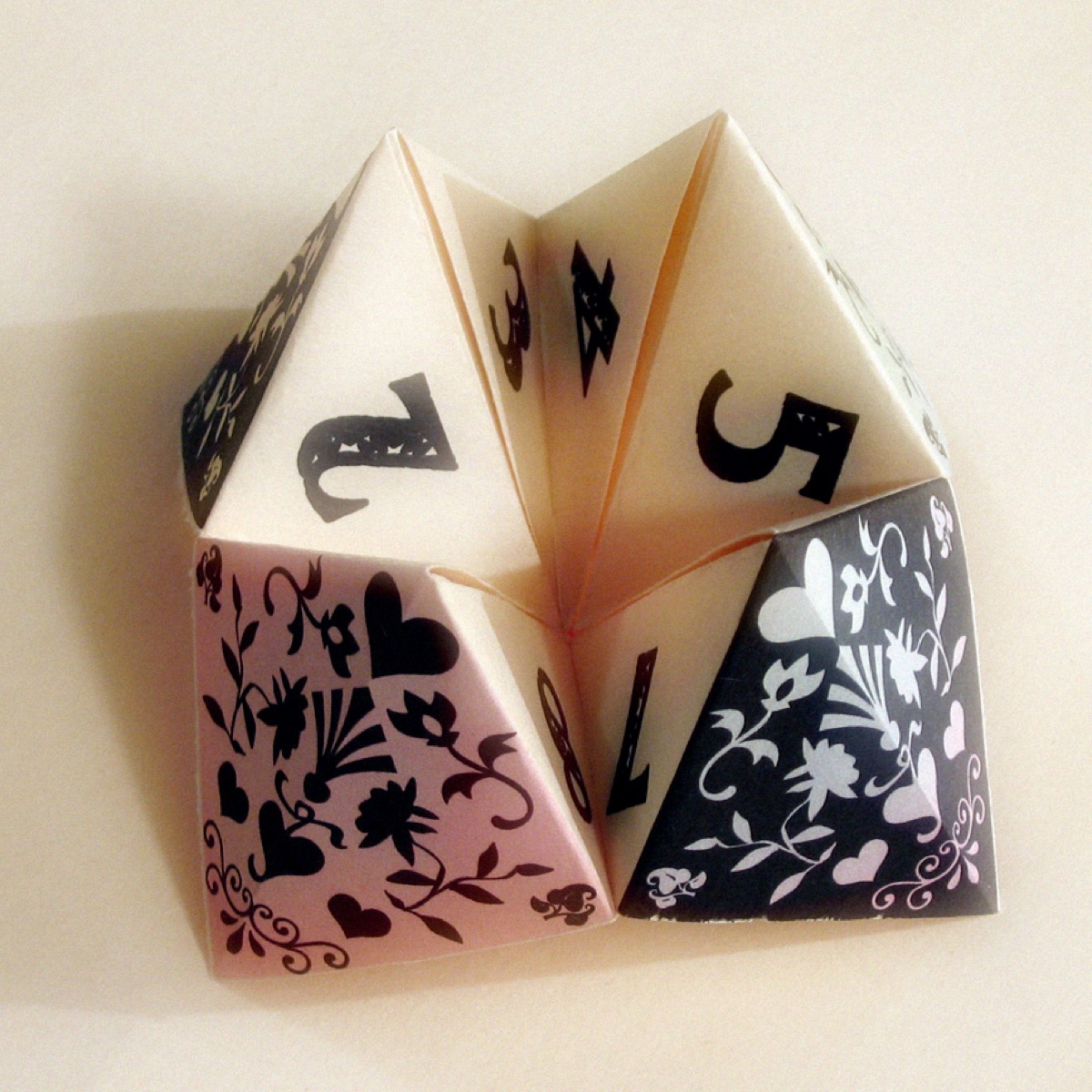
Paper Fortune Tellers
The folded-paper contraption you worked with your fingers to tell someone their future. Pick a color, pick a number, and under the last flap was your fate — who you'd marry, or something rude your friend had written. The classroom fortune-teller you could make out of a single square of notebook paper.

MASH
The pencil-and-paper fortune game that predicted your whole adult life in a few minutes: who you'd marry, what car you'd drive, how many kids you'd have, and — the joke of the whole thing — whether you'd end up in a Mansion, an Apartment, a Shack, or a House.

Barbie
Ruth Handler's fashion doll was already three decades old when the 90s arrived — then had one of its biggest decades anyway. 1992 alone delivered Totally Hair Barbie, the best-selling Barbie of all time, and the 'Math class is tough!' scandal. Every toybox had at least one; every sibling war featured a hostage.