#Mattel

16 items

Video thumbnail — How To Play Apples To Apples
Tabletop Games 1999–present

Apples to Apples

The party card game that turned judgment calls into comedy—a deceptively simple game about matching nouns to adjectives, where the humor lives entirely in the judge's increasingly baffled decisions. Published in 1999 and an instant hit, Apples to Apples became the default game of 2000s classrooms, youth groups, and family gatherings, the one clean party game everybody's parents would allow. The golden rule taught a generation: the judge is always right, no matter how absurd.

Video thumbnail — 1992 Totally Hair Barbie Doll Commercial
Toys 1959–present

Barbie

Ruth Handler's fashion doll was already three decades old when the 90s arrived — then had one of its biggest decades anyway. 1992 alone delivered Totally Hair Barbie, the best-selling Barbie of all time, and the 'Math class is tough!' scandal. Every toybox had at least one; every sibling war featured a hostage.

Video thumbnail — Barbie Fashion Designer CD ROM commercial 1996
Video Games 1996–1998

Barbie Fashion Designer

Design an outfit on screen, print it onto a fabric sheet on the family inkjet, and dress a real Barbie in it. Mattel Media's 1996 CD-ROM sold more than a million copies within a year and became the proof that a game aimed squarely at girls could sell big.

Video thumbnail — Cabbage Patch Kids Snacktime Kid Ad (1996)
Toys 1996–1997

Cabbage Patch Snacktime Kids

The Cabbage Patch doll that "ate" its own plastic snacks—and became a holiday-season horror story when it wouldn't stop. With no off switch and no reverse, the motorized mouth kept pulling in whatever it caught, including kids' hair and fingers, and Mattel yanked it from shelves weeks after Christmas 1996.

Video thumbnail — Diva Starz Doll Toy TV Commercial
Toys 2000–2004

Diva Starz

Mattel's chatty animatronic fashion dolls that gossiped about clothes, boys, and shopping—and actually "knew" what you'd dressed them in. Sensors in their outfits and accessories let them react, and infrared in their shoes let them talk to each other.

Video thumbnail — Earring Magic Ken: Not a Heterosexual (1993) — The Junk Drawer
Toys 1993

Earring Magic Ken

Lavender mesh shirt, purple pleather vest, streaked blond hair, an earring in his left ear and a chrome ring on a chain around his neck. Mattel's 1993 attempt to make Ken "cooler" for little girls instead made him a camp icon, bought up by gay men until he sold out by Christmas.

Video thumbnail — Hot Wheels "TUNE UP SHOP" Commercial (1999)
Toys 1968–present

Hot Wheels

A shoebox of tiny die-cast cars and a living room floor striped with orange track — every 90s kid's floor, though the cars date to 1968. Hot Wheels were the fast, flame-painted answer to sensible little toy cars, and the loop-the-loop never stopped being satisfying.

Video thumbnail — Hot Wheels Power Loop Track Set from 1994 RaceGrooves Review Unboxing
Toys 1994

Hot Wheels Power Loop

A motorized booster hurled your Hot Wheels car through a vertical loop — again and again, until the batteries died or someone called dinner. One glorious 1994 centerpiece of the 90s track-set golden age.

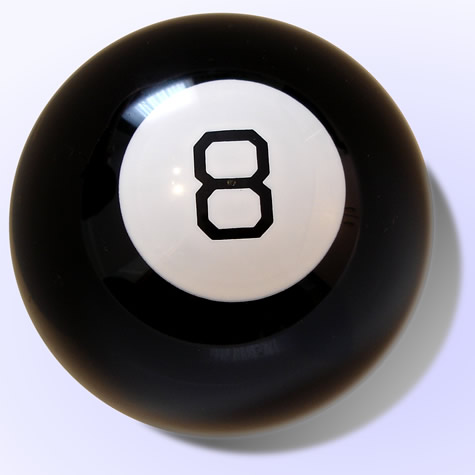
A Magic 8 Ball seen from above, showing the white 8 on its black shell
Toys 1950–present

Magic 8 Ball

A black ball filled with mysterious blue liquid promised to answer any question: yes, no, maybe, or "Ask again later." The Magic 8 Ball has been the same since 1950, which is why it was still the first place you looked when you needed an answer your crush wouldn't give you.

Video thumbnail — My Scene Dolls - Mattel - Madison and Chelsea Commercial (2002)
Toys 2002–2011

My Scene

Mattel's big-headed, pouty-lipped answer to Bratz: Barbie and her city friends Madison and Chelsea, named after New York City places and later packaged with DVDs. The New York Times said their "bulging, makeup-caked eyes" evoked their rival, and MGA sued.

Video thumbnail — My Size Barbie commercial (1992)
Toys 1992–1999

My Size Barbie

The Barbie that was as tall as you were. Mattel's 1992 My Size Barbie stood about three feet high and came in a ballet outfit a little girl could take off the doll and wear herself, tiara included. It was the big-box Christmas present of the early 90s, and the doll that stared at you from the corner of the bedroom all night.

Video thumbnail — Pixel Chix Pals Advert (2006)
Toys 2005–2009

Pixel Chix

A little plastic house with an LCD screen and a digital girl living inside it—part Tamagotchi, part dollhouse. You fed her, played games, dressed her, and sent her to bed, and if you neglected her long enough she'd pack up and leave.

Video thumbnail — Power Glove "Everything Else Is Child's To Play" NES commercial
Video Games 1989–1990

Power Glove

The NES controller you wore on your arm — futuristic on the commercial, nearly unplayable in the living room. It got the greatest product placement line in movie history: "I love the Power Glove. It's so bad." Somehow both a punchline and the coolest thing any kid had ever seen.

Video thumbnail — Street Shark - Mattel (1994)
TV 1994–1997

Street Sharks

Four brothers gene-slammed into half-shark street fighters by a mad scientist, battling Dr. Piranoid in Fission City. It was a syndicated cartoon built to sell Mattel's chomping action figures, which a young Vin Diesel pitched to toy buyers.

Video thumbnail — Teen Talk Barbie commercial (1992)
Toys 1992–1993

Teen Talk Barbie

Press the button and Barbie chirped one of her four phrases: pizza party, dream wedding, meet me at the mall. About one doll in a hundred carried "Math class is tough," and in 1992 that single line got Mattel scolded by math teachers, condemned by the AAUW, and parodied on The Simpsons.

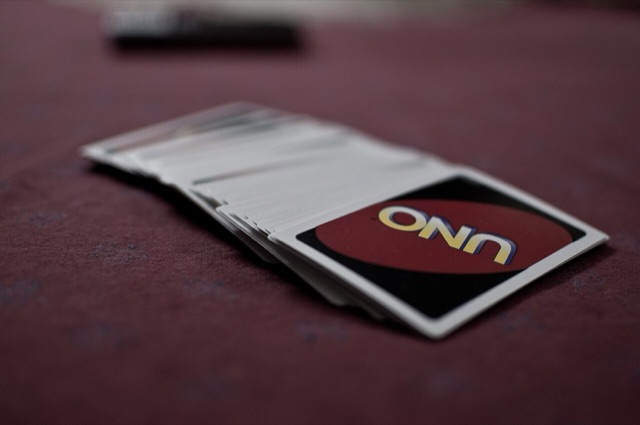
A spread Uno deck on a table, the red-oval UNO card back facing up
Tabletop Games 1971–present

Uno

Match the color or the number, hit your sister with a Draw Four, and scream "UNO!" before anyone catches you at one card. A barber's 1971 invention became the most contentious deck in the 90s family junk drawer—because every single household played by different rules.