Ouija Board

Fingers on the planchette, lights off, and the solemn oath that nobody is pushing it. The Ouija board lived in the same closet as Monopoly but carried a whole different charge — every 90s sleepover had one kid who swore it moved on its own and another who slept with the lights on afterward.
The Ouija board is far older than the sleepovers it haunted. Talking boards grew out of the American spiritualism movement — devices for the living to take dictation from the dead — with boards in use at Ohio spiritualist camps by 1886. Lawyer Elijah Bond secured the patent on February 10, 1891, and the Kennard Novelty Company began selling the board as a parlor novelty. Even the name has a séance story: according to historian Robert Murch, medium Helen Peters Nosworthy asked the board what it wished to be called, and it spelled out O-U-I-J-A, explaining the word meant 'good luck' — she happened to be wearing a locket bearing the author Ouida. The tidy 'oui plus ja' etymology everyone repeats is folklore. William Fuld took over production in 1901 and made Ouija an empire; the brand later passed to Parker Brothers and eventually to Hasbro, which is why a portal to the beyond was stocked in the same toy aisle as Candy Land.
That's the strange double life the 90s kid knew. It was a mass-produced board game — cardboard, plastic planchette, glow-in-the-dark editions — and also the one game parents, youth pastors, and someone's very serious older cousin warned you about. The Catholic Church explicitly forbids divination, Ouija included, and decades of horror movies had given the board a menace no other box in the game closet could match. Which, of course, was the point of bringing it out after midnight.
Science has a calmer explanation: the ideomotor effect. The planchette is moved by the players' own unconscious muscle movements — blindfold the participants and the board produces gibberish. Nobody at the sleepover was lying, exactly; everyone was pushing, and no one could feel it. The board still sells today, spooky reputation fully intact.
Similar items
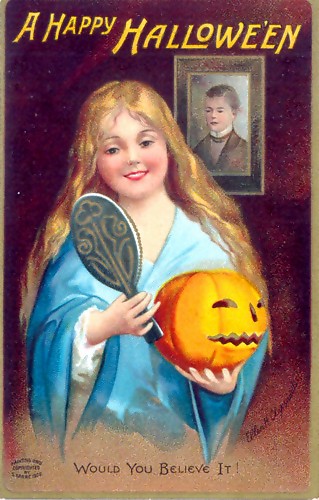
Bloody Mary (Mirror Game)
Lights off, bathroom door closed, face the mirror, and say her name three times — if you dare. Nobody ever made it through the third "Bloody Mary" without screaming, and that was the whole point.

Light as a Feather, Stiff as a Board
The sleepover séance: one friend lies flat, everyone else kneels around with two fingers underneath, the chant starts — and somehow, impossibly, up they go. Every 90s kid swears it actually worked once, at someone's house, they were there.

Are You Afraid of the Dark?
A horror-anthology series that began on Canadian TV in 1990 and found its true audience on Nickelodeon's SNICK block. Hosted by the Midnight Society — teens gathered around a campfire — each episode delivered a self-contained spooky tale introduced with the ritual phrase and midnight dust. Genuinely creepy for a kids' show.

Goosebumps
R.L. Stine's mass-produced horror series for kids, where every book's drippy cover could stop your heart in the school library. Goosebumps sold roughly 4 million copies a month at its mid-90s peak and by 1996 accounted for nearly 15% of Scholastic's entire revenue.