Listerine PocketPaks

Postage-stamp-sized strips that melted on your tongue in seconds and tasted like menthol fury in the best way. Launched in the US in 2001, they were an instant fad that made TIME's Best Inventions of 2002 list — in every drugstore and backpack until the craze cooled and left them oddly still around forever.
The technology behind Listerine PocketPaks originated in Japan with Hayashibara, which had developed an edible film that dissolved in the mouth, originally aimed at smokers. Pfizer business-development executive Keith Lerner licensed the innovation, and the company's scientists spent roughly six years adapting it for consumer oral care — infusing the dissolving strips with Listerine's signature four essential oils: thymol, menthol, eucalyptol, and methyl salicylate. The result was a postage-stamp-sized film that dissolved on the tongue in seconds, delivering a concentrated menthol jolt.
PocketPaks launched in Canada in 2000, followed by the US market in October 2001 under Pfizer, which had just absorbed Warner-Lambert, Listerine's longtime parent company. The impact was immediate and explosive: first-year US sales topped $100 million, making it one of the biggest new-product launches of the early 2000s. TIME magazine recognized it as one of the year's Best Inventions in 2002, cementing its status as a genuine innovation. The product's success sparked an instant knockoff wave — seemingly every mint and gum brand rushed its own dissolving-film product to market, and breath-strip mania briefly dented actual mint sales.
The fad cooled as suddenly as it had risen. Category sales for dissolvable breath strips nearly halved in 2003, and the cultural moment faded. Unlike the trend-chasing competitor products that vanished, Listerine PocketPaks survived its own boom-and-bust — they never fully left store shelves and are still sold today, a quiet relic of the early-2000s fad cycle.
Similar items

Binaca
The pocket breath spray with the click-and-blast ritual — a slim canister of concentrated mint that delivered instant confidence before any moment that mattered. Born from Swiss pharma giant Ciba's oral-care line, it found American cult status with smokers, daters, and sitcom writers (Seinfeld and Taxi both got jokes out of spraying it in someone's face). By the 1990s it was the pre-date essential; by 1993, some schools were banning it from campuses.

Mentos (The Freshmaker Era)
Minor social catastrophe? Eat a Mentos. Roll across a freshly painted bench, hijack a tablecloth, climb through a stranger's car — then flash a thumbs-up at the camera. The Freshmaker ads were so gloriously wrong they became one of the most beloved things on 90s TV.

Trident
The sugarless gum that practically owned the drugstore checkout counter, and the slogan everyone can still recite: "Four out of five dentists surveyed recommend sugarless gum for their patients who chew gum." Trident had been around since 1960, but its color-coded flavors — spearmint, cinnamon, bubble gum — were a '90s pocket-and-purse staple.
Disposable Cameras
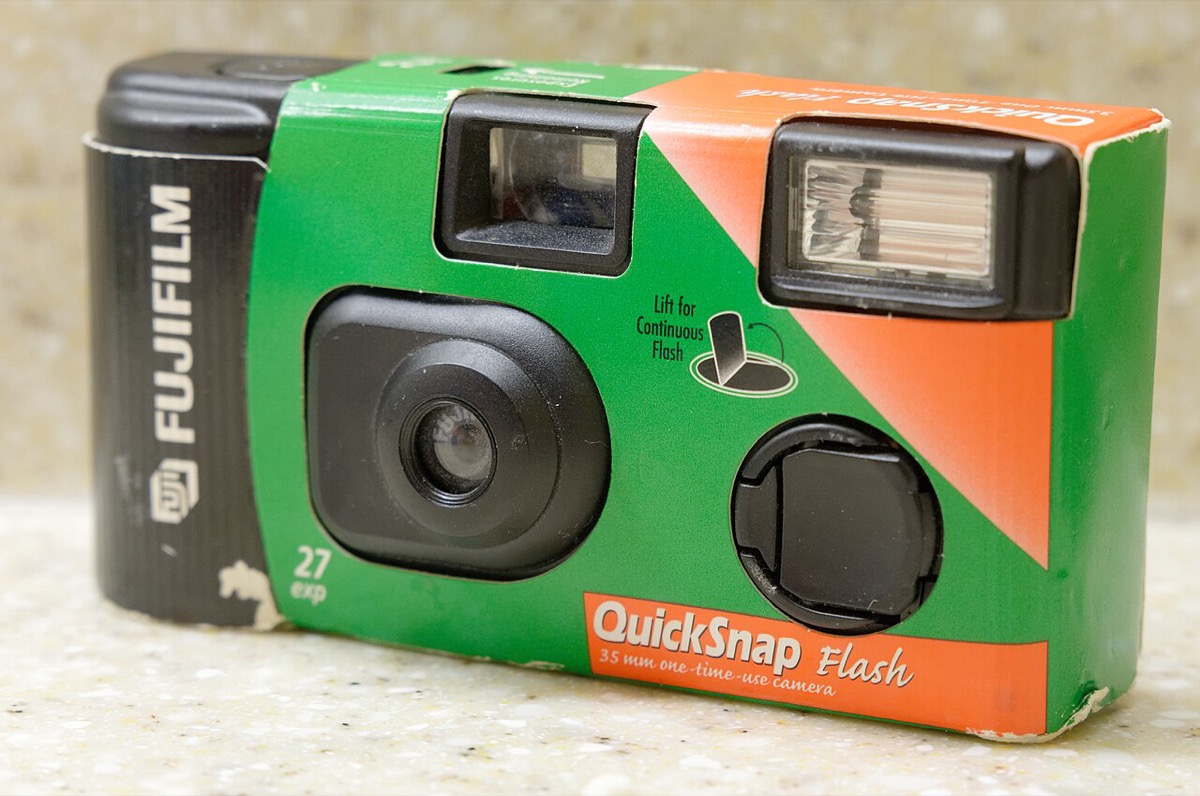
The camera you bought at the drugstore, used up at the field trip or party, and handed back over the counter — whole. No focus, no zoom, just 24 or 27 chances to get a decent shot. You waited days to see if any of them came out — which was exactly the anxiety that made them so memorable.