Disposable Cameras
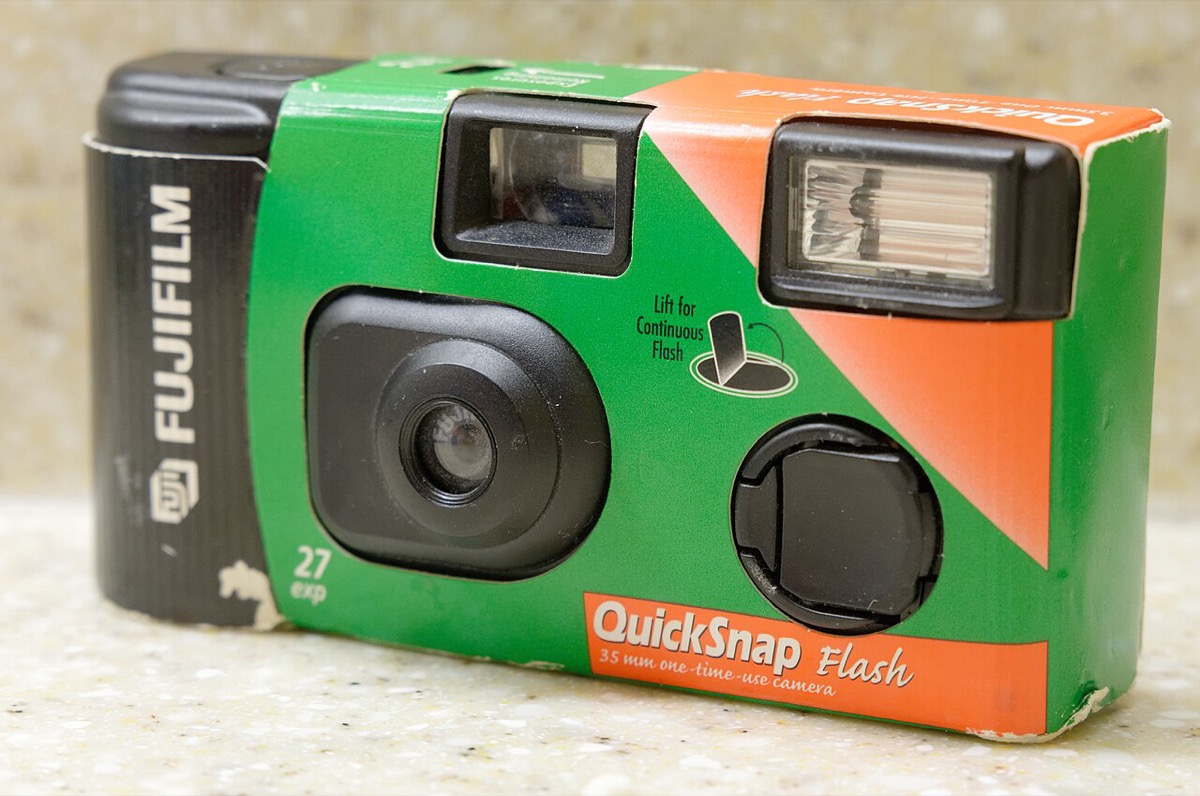
Photo credit: Photo: Jud McCranie, CC BY-SA 4.0, via Wikimedia Commons
The camera you bought at the drugstore, used up at the field trip or party, and handed back over the counter — whole. No focus, no zoom, just 24 or 27 chances to get a decent shot. You waited days to see if any of them came out — which was exactly the anxiety that made them so memorable.
The ancestor of the disposable camera was Photo-Pac, a mail-in camera kit from 1949 that cost $1.29 and offered eight exposures, but it flopped almost immediately. The modern single-use camera was born when Fujifilm released the QuickSnap ("Utsurun-Desu" in Japan, roughly "It takes pictures") in 1986. Kodak answered with the Fling in 1987, which initially used 110 film, but by 1988 Kodak shifted to 35mm and renamed the product FunSaver in 1989 when 110 was retired entirely. The formula was elegant: a plastic shell containing a pre-loaded roll of 35mm film, a fixed-focus lens, a thumbwheel to advance frames, and on most models a flash you charged by holding a button until the whine stopped — and nothing else. No focus ring, no zoom, no aperture control, no second chances — you had 24 or 27 exposures to work with, period.
The ritual was universal. You brought your disposable camera to the birthday party, the school dance, the sleepover, the field trip — events where phones with cameras didn't exist yet and where film was precious. At the end of the evening or the school week, you handed the entire camera over the counter at the drugstore photo lab. The processor kept the plastic shell (the parts were recycled into new cameras) and gave you back your prints and negatives a few days later — time enough to sweat whether your shots had worked out at all, whether you'd accidentally covered the lens, whether the red-eye was catastrophic. Disposable cameras peaked enormously in the 1990s, and in Japan alone annual sales topped 89 million units in 1997. They became the default favor at weddings in the late 1990s — tables at receptions were scattered with them so guests could snap candid moments — and spawned waterproof versions for pool parties and beach vacations.
Digital cameras and smartphone photography devastated the market. Sales in Japan fell below 5 million annually by 2012. But film has never completely died, and neither have QuickSnaps. A Gen Z revival in the late 2010s pushed Japanese disposable camera sales back above 9 million by 2019, driven by young people buying them on purpose for the exact qualities that had always been their limitation: you had to wait to see your pictures, film grain was baked in, and you couldn't delete the shot you hated. A return to intentionality after a decade of unlimited digital scrolling.
Similar items

School Field Day
The end-of-year outdoor blowout when class got canceled for a day of sack races, tug-of-war, three-legged races, and water-balloon tosses out on the field. Everybody went home sunburned and clutching a ribbon — even if it just said "Participant."

Scholastic Book Fairs
The ritual: your school gym transforms overnight into a pop-up bookstore of rolling display cases, and you wander the aisles with a wish list and a budget. Scholastic Book Fairs dominated the 90s market, though what kids actually bought — glittery gel pens, novelty pencils, poster books — often had nothing to do with the Goosebumps stacks they wandered past.

Lisa Frank
Neon-rainbow folders, stickers, and binders plastered with dolphins, unicorns, and technicolor leopards—the aesthetic that defined every 90s classroom. Lisa Frank's maximalist explosion of color became a status symbol and a collecting obsession that grossed over $60 million a year at its peak.
America's Funniest Home Videos
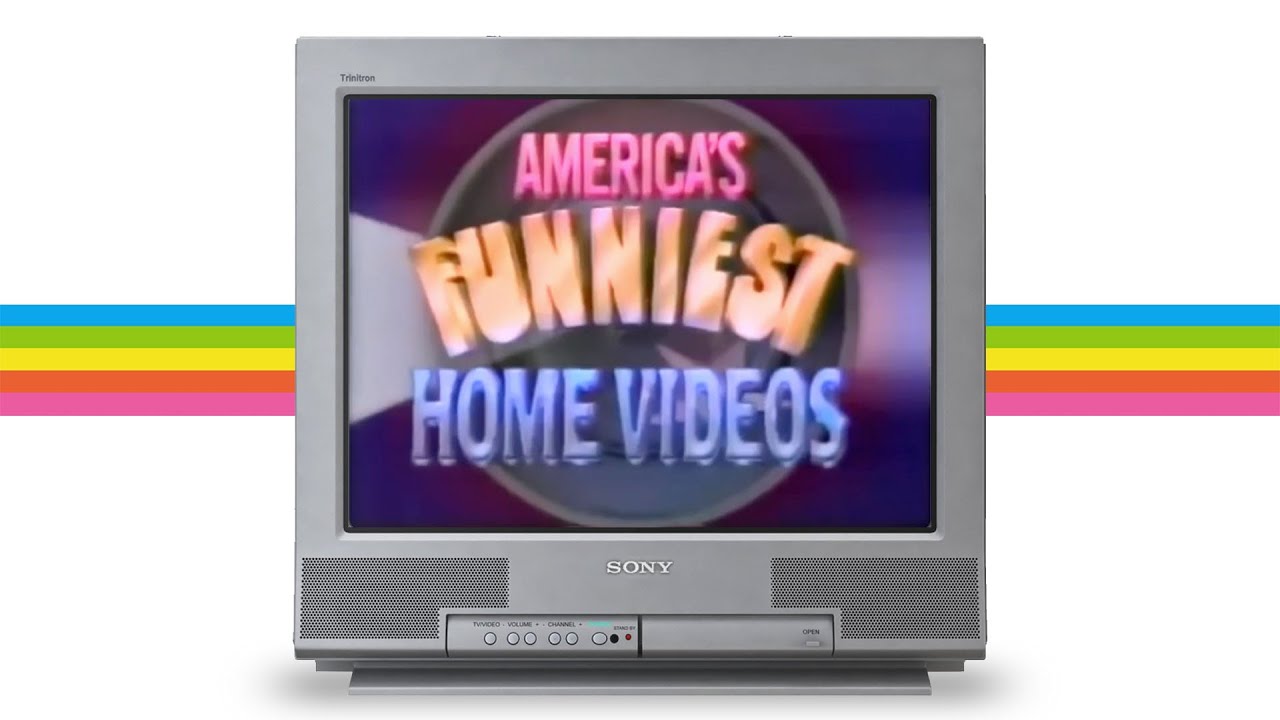
Backyard mishaps, wedding disasters, and cats falling off furniture — network primetime built entirely from viewers' camcorder tapes, with a $10,000 prize on the line. America's Funniest Home Videos captured the moment when every family owned a camcorder and one shot at fame.