Mentos (The Freshmaker Era)

Minor social catastrophe? Eat a Mentos. Roll across a freshly painted bench, hijack a tablecloth, climb through a stranger's car — then flash a thumbs-up at the camera. The Freshmaker ads were so gloriously wrong they became one of the most beloved things on 90s TV.
Mentos itself is old-world candy — first produced in 1932 by Van Melle, a Dutch confectioner dating back to 1840 — but in America it will forever mean one thing: the commercials. The "Freshmaker" campaign hit US screens in 1991–92, and its formula never wavered: an attractive young person suffers a minor social disaster, eats a Mentos, is struck by an absurdly confident solution (rolling across a wet-painted bench so the stripes look intentional; donning a tablecloth to pose as a waiter), and beams a thumbs-up at the fourth wall while the song chirps "Fresh goes better — Mentos freshness!" and "The Freshmaker!" stamps the screen.
The secret to the ads' off-planet weirdness was simple: they weren't from this planet. The campaign was created by Pahnke & Partners, a Hamburg ad agency, and most of the spots were produced overseas — which is why the fashion, the dubbing, and the lyrics all felt like transmissions from a parallel, slightly-off America. Viewers noticed: a 1994 USA Today readers' poll ranked it among the worst ad campaigns on television. And it worked anyway — US Mentos sales reportedly climbed from about $20 million in 1991 to around $120 million by 1996, while the ads crossed over from mocked to beloved camp, earning riffs in Clueless and beyond. The definitive tribute came from the Foo Fighters, whose 1996 "Big Me" video parodied the campaign as "Footos — The Fresh Fighter" and won Best Group Video at that year's MTV Video Music Awards. The parody worked too well: fans pelted the band with Mentos at shows for years — Dave Grohl complained the little things hurt like pebbles — and the band shelved the song live for a stretch.
The campaign wound down around 2001, the year Van Melle merged into Perfetti Van Melle (which also owns Airheads and Chupa Chups). But Mentos had one more cultural detonation left: drop one into Diet Coke and the candy's microscopically rough surface nucleates the dissolved CO2 into a geyser. A chemistry teacher demoed it on Letterman back in 1999, and in 2006 the EepyBird fountain videos and a MythBusters episode turned it into one of the internet's first great science memes — the Freshmaker, remade as a rocket.
Similar items

Airheads
The stretchy, tangy taffy bar in the loud mylar wrapper — Blue Raspberry stained your tongue, and White Mystery was a gamble by design. Fifty cents of pure lunchbox status.

Binaca
The pocket breath spray with the click-and-blast ritual — a slim canister of concentrated mint that delivered instant confidence before any moment that mattered. Born from Swiss pharma giant Ciba's oral-care line, it found American cult status with smokers, daters, and sitcom writers (Seinfeld and Taxi both got jokes out of spraying it in someone's face). By the 1990s it was the pre-date essential; by 1993, some schools were banning it from campuses.
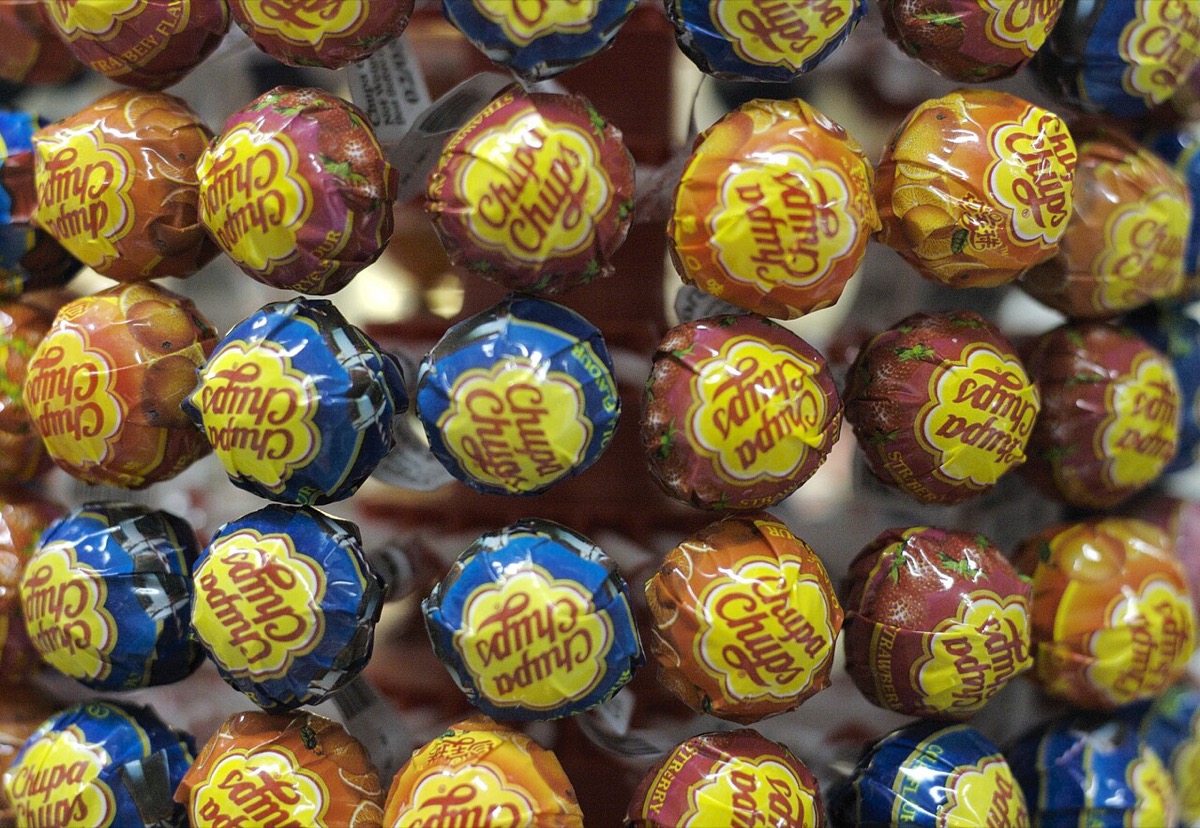
Chupa Chups
The Spanish lollipop with the unforgettable daisy-shaped logo designed by Salvador Dalí. The round candy on a stick solved a kid's eternal problem — no sticky hands — and the distinctive red-and-white wrapper with a centered daisy became one of the world's most recognizable candy marks.
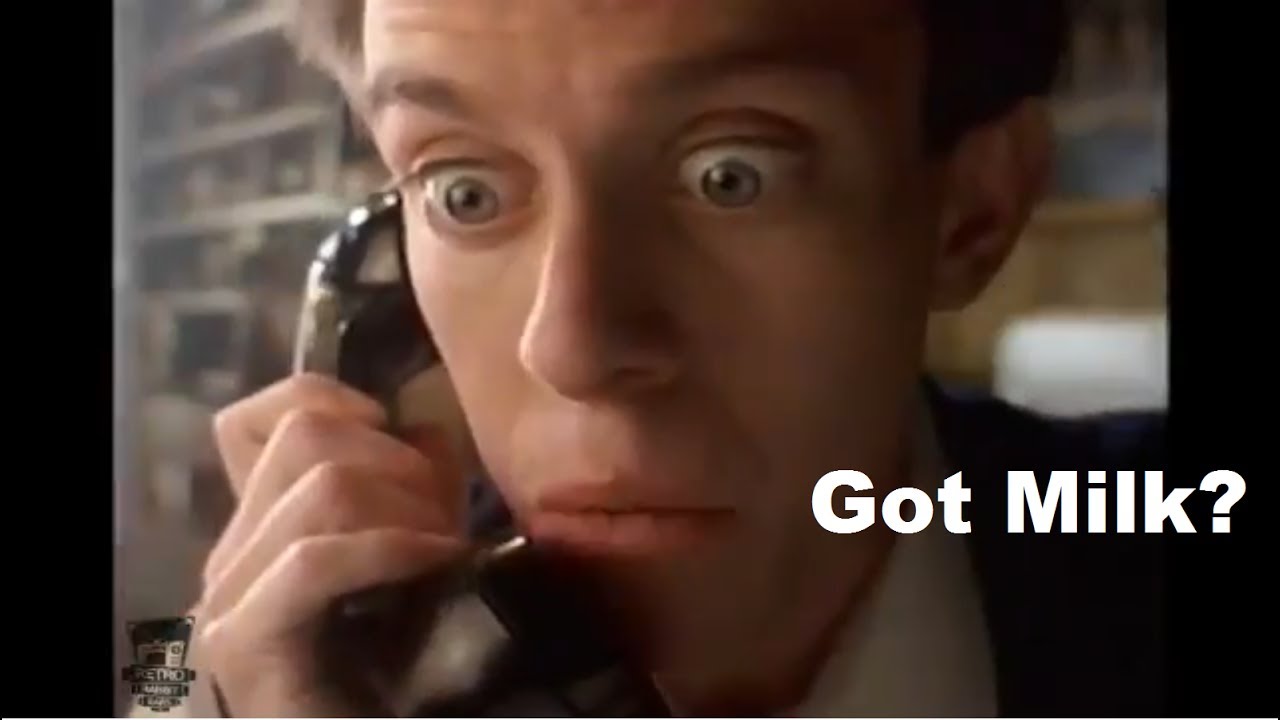
Got Milk?
The iconic 'Got Milk?' campaign launched October 1993 with a TV spot directed by Michael Bay, but the cultural phenomenon exploded with the celebrity milk-mustache print ads that started in 1995. Hundreds of celebrities posed with white mustaches across magazine spreads; kids collected and pinned the pages like trading cards.