Italian Charm Bracelets
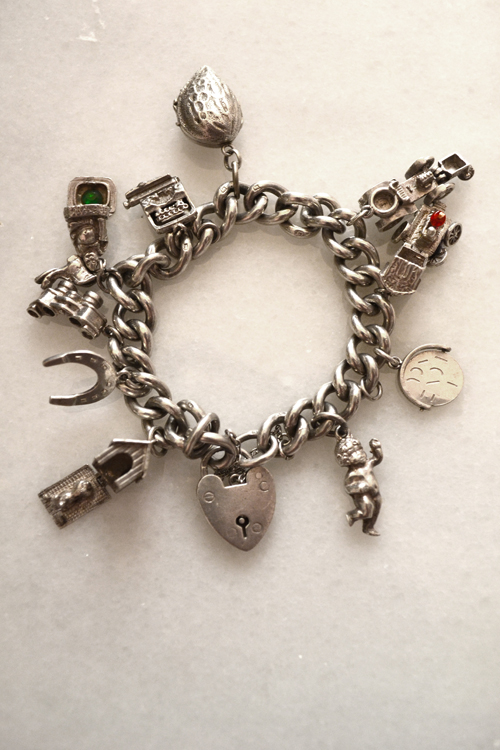
A stretchy steel band of flat little links, each one snapped out and swapped for a charm — your initial, a soccer ball, a ladybug, your best friend's name. Italian charm bracelets turned a wrist into a customizable scrapbook, and for a few years in the early 2000s every girl in school was comparing links.
The design came from Italy long before the fad did. In 1987, the jewelry company Nomination — based in Sesto Fiorentino, outside Florence — introduced its Composable line: a bracelet built from individual modular stainless-steel links hooked together on a stretchy band, typically eighteen links around, each one removable and replaceable with a decorated charm link. American tourists discovered the bracelets in Italy during the 1990s and carried them home, and by the early 2000s the "Italian charm bracelet" had exploded into a full American craze, with a swarm of competing brands and imitators feeding the demand.
The genius of the format was that the starter bracelet was just the beginning. Every holiday and birthday became an excuse for another link — laser-etched initials, enamel flags, hearts, sports, cartoon characters, angels, in-memory-of charms — and collections grew link by link the way charm bracelets always had, except these lay flat against the wrist and clicked together with a satisfying mechanical snap. Kiosks and jewelry counters sold single links cheap enough for allowance money, which made them perfect gifts between friends: matching links were the early-2000s equivalent of splitting a heart necklace.
Like most accessory crazes, it burned bright and faded fast; by the late 2000s the bracelets had migrated to the backs of jewelry boxes. But the format never entirely died — Nomination kept making Composable links in Italy, and the style resurfaced in the 2020s as TikTok rediscovered Y2K jewelry. For anyone who wore one, the memory is specific: working a stubborn link open with your thumbnails, and the little click when the new charm snapped into place.
Similar items

Jelly Bracelets
Thin, neon plastic hoops that came in every color imaginable and were stacked up the arm like jewelry—the fashion accessory that cost almost nothing and became trading currency on every playground. Sparked by Madonna's 1980s stacked-arm look, they dominated the early 80s and stayed essential into the 90s, cheap enough to lose constantly and buy again without guilt.
Livestrong Bands
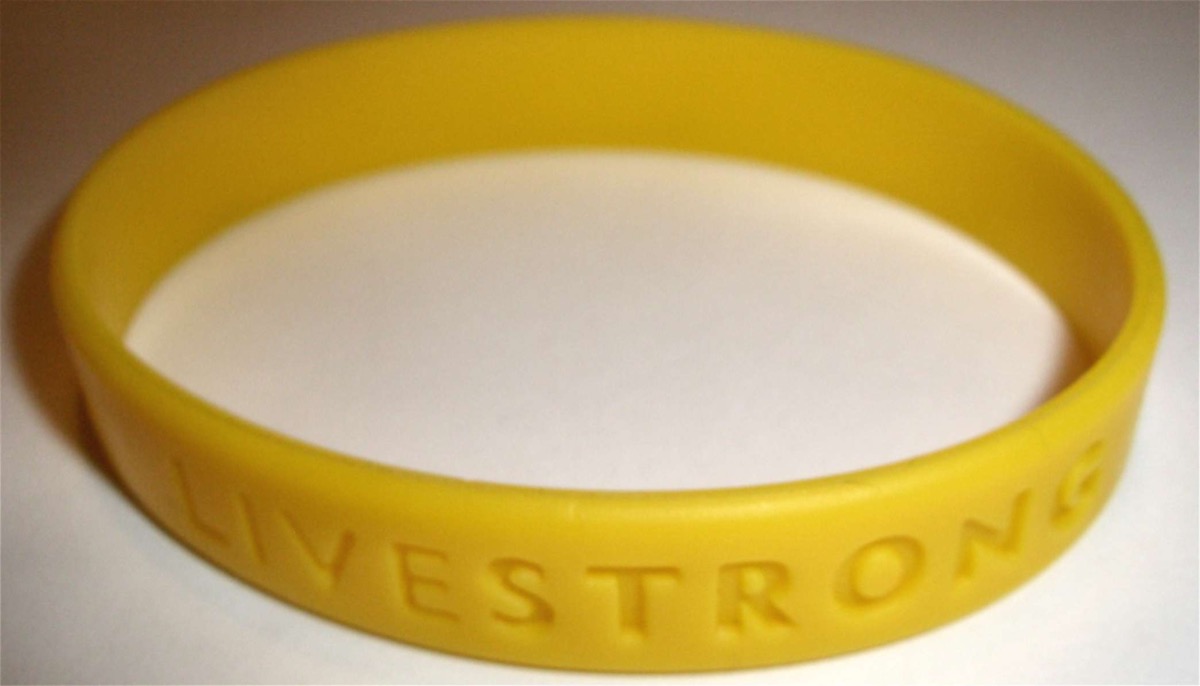
The yellow silicone gel wristband launched in 2004 by the Lance Armstrong Foundation with Nike, sold for $1 to support people affected by cancer. Tens of millions sold, and it ignited the entire cause-awareness rubber-bracelet craze—soon every color stood for a different charity, and everyone stacked them on their wrists like a visible moral portfolio.
Claire's
The ear-piercing rite of passage: the window chair, the piercing gun, picking starter studs while your friends pressed against the glass. Claire's claims more ear piercings than any other retailer — over 100 million — and for generations of tween girls it was the reason the mall existed: bins of cheap earrings, chokers, butterfly clips, and best-friend necklaces made to be split in half.

Clay Pendant Necklaces
Handmade-looking polymer clay pendants—suns with faces, crescent moons, yin-yangs—strung on hemp or black leather cord. Cheap enough to buy at a boardwalk kiosk, earthy enough to feel like you'd made it yourself. The unofficial jewelry of late-90s beach towns and mall food courts.