Flip Phone Charms
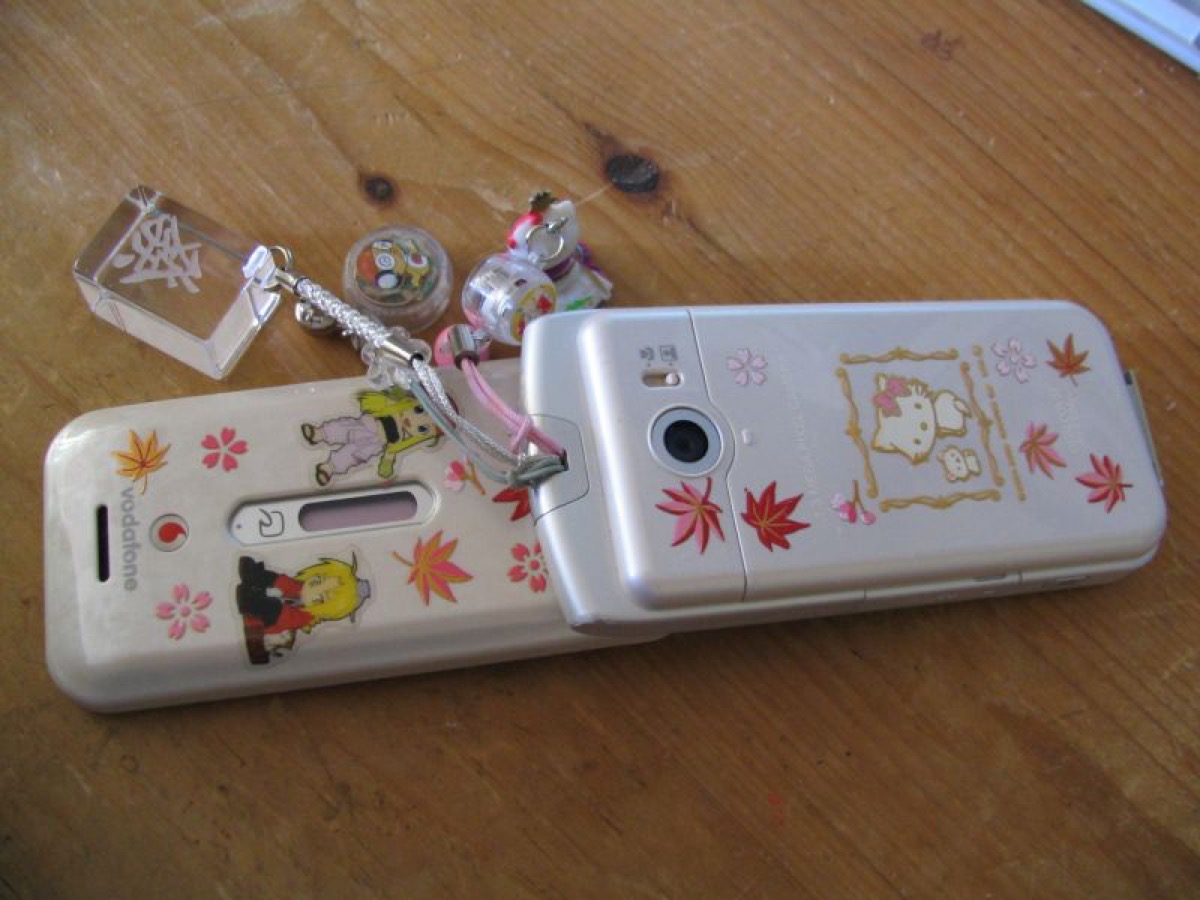
Photo credit: Junglizt1210, public domain, via Wikimedia Commons
Your flip phone looked exactly like everyone else's — until a charm swung from it. The habit came straight from Japan, where "keitai straps" had been phone culture since the late 1990s, and by the mid-2000s crystal danglies, plush animals, and cartoon characters hung off every clamshell in the mall.
Japanese phones came with a dedicated strap hole from the start, and the accessory ecosystem around it exploded — shops sold thousands of designs, from miniature food to anime characters, and hanging several charms at once was standard practice. When the fashion crossed the Pacific in the mid-2000s it arrived fully formed: crystal danglies, tiny plush animals, stars, butterflies, crowns, and cartoon characters, all swinging from the flip phones everyone carried everywhere.
A charm was personalization — a way to claim your phone as yours in a sea of identical devices — and a practical marker for spotting it in a purse. It was also just a small daily pleasure: a spot of color and whimsy that clicked against the plastic every time you flipped the phone open. Then smartphones took over, and most of them offered no place to tie a strap. The fad died with the hardware that hosted it, and phone personalization migrated to the case itself — the phone became the canvas, not the thing the decoration hung from.
Similar items

Motorola Razr
The Razr V3 launched in late 2004 as the world's thinnest clamshell phone at a shocking $500. Its anodized-aluminum body, laser-etched keypad, and impossible thinness made it a fashion statement. When the price dropped in 2005–2006, everyone had one—and snapping it shut after a call was the whole point.

Nokia 3310
The brick phone that became a meme—Nokia's 3310 was the phone that survived drops that would kill any modern device. Released in 2000 and sold over 126 million times, it was famous for its indestructibility, the built-in Snake II game, interchangeable colored covers, and the iconic Nokia tune ringtone. It was the anti-smartphone years before the smartphone era, representing the peak of durable simplicity.
![Video thumbnail — Jamster Sweety the Chick Mobile Ringtone commercial [2005, HQ]](https://i.ytimg.com/vi/DZr8xVZATk8/maxresdefault.jpg)
T9 Texting & Ringtones
Typing "home" and getting "good," texting blind from inside your pocket, and a computerized frog selling ringtone subscriptions between every cartoon. The whole keypad-phone universe, in one glorious, beeping memory.

Body Glitter
Roll-on, gel, or powder with a puff — applied to the collarbones, the eyelids, and eventually the entire upper body before a school dance. It came in every color imaginable, and its single defining property was that it never came off. Not that night, not that week, not from your bedsheets.