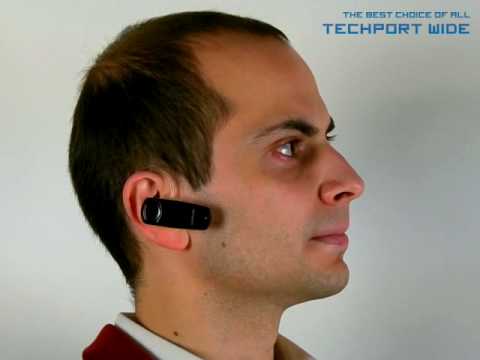
Bluetooth Headset Guy
The blinking blue earpiece, worn everywhere, forever. Mid-2000s America's most confident man: standing in the cereal aisle, gesturing, talking loudly to absolutely no one you could see.
6 items
The blinking blue earpiece, worn everywhere, forever. Mid-2000s America's most confident man: standing in the cereal aisle, gesturing, talking loudly to absolutely no one you could see.
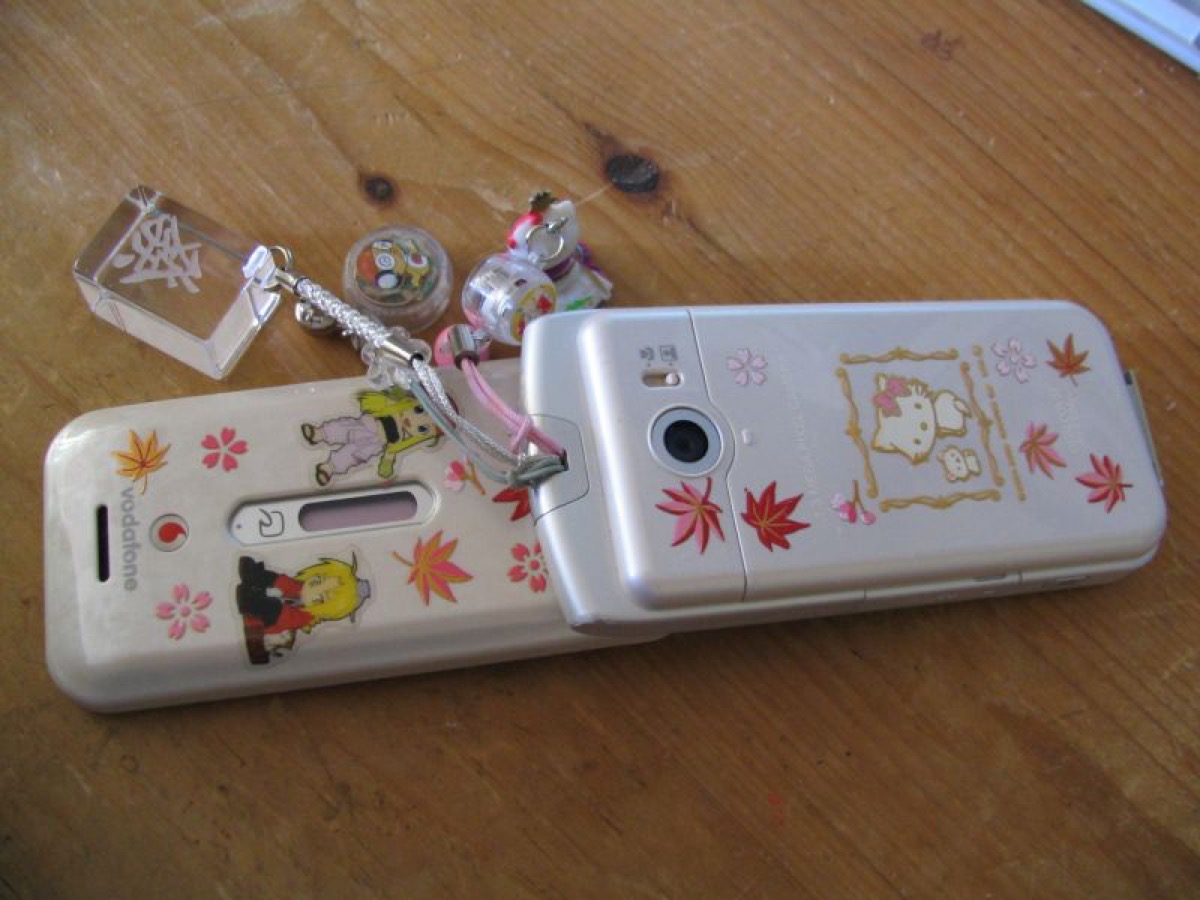
Your flip phone looked exactly like everyone else's — until a charm swung from it. The habit came straight from Japan, where "keitai straps" had been phone culture since the late 1990s, and by the mid-2000s crystal danglies, plush animals, and cartoon characters hung off every clamshell in the mall.
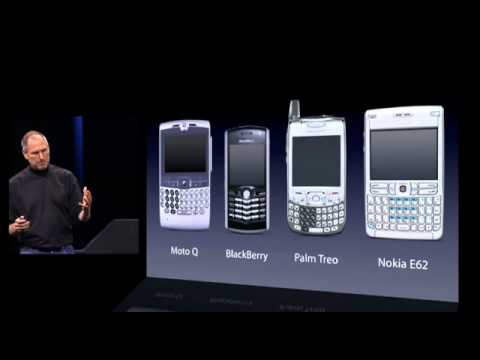
"Today, Apple is going to reinvent the phone." Steve Jobs said it on January 9, 2007, and by June 29 thousands were camped outside stores to find out if he meant it. The lines, the keynote, the $599 price tag — the moment phones changed overnight.

A Star Trek communicator finally landed in your hand — the Motorola StarTAC flipped open and changed what everyone thought a phone should be. At 88 grams and a $1,000 price tag, it was impossibly small and impossibly cool.

You pressed the edge of your N-Gage to your ear to make calls — the infamous "sidetalking" — while everyone nearby asked why you were talking into a taco. Swapping games meant removing the back cover and battery. The Game Boy Advance outsold it 100 to 1 within weeks. The joke aged beautifully, though: phones really did become game machines.

A man in a gray jacket and horn-rimmed glasses wanders the far corners of America, pressing a phone to his ear and asking the void: 'Can you hear me now?' 'Good.' For nine years, that was Verizon — four words that turned a network-coverage claim into a national catchphrase.