Duke Nukem

"Hail to the king, baby." PC gaming's most gleefully crude action hero started as a 1991 shareware platformer and exploded with 1996's Duke Nukem 3D — 3.5 million copies of one-liners, aliens, strippers, and moral panic. Then came Duke Nukem Forever, the most legendary vaporware in gaming history.
Duke began modestly: a side-scrolling MS-DOS platformer released by Apogee Software on July 1, 1991 — programmed by Todd Replogle with Apogee founder Scott Miller producing — with Duke battling the mad scientist Dr. Proton. Distributed shareware-style — first episode free, pay for the rest — it did well enough to earn a sequel. But Duke's true arrival came on January 29, 1996, when 3D Realms released the shareware episode of Duke Nukem 3D, built on Ken Silverman's Build engine, with the full game following that April.
Duke Nukem 3D felt alive in a way other shooters didn't: interactive cities where you could flip light switches, use the toilets, and blow up nearly everything, crawling with aliens and — infamously — strippers. Jon St. John's growling voice work turned Duke into a quote machine, his one-liners lifted lovingly from action movies like They Live, Evil Dead II, and Full Metal Jacket. It sold about 3.5 million copies and became a cultural lightning rod in equal measure: criticized for its violence, erotic content, and portrayal of women, banned in Brazil and, for a time, Australia. For teenage players, that outrage was half the appeal — Duke was gaming's rock-and-roll middle finger, arriving right as the medium was testing how grown-up it could get.
Then came the punchline. Duke Nukem Forever was announced in 1997 as the inevitable follow-up and promptly vanished into development hell, becoming the industry's standing joke and the defining example of vaporware. When it finally shipped in 2011 — fourteen years later — it landed with a shrug. The king never got a worthy second act, but for a few years in the late 90s, nobody was bigger.
Similar items

GoldenEye 007
The Nintendo 64 first-person shooter that redefined console multiplayer: four players split-screen deathmatch, and an iron-clad house rule banning Oddjob because his short stature slipped under auto-aim. Rare's landmark game sold over 8 million copies and owned living rooms until Halo arrived.
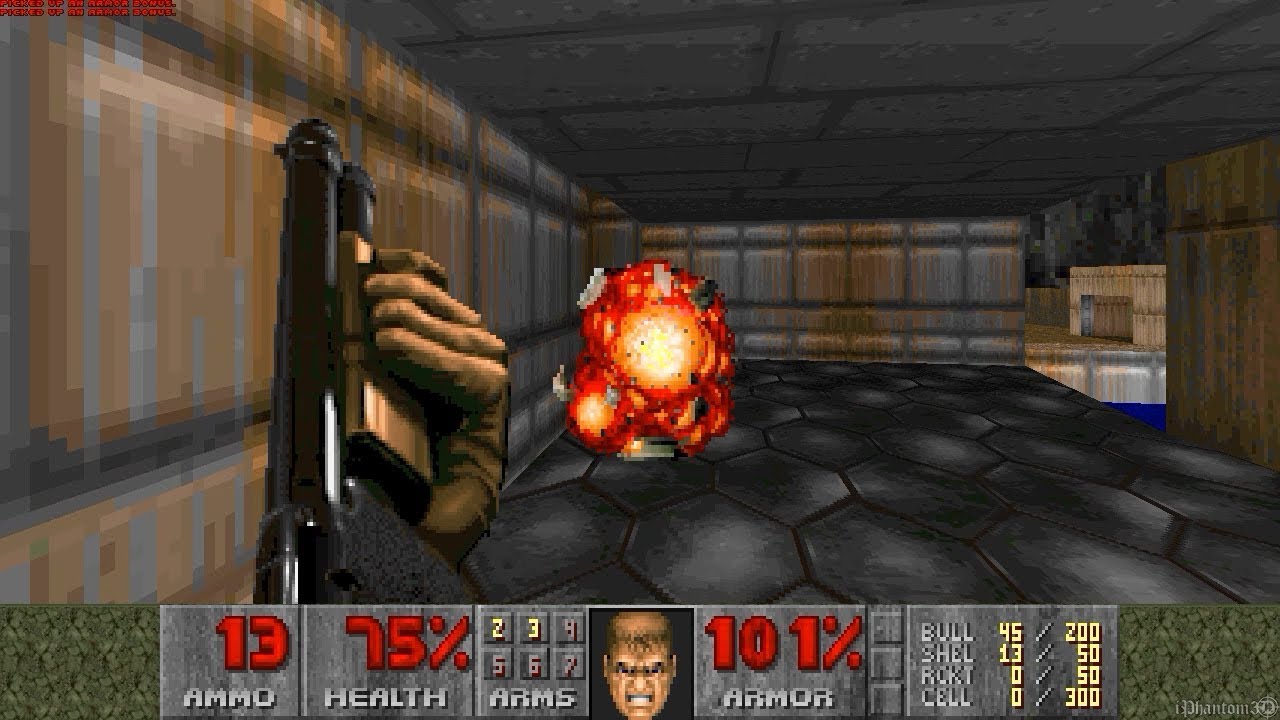
Doom
The shooter that defined the genre, released by id Software as shareware in 1993 and instantly crashing the network when thousands tried to download it at once. Fast, brutal, moddable to the extreme, and the game that turned "fragging" into a verb — by late 1995 it was estimated to be on more computers than Windows 95.
![Video thumbnail — Quake Trailer 1996 [Original]](https://i.ytimg.com/vi/DV2vhmtGBqM/maxresdefault.jpg)
Quake
id Software followed Doom by throwing out the second dimension entirely: Quake was true real-time 3D, drenched in a Nine Inch Nails soundscape, and built to be torn apart by its players — who invented rocket jumps and whole art forms inside it, and turned internet deathmatch into a culture.

BioShock
A plane crash, a lighthouse, and a descent into Rapture — a ruined Art Deco utopia at the bottom of the sea. Ken Levine's 2007 shooter gave players plasmids, Big Daddies, one devastating twist, and the era's best argument that video games could be art. Would you kindly?