Daytona USA

The twin-seat cabinets, the No. 41 Hornet, and a Sega composer belting "DAYTONAAAA" himself because it was the fastest way to get vocals into the game. The arcade racer that defined the mid-90s arcade.
Daytona USA was built to show off the Model 2, the 3D arcade board Sega developed with GE Aerospace from 1992, and to beat Namco's Ridge Racer, which had topped the arcade charts at the turn of 1994. Composer Takenobu Mitsuyoshi has put it plainly: "We received executive orders from Sega that we had to make something better than Ridge Racer." The NASCAR idea came from Tom Petit, head of Sega's American arcade division, and the project went to AM2 under Yu Suzuki, with Toshihiro Nagoshi directing for the first time. Sega licensed the Daytona speedway but skipped a NASCAR license to save money, which is why the game has no real drivers, sponsors, or cars.
The team studied stock-car racing from scratch. Staff photographed Daytona International Speedway, Nagoshi walked a full lap to feel the banking, and planner Makoto Osaki says he watched Days of Thunder more than a hundred times. Nagoshi wanted "funky entertainment" rather than a simulation, so drifting stayed in even though stock cars do not drift, and the player's Hornet wore number 41 because someone close to him said it was lucky. Mitsuyoshi, who knew nothing about stock cars, decided the soundtrack needed vocals and recorded them himself as the fastest way to get music into the game; his voice was sampled onto the Yamaha sound chip. "It never even crossed my mind to bring in another singer," he said later, and he became, in his words, "the guy who sings."
After a prototype at the Tokyo Amusement Machine Show in August 1993, the game launched in Japan in March 1994 and worldwide that April in twin and deluxe cabinets. It debuted at number two on RePlay's Player's Choice chart and stayed on it for five years, sixteen months of them at number one, and took AAMA Diamond Awards in 1994 and 1995. IGN later called it "perhaps the most recognisable arcade racing game of all time and the highest-grossing sit-down cabinet ever," noting the machines still running in arcades and bowling alleys two decades on.
The Saturn port was finished in April 1995, shipped as a Western launch title, and sold a million copies across Japan and the US by the end of 1996, though critics dinged its pop-up and low-resolution textures. Championship Circuit Edition followed in 1996, the arcade-only Daytona USA 2 in 1998, and Daytona USA 2001 on Dreamcast.
Similar items

Sega Saturn
Sega's answer to the PlayStation: a cartridge-free arcade powerhouse with dual processors, a CD-ROM drive, and a cult library of 3D fighters and dreamers. The Saturn dominated Japan but stumbled spectacularly in the West after Sega's infamous E3 surprise launch—a retailer and developer betrayal that became business-school legend.

Cruis'n USA & Cruis'n World
Arcade racing cabinet that promised a coast-to-coast road trip—San Francisco to Washington, D.C.—and actually delivered. You shifted and swerved your way through America's most iconic backdrops, and later the entire globe, one quarter at a time.

Crazy Taxi
A big green arrow, a yellow convertible, a fare who wants KFC, and The Offspring's "All I Want" blasting as you launch off a San Francisco-style hill. Sega's 1999 arcade hit became the Dreamcast's must-own port in early 2000 and one of the console's best sellers.
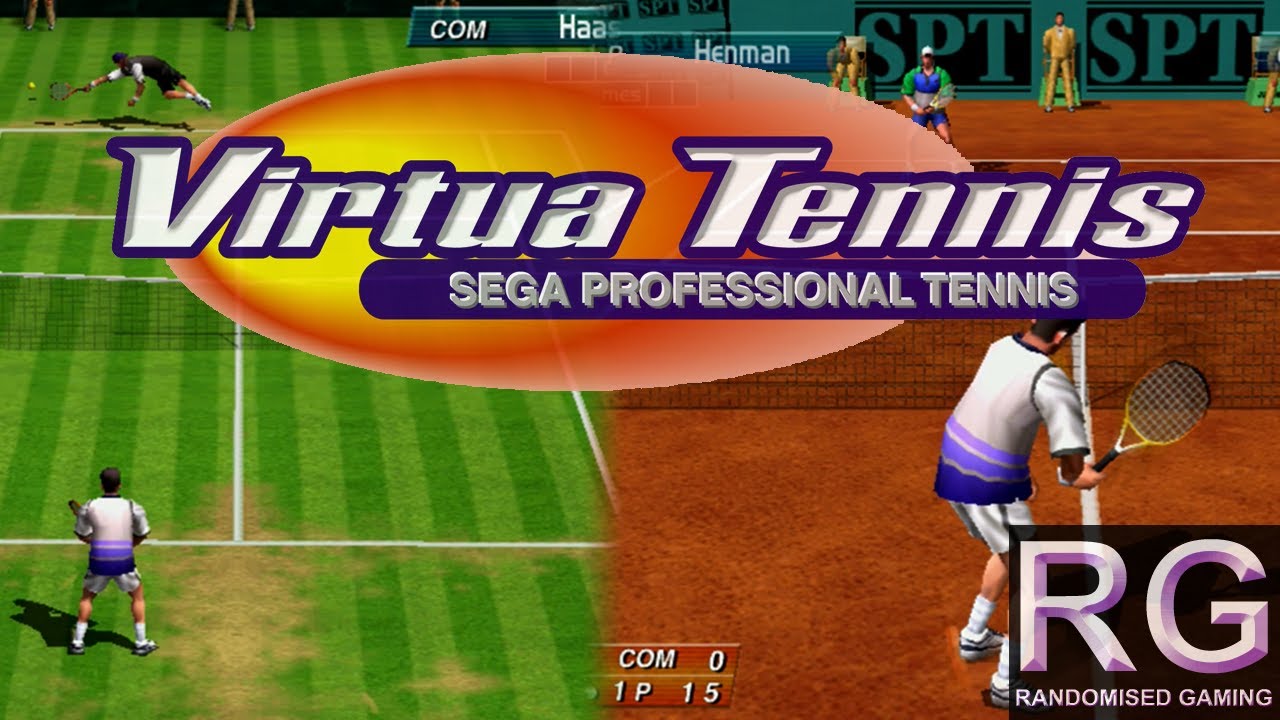
Virtua Tennis
Two buttons: one to hit, one to lob. Sega's tennis game asked almost nothing of you and gave back the best rallies on the console — an arcade cabinet's worth of instant playability on a Dreamcast disc. It remains one of the machine's most fondly remembered games a quarter-century later.