Crazy Taxi

A big green arrow, a yellow convertible, a fare who wants KFC, and The Offspring's "All I Want" blasting as you launch off a San Francisco-style hill. Sega's 1999 arcade hit became the Dreamcast's must-own port in early 2000 and one of the console's best sellers.
The arcade game ran on Sega's Naomi hardware in February 1999, made by the team that became Hitmaker. Director Kenji Kanno built it around one idea: instead of the "100 yen for three minutes" that arcades ran on, your minute on the clock stretched every time you delivered a passenger quickly, so good drivers played longer. He wanted something that could be played in short sessions while capturing a cab driver's "daily life and routine." A huge green arrow pointed roughly toward the destination, and money came from near misses and stunts in a sunny coastal city of steep hills. Sega patented the arrow navigation system in 2001.
The Dreamcast version came out in Japan in January 2000 and in North America on February 2. Besides the arcade map it added a second, larger "Original" city, built so home players could feel lost and enjoy "learning the town," plus three-, five- and ten-minute modes and Crazy Box, a set of minigames pared down from more than a hundred ideas that included bowling with the cab and popping giant balloons. Passengers asked for Pizza Hut, Tower Records, FILA, Levi's and KFC, each modeled in the city, one of the most prominent cases of product placement in games. Bad Religion and The Offspring supplied the entire soundtrack, and The Offspring's "All I Want" has been tied to the series ever since.
The Dreamcast port averaged 90 percent across 37 reviews. IGN's Brandon Justice wrote, "I can't stress enough how addictive this game is," and GameSpot's Jeff Gerstmann said of the music that "you'll either want to crank the volume up or turn the music all the way down." It was the second-highest-selling Dreamcast game in the US in 2000 at nearly 750,000 copies, won Console Action Game of the Year from the Academy of Interactive Arts & Sciences, and went on to 2.2 million US sales across the Dreamcast and the 2001 PlayStation 2 port. The GameCube and PC versions followed with lower scores, the PC one with a different soundtrack.
Crazy Taxi 2 arrived in 2001 and Crazy Taxi 3: High Roller in 2002. When The Simpsons: Road Rage copied the formula, Sega sued Fox Interactive, Electronic Arts and Radical Entertainment in 2003 and settled privately. The 2010 PlayStation 3 and Xbox 360 re-releases lost both the bands and the brand-name destinations to licensing; the 2012 iOS version got the songs back. A new entry, Crazy Taxi: World Tour, is due in 2027, and in 2026 Netflix announced a Crazy Taxi movie.
Similar items

Sega Dreamcast
Sega's last console, a gorgeous white system with a built-in modem that promised arcade quality straight to living rooms. It shipped with one of the most inventive libraries in gaming: Sonic Adventure, Crazy Taxi, Jet Set Radio, and the impossibly niche masterpiece that is Shenmue. The Dreamcast launched with mythical marketing (9/9/99) and died a hero when the PlayStation 2 juggernaut made the economics of console competition impossible.
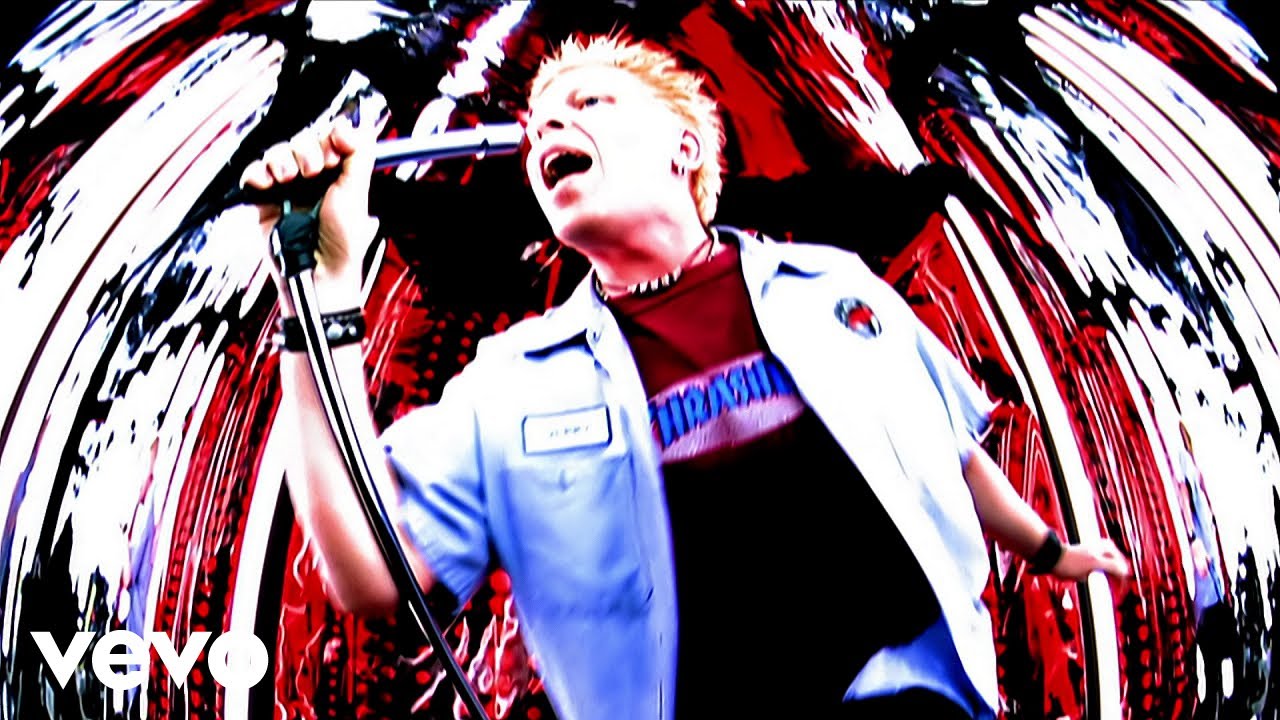
The Offspring
The Orange County lifers who took punk from the underground to total radio domination in one 1994 stroke. Smash became one of the best-selling albums ever released on an independent label, with "Come Out and Play" and "Self Esteem" detonating on modern-rock radio. A second, goofier peak followed with Americana and "Pretty Fly (for a White Guy)." Decades later, frontman Dexter Holland finished a PhD in molecular biology—and the band never stopped touring.

Shenmue
Yu Suzuki's Dreamcast epic put you in 1986 Yokosuka as Ryo Hazuki, avenging your father one conversation at a time: shops that close for the night, buses on timetables, a forklift job at the docks, and half the town asked where the sailors hang out. The most expensive game ever made at the time, it sold 1.2 million copies and still lost money.

PlayStation 2
The black rectangle that invaded living rooms worldwide as an affordable DVD player and happened to pack the best game library ever assembled. With over 155 million sold—the best-selling console of all time—the PlayStation 2 didn't just dominate gaming; it became the era's default home entertainment hub.